A CDK4/6 inhibitor-armed oncolytic adenovirus reverses T cell exhaustion through the Rb-p65-CCL5 pathway and potentiates the antitumor activity of anti-PD-1 or CAR-T therapy in colorectal cancer - Report - MDSpire
Advertisement
A CDK4/6 inhibitor-armed oncolytic adenovirus reverses T cell exhaustion through the Rb-p65-CCL5 pathway and potentiates the antitumor activity of anti-PD-1 or CAR-T therapy in colorectal cancer
Clinical Report: Oncolytic Adenovirus Enhances T Cell Efficacy in CRC
Overview
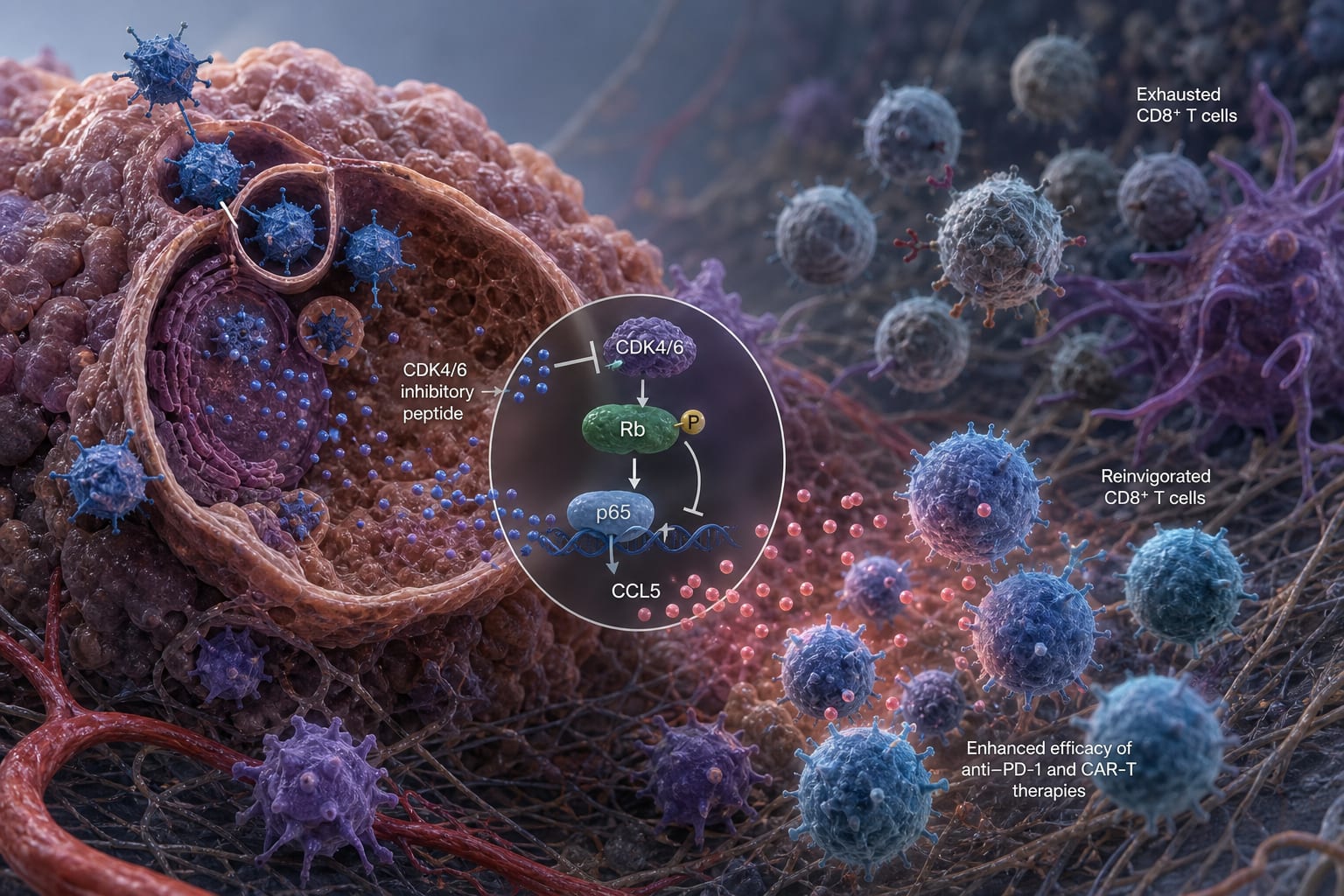
The engineered oncolytic adenovirus ADV-PTD4-D3 reverses T cell exhaustion and improves the efficacy of anti-PD-1 and CAR-T therapies in colorectal cancer models. This approach addresses critical barriers to effective immunotherapy by enhancing T cell infiltration and function.
Background
Colorectal cancer (CRC) presents significant treatment challenges, particularly in microsatellite stable (MSS) cases that respond poorly to immune checkpoint inhibitors. Oncolytic viruses have emerged as potential therapies to stimulate anti-tumor immunity, but their effectiveness is often limited by T cell exhaustion and inadequate tumor infiltration. Innovative strategies are needed to enhance the immune response in these 'cold' tumors.
Data Highlights
No numerical data available in the source material.
Key Findings
ADV-PTD4-D3 induces robust, antigen-specific immunological memory in CRC models.
The mechanism involves CDK4/6 inhibition, reducing Rb phosphorylation and enhancing CCL5 expression.
ADV-PTD4-D3 reverses functional exhaustion of CD8+ T cells in the tumor microenvironment.
This oncolytic virus improves antitumor responses when combined with PD-1 blockade and CAR-T therapies.
The treatment shows no significant off-target toxicity in immunocompetent hosts.
Clinical Implications
The findings suggest that local modulation of T cell exhaustion pathways using oncolytic viruses could enhance the effectiveness of existing immunotherapies in CRC. Clinicians may consider integrating such strategies to improve patient outcomes, particularly in MSS colorectal cancer cases.
Conclusion
Engineering oncolytic viruses to target T cell exhaustion represents a promising strategy to enhance antitumor immunity in colorectal cancer, potentially improving the efficacy of immunotherapeutic approaches.