Serum uric acid levels and cardiorenal complication prevalence in hypertensive patients before and after the COVID-19 pandemic: a retrospective cross-sectional study from a tertiary traditional Chinese medicine hospital - Report - MDSpire
Advertisement
Serum uric acid levels and cardiorenal complication prevalence in hypertensive patients before and after the COVID-19 pandemic: a retrospective cross-sectional study from a tertiary traditional Chinese medicine hospital
Assessment of Serum Uric Acid Concentrations and Cardiorenal Complications
Overview
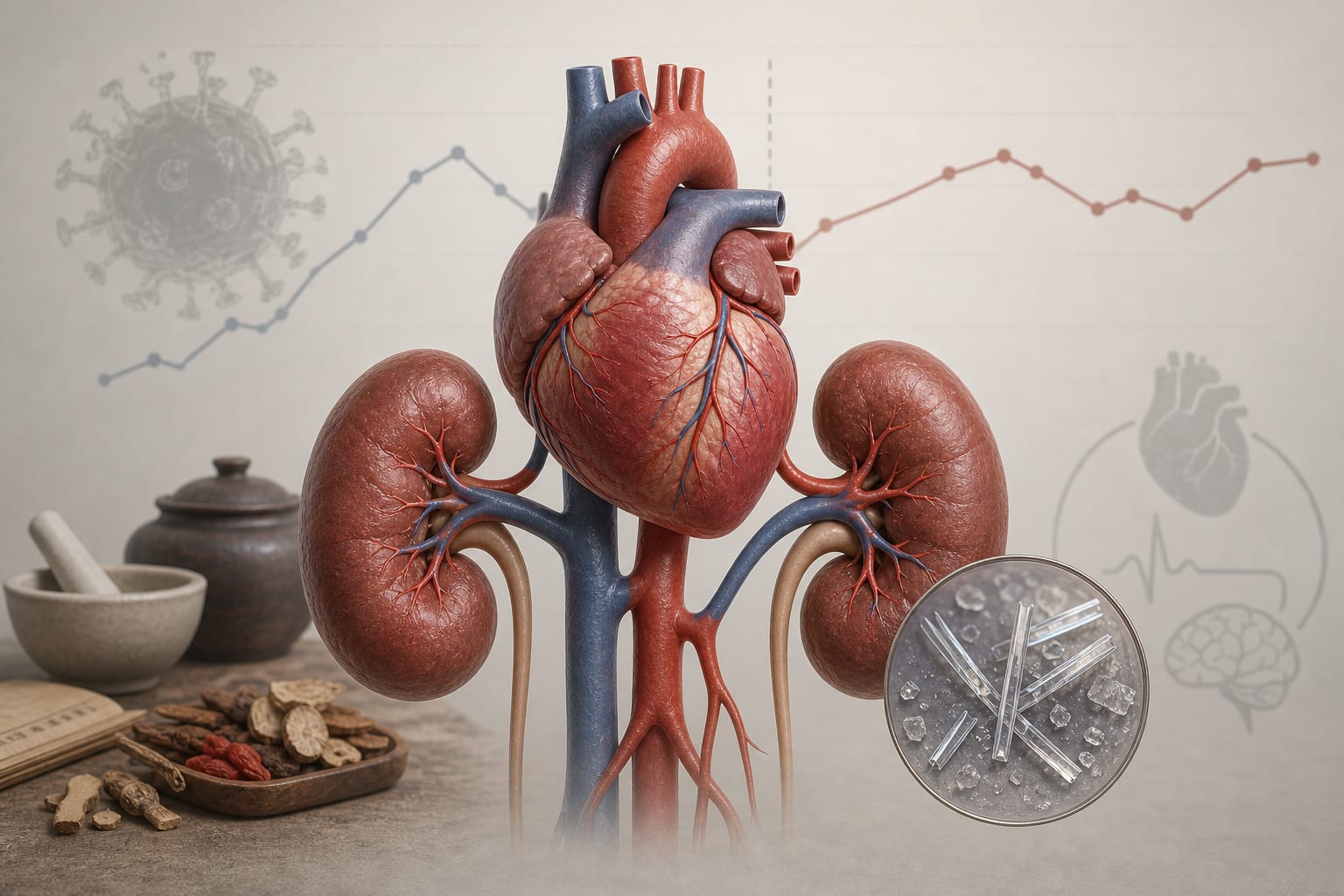
This study evaluates the impact of the COVID-19 pandemic on serum uric acid levels and the incidence of cardiorenal complications in hypertensive patients. Findings indicate that post-pandemic individuals exhibit higher serum uric acid levels and a greater prevalence of cardiorenal complications compared to pre-pandemic counterparts.
Background
Hypertension is a major global health issue, affecting over 1.28 billion adults and contributing significantly to cardiovascular and renal morbidity. Hyperuricemia has been identified as a risk factor for cardiorenal complications, yet the interaction between hyperuricemia and the post-pandemic period on these outcomes has not been thoroughly investigated. Understanding this relationship is crucial for optimizing management strategies in hypertensive patients.
Data Highlights
{'format': 'Ensure the table is presented in a clear and accessible format.'}
Key Findings
{'add': 'Include confidence intervals for all reported odds ratios.'}
Clinical Implications
{'expand': 'Provide specific recommendations for monitoring and management.'}
Conclusion
The study highlights the need for heightened awareness of hyperuricemia's role in cardiorenal risk among hypertensive patients, especially following the COVID-19 pandemic. Further research is warranted to explore effective management strategies.