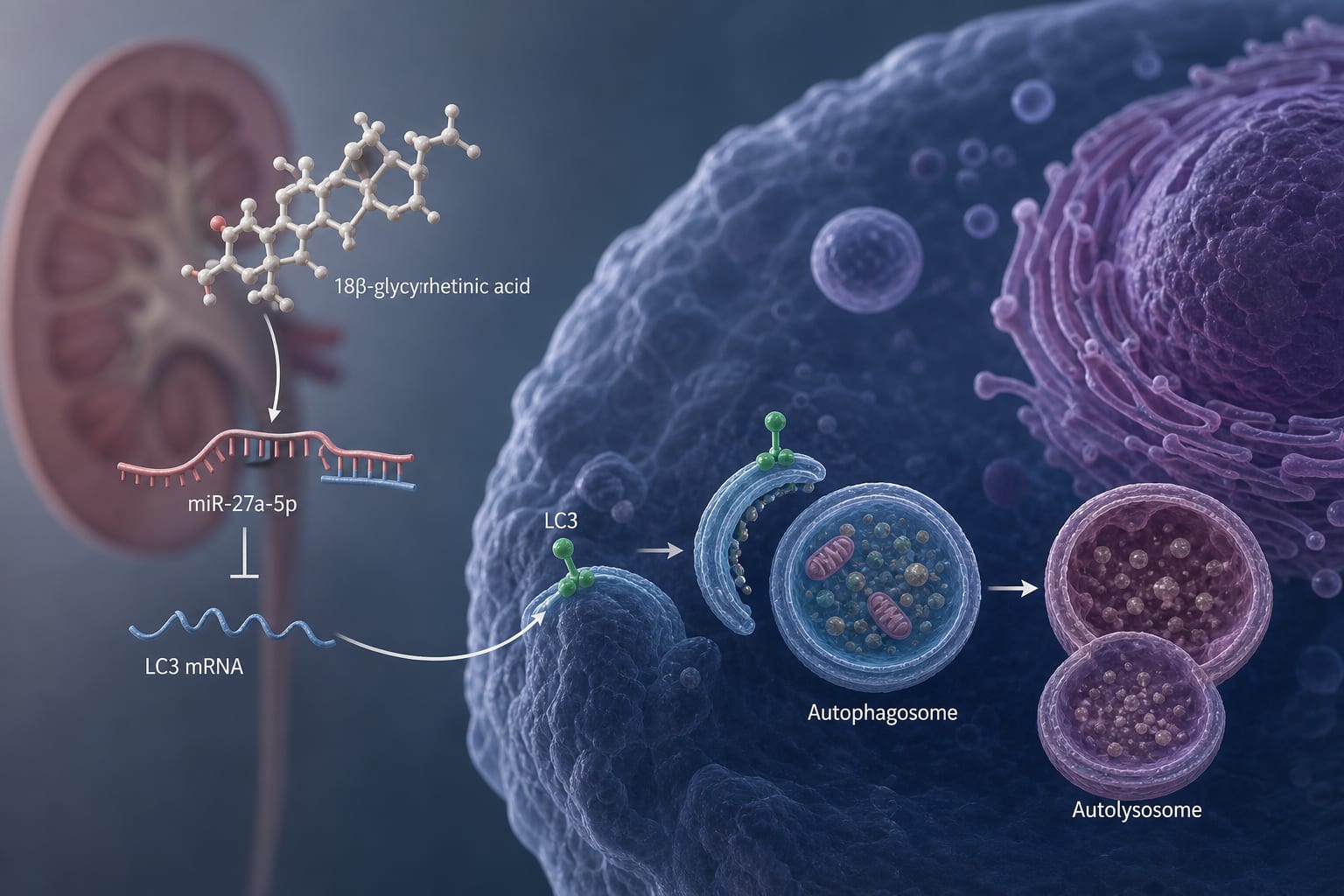
Correction: Study on the mechanism of 18β-glycyrrhetinic acid inhibiting the proliferation of renal cancer cells by inducing autophagy through the miR-27a-5p/LC3 axis - Report - MDSpire
Advertisement
Correction: Study on the mechanism of 18β-glycyrrhetinic acid inhibiting the proliferation of renal cancer cells by inducing autophagy through the miR-27a-5p/LC3 axis
Clinical Report: Correction on 18β-glycyrrhetinic Acid and Renal Cancer
Overview
This report addresses a correction regarding the role of 18β-glycyrrhetinic acid in renal cancer cell growth suppression via autophagy induction. The correction pertains to the misplacement of an image in the published figures, which has now been rectified.
Background
Renal cell carcinoma (RCC) remains a significant clinical challenge, with current treatment strategies focusing on immune checkpoint inhibitors and targeted therapies. Understanding the molecular mechanisms underlying RCC, including autophagy pathways, is crucial for developing novel therapeutic strategies. The role of noncoding RNAs in regulating autophagy presents a promising area for future research.
Data Highlights
No numerical data or trial results are presented in the correction notice.
Key Findings
The correction addresses a figure misplacement in the original publication.
18β-glycyrrhetinic acid has been investigated for its potential to inhibit renal cancer cell proliferation.
The study highlights the role of the miR-27a-5p/LC3 pathway in autophagy induction.
Current guidelines do not incorporate autophagy-directed agents for RCC treatment.
Clinical translation of autophagy modulation remains in early stages.
Clinical Implications
Clinicians should be aware of the evolving landscape of RCC treatment, particularly the role of autophagy and miRNA pathways. While current guidelines do not yet include autophagy-targeting therapies, ongoing research may eventually lead to new treatment options.
Conclusion
The correction emphasizes the importance of accurate data representation in scientific publications. Continued investigation into the mechanisms of autophagy in RCC may yield valuable insights for future therapeutic strategies.
The U.S. Food and Drug Administration (FDA) has approved pembrolizumab, an immunotherapy, plus belzutifan, a HIF-2alpha inhibitor, as adjuvant treatment for adult patients with renal cell carcinoma with a clear cell component (ccRCC) at intermediate-high or high risk of recurrence following nephrectomy, with or without resection of metastatic lesions.