Unique Microbiota Profiles and Dysbiosis in Polyps of Peutz-Jeghers Syndrome
Overview
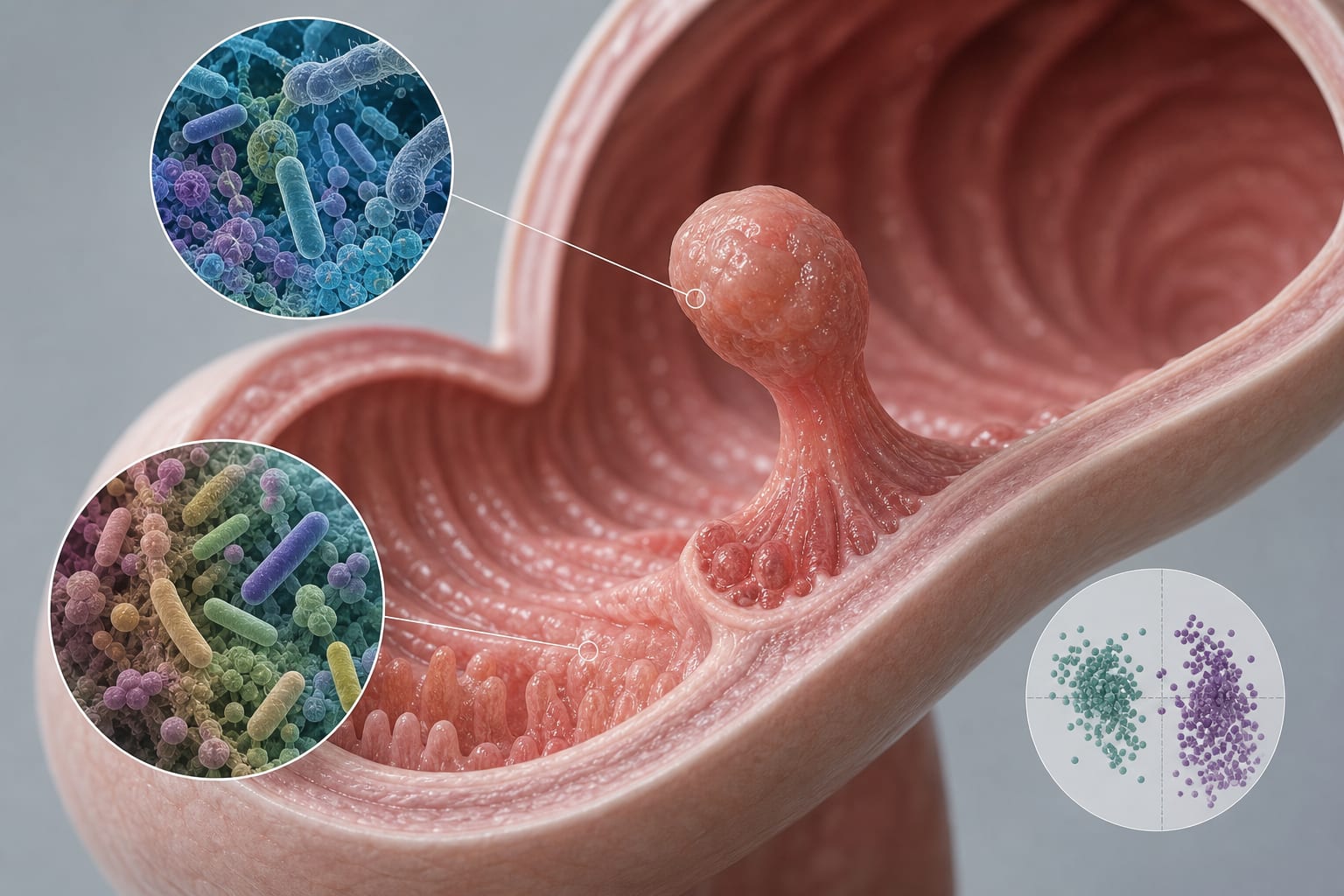
This study investigates the mucosal microbial signatures in Peutz-Jeghers syndrome (PJS) polyps compared to normal mucosa. Significant dysbiosis was observed in PJS polyps.
Background
Peutz-Jeghers syndrome (PJS) is an autosomal dominant disorder characterized by gastrointestinal hamartomatous polyps and an increased risk of cancer. Understanding the role of mucosa-associated microbiota in PJS is crucial, as dysbiosis has been linked to various gastrointestinal diseases, including cancer. This study aims to elucidate the microbial profiles associated with PJS polyps.
Data Highlights
Measure
Polyp
Normal Mucosa
P-value
Alpha Diversity (Observed species)
Reduced
Higher
< 0.001
Alpha Diversity (Chao1)
Reduced
Higher
< 0.001
Alpha Diversity (Shannon)
Reduced
Higher
< 0.001
Simpson Index
Increased
Decreased
< 0.001
Beta Diversity
Significant difference
-
P = 0.002
Microbial Dysbiosis Index
Higher
Lower
< 0.001
Key Findings
Alpha diversity metrics were significantly lower in PJS polyps compared to normal mucosa (P < 0.001).
Beta diversity showed significant differences between PJS polyps and normal mucosa (ANOSIM, R = 0.0667, P = 0.002).
PJS polyps were enriched in Pseudomonadota and depleted in Bacillota and Bacteroidota (all P < 0.001).
The microbial dysbiosis index was significantly higher in polyps (P < 0.001).
A random forest model using 9 genera achieved an AUC of 0.897 for distinguishing polyp samples.
Escherichia-Shigella correlated with the number of polyps (P < 0.05).
Clinical Implications
The findings indicate mucosal microbial dysbiosis in PJS polyps.
Conclusion
PJS polyps exhibit significant microbial dysbiosis, highlighting the importance of mucosa-associated microbiota in the pathogenesis of this syndrome.