Roux-en-Y Gastric Bypass for Barrett’s Esophagus Post Sleeve Gastrectomy
Overview
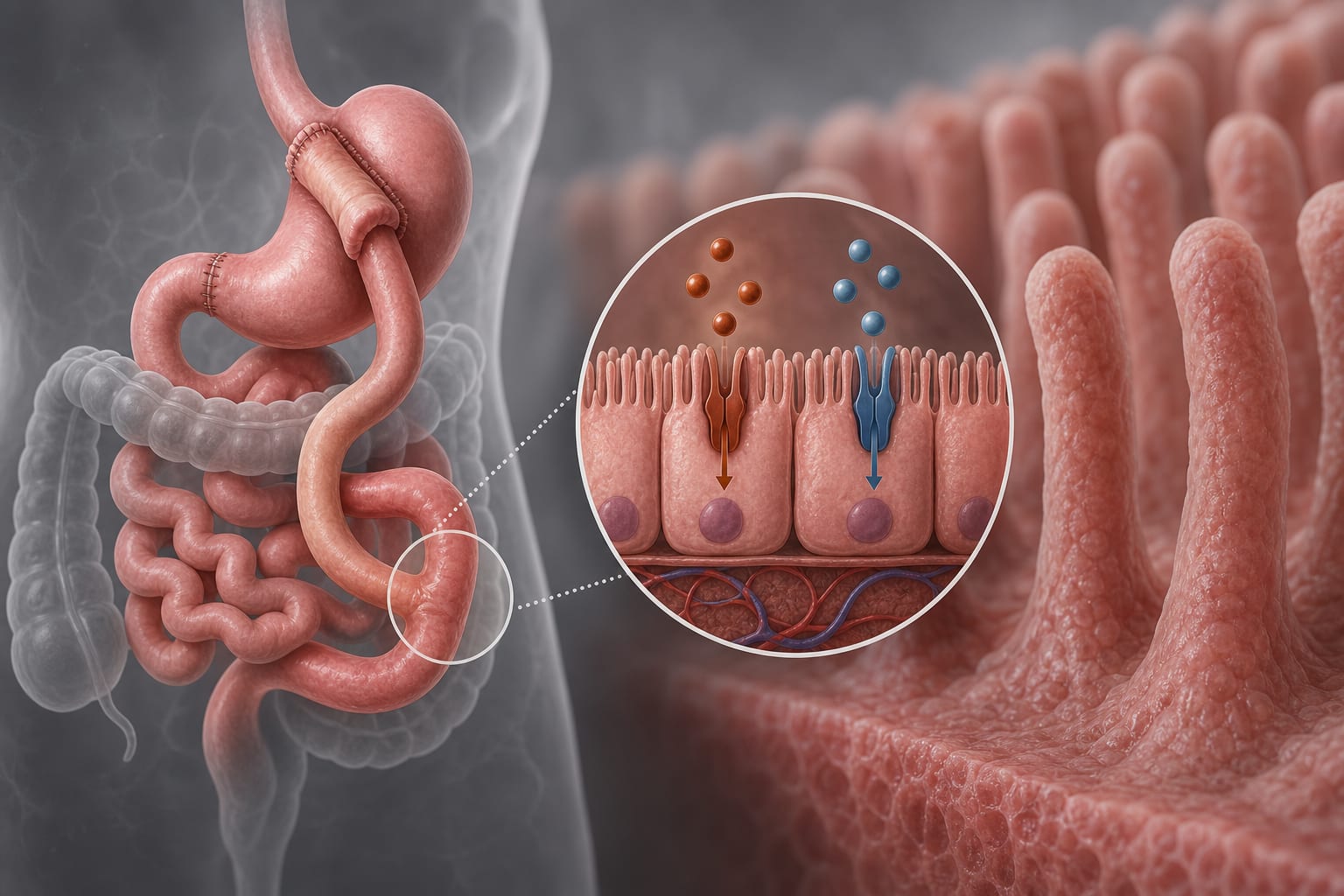
This study evaluates the effectiveness of Roux-en-Y gastric bypass (RYGB) in managing Barrett’s esophagus (BE) that developed after sleeve gastrectomy (SG). Ten female patients with BE and reflux symptoms post-SG underwent conversion to RYGB, with follow-up including gastroscopy, manometry, and 24 h pH-metry. Findings suggest that RYGB may improve reflux symptoms and impact BE status in this patient population.
Background
Sleeve gastrectomy (SG) is the most commonly performed bariatric surgery worldwide, effective for weight loss but associated with long-term reflux and development of Barrett’s esophagus (BE) in some patients. Conversion to Roux-en-Y gastric bypass (RYGB) is a recognized treatment for reflux after SG, though the effect of RYGB on BE following SG has not been well studied. Comprehensive evaluation including gastroscopy, manometry, and pH-metry is necessary to assess reflux and BE status after conversion. This study aims to provide detailed data on patients undergoing RYGB for BE after SG.
Data Highlights
Parameter
Value
Number of patients
10 (100% female)
Weight at SG (mean ± SD)
120.8 ± 20.4 kg
BMI at SG (mean ± SD)
45.1 ± 9.2 kg/m2
Interval SG to RYGB (mean ± SD)
42.7 ± 14.9 months
Patients with hiatal hernia post-SG
2 (20%)
Patients with esophagitis post-SG
8 (80%)
Patients with Barrett’s esophagus post-SG
10 (100%)
Follow-up after RYGB (mean ± SD)
33.4 ± 21.1 months (minimum 6 months)
Key Findings
All patients developed Barrett’s esophagus and reflux symptoms after sleeve gastrectomy despite no reflux symptoms before SG.
Conversion to Roux-en-Y gastric bypass was performed on average 42.7 months after SG.
Gastroscopies before SG showed no abnormalities; post-SG gastroscopies revealed 20% with hiatal hernia, 80% with esophagitis, and 100% with BE.
RYGB was combined with hiatoplasty in 2 patients to address hiatal hernia.
Follow-up included gastroscopy, 24 h pH-metry, and manometry to comprehensively assess reflux and BE status after RYGB.
Clinical Implications
Clinicians should be aware that Barrett’s esophagus can develop in patients with reflux after sleeve gastrectomy, necessitating careful endoscopic surveillance. Conversion to Roux-en-Y gastric bypass appears to be a viable surgical option to manage reflux and potentially improve BE in this context. Comprehensive pre- and post-operative evaluation including gastroscopy and reflux testing is essential for optimal management.
Conclusion
This study provides initial evidence that RYGB may be effective in managing Barrett’s esophagus and reflux symptoms following sleeve gastrectomy. Further research with larger cohorts and longer follow-up is needed to confirm these findings and guide clinical practice.
References
Austrian Society for Bariatric and Metabolic Surgery -- Patient recruitment and study design
AGA Guidelines -- Diagnosis of Barrett’s Esophagus
Holmberg et al. 2021 -- Reflux symptoms after RYGB
by Daniel M. Felsenreich, Felix B. Langer, Christoph Bichler, Magdalena Eilenberg, Julia Jedamzik, Ivan Kristo, Natalie Vock, Lisa Gensthaler, Charlotte Rabl, Alexander Todoroff, Gerhard Prager