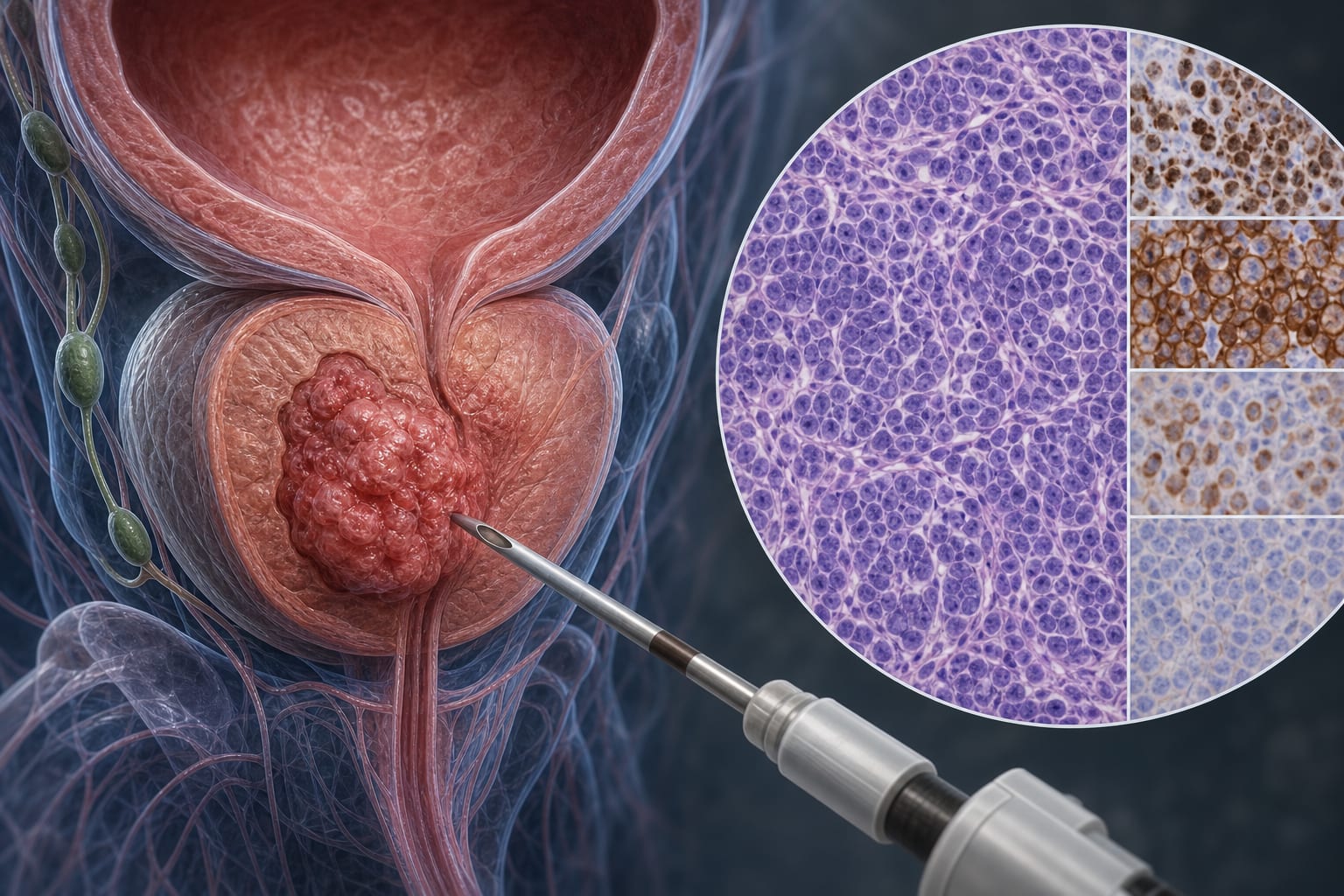
Clinical Report: Uncommon Presentation of Small Cell Carcinoma in the Prostate
Overview
This report details a case of small cell carcinoma of the prostate in a 74-year-old man, highlighting the challenges of diagnosis due to normal PSA levels. The patient presented with defecation difficulties and imaging findings suggestive of malignancy, ultimately leading to a diagnosis confirmed by biopsy.
Background
Small cell carcinoma of the prostate (SCCP) is a rare and aggressive form of prostate cancer, accounting for 0.5%–2% of cases. Its non-specific symptoms and often normal prostate-specific antigen (PSA) levels complicate early diagnosis, leading to advanced disease at presentation. Understanding the clinical and radiological indicators for early biopsy is crucial for improving outcomes in affected patients.
Data Highlights
No numerical data or trial data presented in the article.
Key Findings
Small cell carcinoma of the prostate is rare and aggressive, often presenting with normal PSA levels.
The case involved a 74-year-old man with progressive defecation difficulty and an enlarged prostate.
Imaging revealed a prostate mass suggestive of local invasion despite normal serum PSA levels.
Needle biopsy confirmed the diagnosis of small cell carcinoma with neuroendocrine marker expression.
The patient received chemotherapy but deteriorated rapidly and died shortly after treatment initiation.
Clinical Implications
Clinicians should maintain a high index of suspicion for small cell carcinoma in patients presenting with invasive-appearing prostate lesions, even when PSA levels are normal. Early biopsy is essential for accurate diagnosis and timely intervention.
Conclusion
Strengthen the conclusion by reiterating the urgency of prompt diagnostic procedures.
Legend and Kelonia reveal 100 percent response rates in phase 1 trials, dual CAR T opens doors for kidney transplant patients, and iPDSC therapy beefs up failing hearts