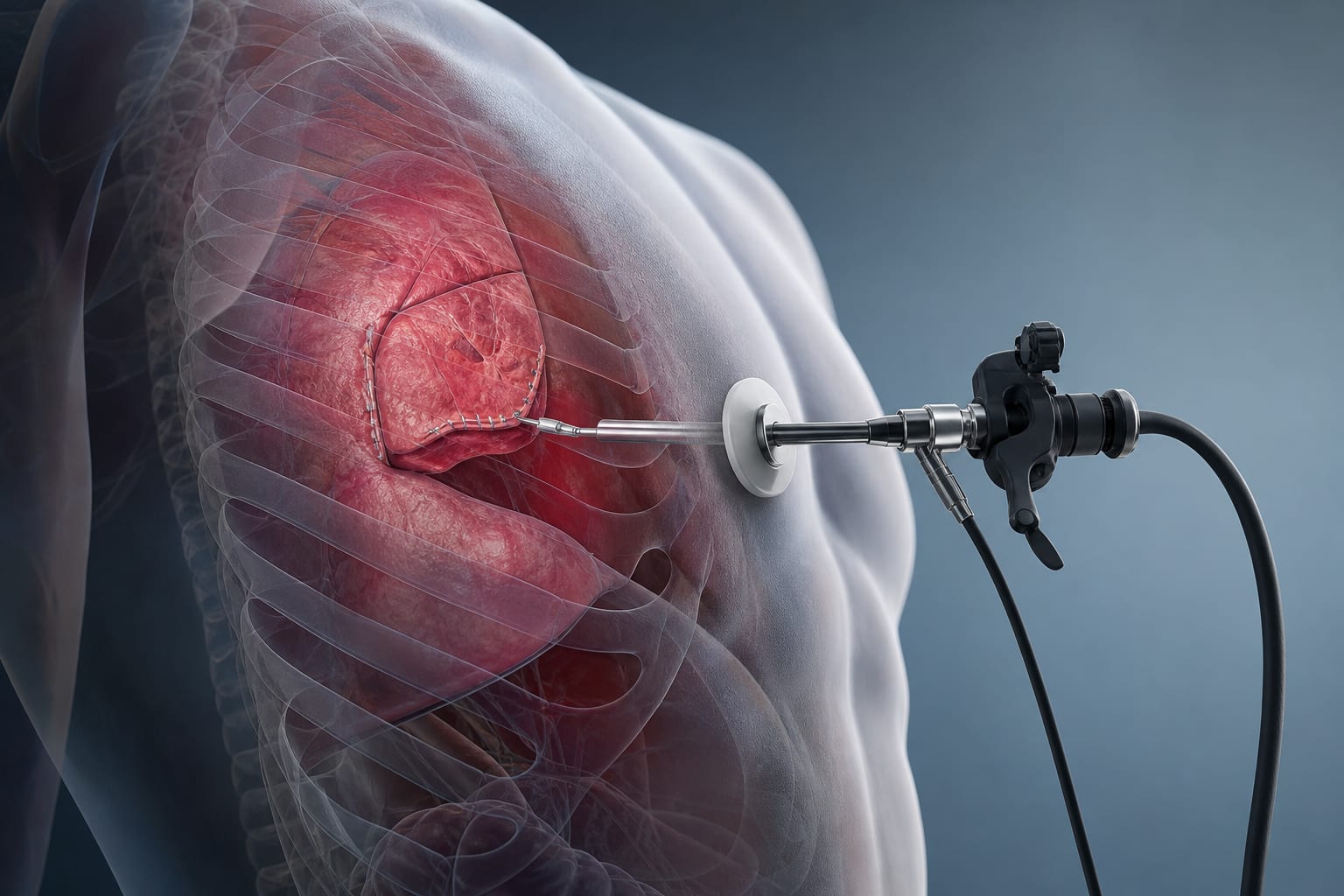
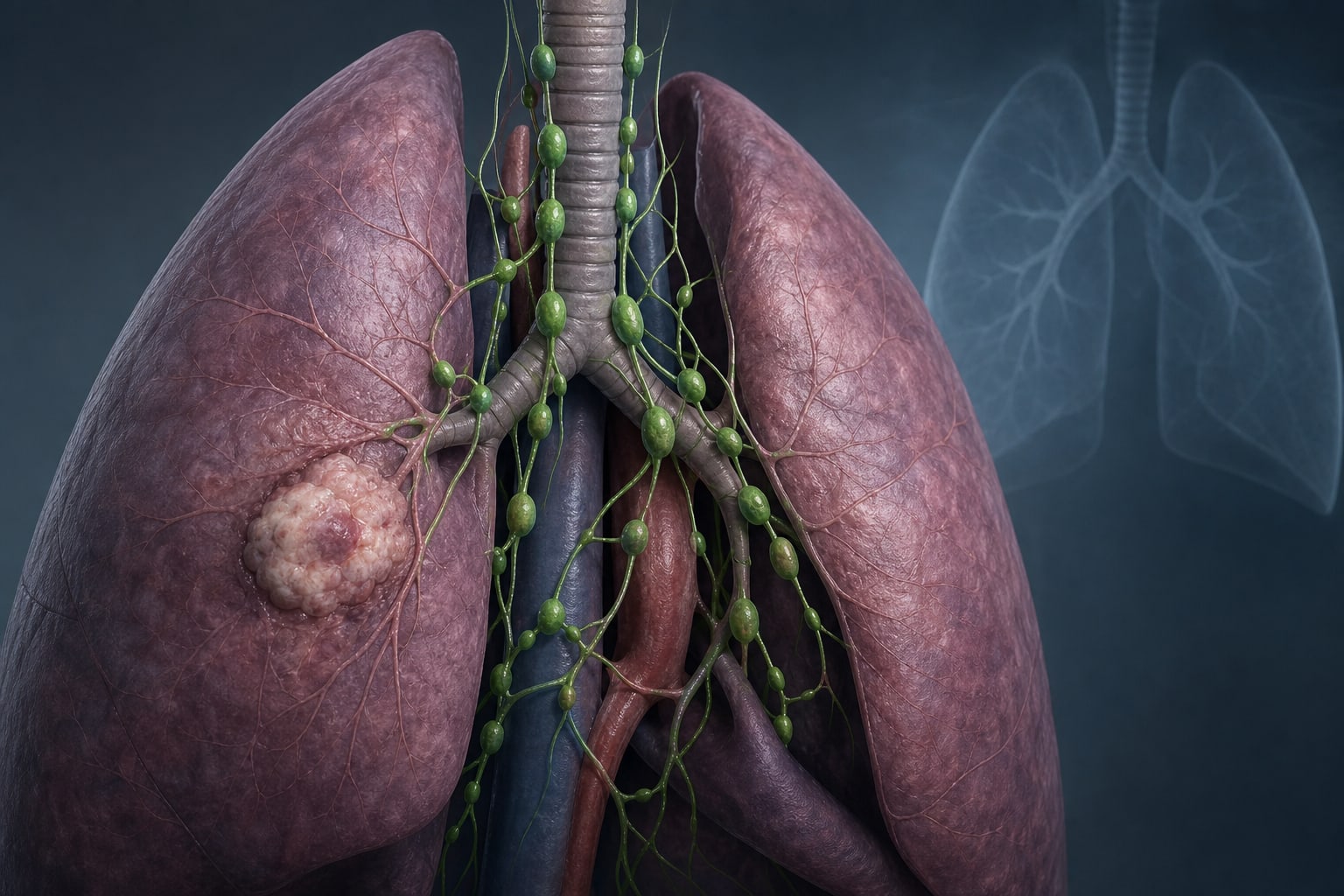
Clinical Report: Evaluation of Uniportal Thoracoscopic Sublobar Resection Without Chest Tube Drainage
Overview
This study evaluates the feasibility of uniportal thoracoscopic sublobar resection without chest tube drainage, comparing outcomes with traditional chest tube drainage. The findings suggest that a tubeless approach may reduce operational time, hospital stay, and postoperative pain in selected patients.
Background
The tubeless strategy in thoracoscopic surgery has gained attention as it may reduce postoperative complications and improve recovery times. With advancements in video-assisted thoracoscopic surgery (VATS), minimizing invasiveness while maintaining safety is crucial. Understanding the implications of omitting chest tube drainage in selected patients can enhance surgical outcomes and patient satisfaction.
Data Highlights
Outcome
Tubeless Group (n=60)
Chest Tube Group (n=60)
P-value
Pneumothorax
1 (1.7%)
0 (0.0%)
0.500
Operational Time
Lower
Higher
<0.001
Perioperative Blood Loss
Lower
Higher
0.007
Total Hospital Stay
Lower
Higher
0.001
Postoperative Pain VAS (POD 1)
Lower
Higher
0.003
Postoperative Pain VAS (POD 2)
Lower
Higher
0.020
Key Findings
Pneumothorax occurred in 1.7% of the tubeless group, with no significant difference from the chest tube group.
Operational time was significantly lower in the tubeless group (P < 0.001).
Total hospital stay was reduced in the tubeless group (P = 0.001).
Postoperative pain VAS scores were lower in the tubeless group on POD 1 and 2 (P = 0.003 and P = 0.020, respectively).
No significant differences in overall patient satisfaction between the two groups.
Further prospective studies are needed to validate these findings.
Clinical Implications
The findings suggest that uniportal thoracoscopic sublobar resection without chest tube drainage may be a viable option for selected low-risk patients, potentially leading to improved recovery metrics. Clinicians should consider patient selection carefully and monitor for complications, particularly pneumothorax.
Conclusion
Uniportal thoracoscopic sublobar resection without chest tube drainage appears feasible in selected patients, with benefits in operational efficiency and postoperative recovery. Further research is warranted to confirm these results.