Clinical Report: Life-Threatening Hypokalemia Due to Tislelizumab-Induced dRTA
Overview
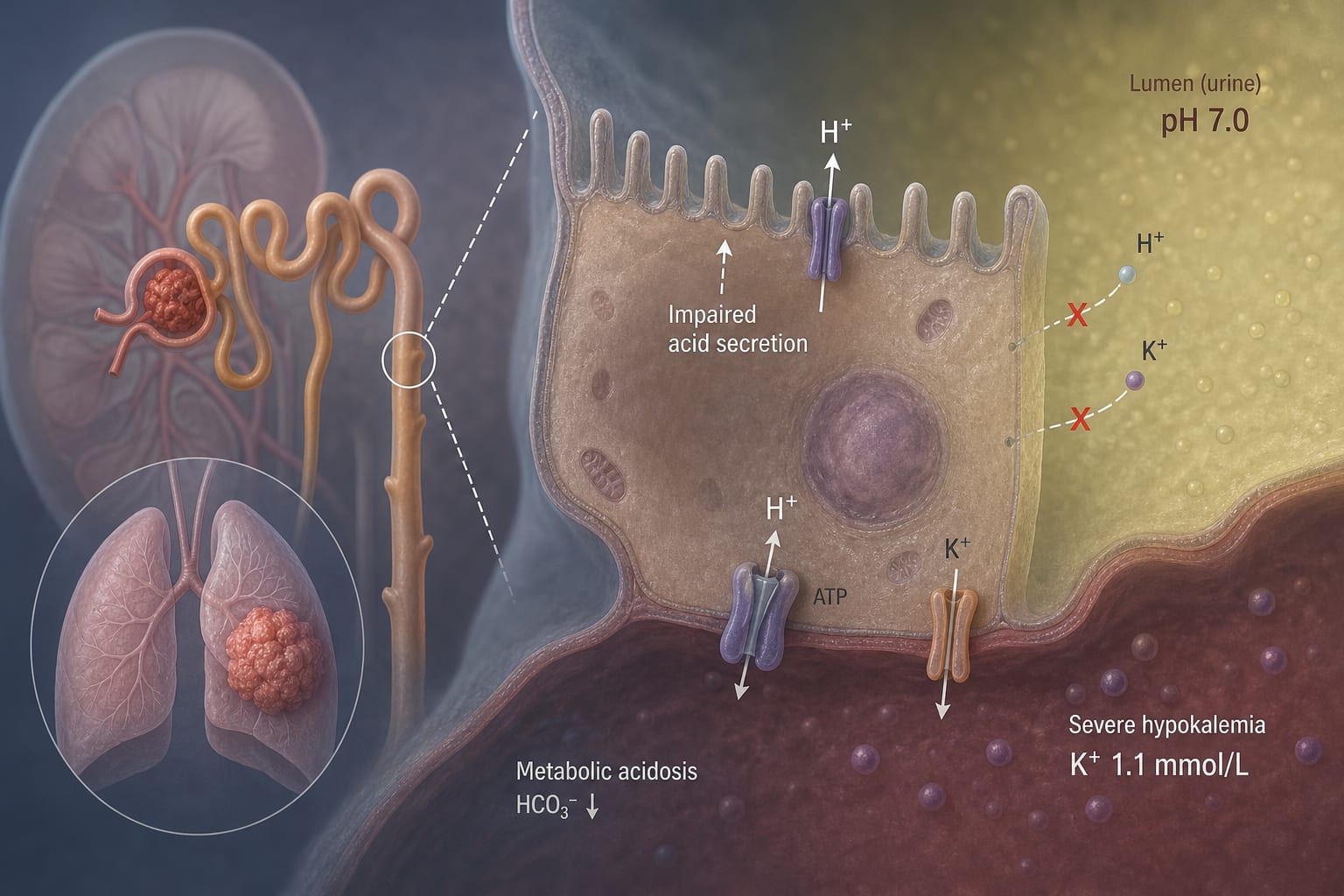
This case report describes a 63-year-old man who developed life-threatening hypokalemia and metabolic acidosis due to distal renal tubular acidosis (dRTA) induced by tislelizumab, an immune checkpoint inhibitor. Following the discontinuation of tislelizumab and appropriate treatment, the patient achieved resolution of metabolic abnormalities and maintained normal renal function over one year of follow-up.
Background
Immune checkpoint inhibitors (ICIs) have transformed cancer treatment but can lead to immune-related adverse events (irAEs), including renal complications. Distal renal tubular acidosis (dRTA) is a rare renal irAE that can cause severe electrolyte imbalances and is often misdiagnosed due to nonspecific symptoms. Awareness of this potential complication is crucial for timely diagnosis and management.
Data Highlights
No numerical data available.
Key Findings
The patient developed profound metabolic acidosis and hypokalemia after receiving tislelizumab.
Laboratory findings included a serum potassium nadir of 1.1 mmol/L and urine pH of 7.0 during systemic acidosis.
Despite aggressive potassium supplementation, hypokalemia worsened, leading to ICU admission and mechanical ventilation.
Diagnosis of tislelizumab-induced dRTA was established after excluding other causes.
Discontinuation of tislelizumab and treatment with potassium citrate and prednisone resulted in complete resolution of metabolic abnormalities.
Over one year of follow-up, the patient maintained normal renal function and achieved a major partial response of his lung cancer.
Clinical Implications
Clinicians should be vigilant for unexplained, potassium-refractory electrolyte disturbances in patients receiving ICIs. Early diagnosis and discontinuation of the offending agent, along with appropriate management, are essential to prevent severe complications.
Conclusion
This case underscores the importance of recognizing dRTA as a potential irAE from ICIs like tislelizumab, highlighting the need for prompt intervention to mitigate life-threatening electrolyte disturbances.