Agencies Issue Joint Update on Planned Controlled Detonation at Iowa Army Ammunition Plant
-
By
-
Assistant Secretary for Public Affairs (ASPA)
-
November 20, 2026
Clinical Report: Joint Update on Planned Iowa Ammunition Plant Detonation
Overview
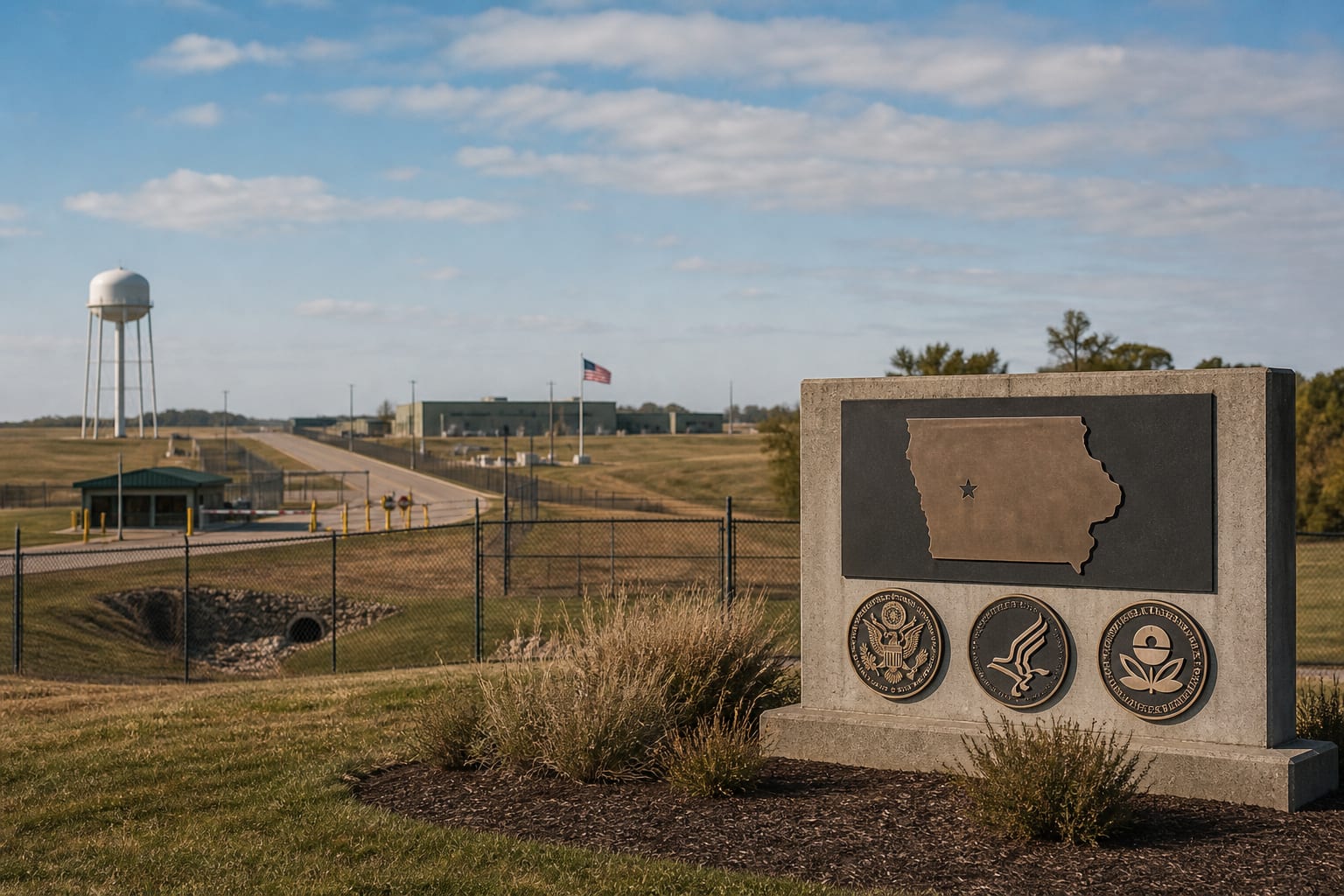
The Army, Health and Human Services, and Environmental Protection Agency issued a joint statement about a planned controlled detonation at the Iowa Army Ammunition Plant in Middletown, Iowa. The agencies report that planning has been underway since March and that they are coordinating mitigation measures and updates with state and local officials and the community.
Background
The statement concerns a planned controlled detonation at an Army ammunition facility and responds to public interest. It identifies the Army, Health and Human Services, and the Environmental Protection Agency as participating agencies. The agencies say they have engaged in planning since March and intend to coordinate with state and local officials and the broader community. The supplied statement does not provide a detonation date, technical details, or specific exposure-monitoring information.
Data Highlights
The source provides no numerical, trial, or exposure-monitoring data. It states that planning has been underway since March and that agencies intend to use mitigation measures, but gives no further operational details.
Key Findings
- The planned controlled detonation is at the Iowa Army Ammunition Plant in Middletown, Iowa.
- The joint statement is issued by the Army, Health and Human Services, and the Environmental Protection Agency.
- Officials report that planning for the event has been underway since March.
- The agencies state that they are coordinating to conduct the detonation as safely as possible and to implement mitigation measures.
- The statement says agencies will continue working with state and local officials and the broader community and provide updates as they become available.
- The supplied statement does not specify the detonation date, mitigation methods, monitoring plans, or clinical response arrangements.
Clinical Implications
The source is an agency update, not a clinical assessment or exposure report, and it provides no clinical guidance or measured health findings. Healthcare professionals should not infer specific exposure risks or clinical management requirements from the statement alone.
Conclusion
The joint update describes interagency planning and intended public communication for the planned detonation. Operational and health-monitoring details are not included in the supplied material.
Related Resources & Content
- the medicine maker — Reviewing FDA Warning Letters: July 2025 Edition
- ADA News — OSHA updates standard to improve hazard information on chemical labels
- ASCO Publications — In Defense of TNT: A Dynamite Strategy
- ASCO Publications — In Defense of TNT: A Dynamite Strategy
- Blast Injuries
- Explosive Weapons Trauma Care Collective (EXTRACCT) Clinical Practice Guideline: Transfer of Critically Injured Casualties
- Explosive Weapons Trauma Care Collective (EXTRACCT) Blast Injury Clinical Practice Guideline: Traumatic Brain Injury From Blast and Penetrating Mechanisms in Settings With Variable Resource Availability.
- Clinical Practice Guidelines (CPGs) - Joint Trauma System
- Aural_Blast_Injury_Acoustic_Trauma_and_Hearing_Loss_14_Aug_2025_ID05
- Aural Blast Injury: An Emergency Management
- GAO-26-107829, DEFENSE HEALTH CARE: DOD Should Assess Its Needs for Managing Potential Brain Health Effects from Weapons Blast Exposures
- Deputy Secretary of Defense memorandum
- Warfighter Brain Health (WBH)-Blast Overpressure (BOP) – Safety and Occupational Health
- Blood Lead Level Guidance | Lead | CDC
- Resources | Lead | CDC
- Commissioner name
- Recommended Actions Based on Blood Lead Level | Childhood Lead Poisoning Prevention | CDC
- Lead poisoning
- Burn Care, 10 June 2025
- Inhalation Injury: Update on Pathogenesis, Emerging Hazards, and Management
Based on findings from:
Joint Statement on Controlled Detonation at Iowa Army Ammunition Plant
Assistant Secretary for Public Affairs (ASPA). United States Department Of Health And Human Services, 2026.
https://www.hhs.gov/press-room/hhs-joint-statement-controlled-detonation-middletown-iowa.html
This content is an AI-generated, fully rewritten summary based on a published scholarly article. It does not reproduce the original text and is not a substitute for the original publication. Readers are encouraged to consult the source for full context, data, and methodology.