Editorial: Defining the Functional Diversity of Synovial Macrophages
-
By
-
Anna B. Montgomery
-
Deborah R. Winter
-
June 30, 2026
Clinical Report: Defining the Functional Diversity of Synovial Macrophages
Overview
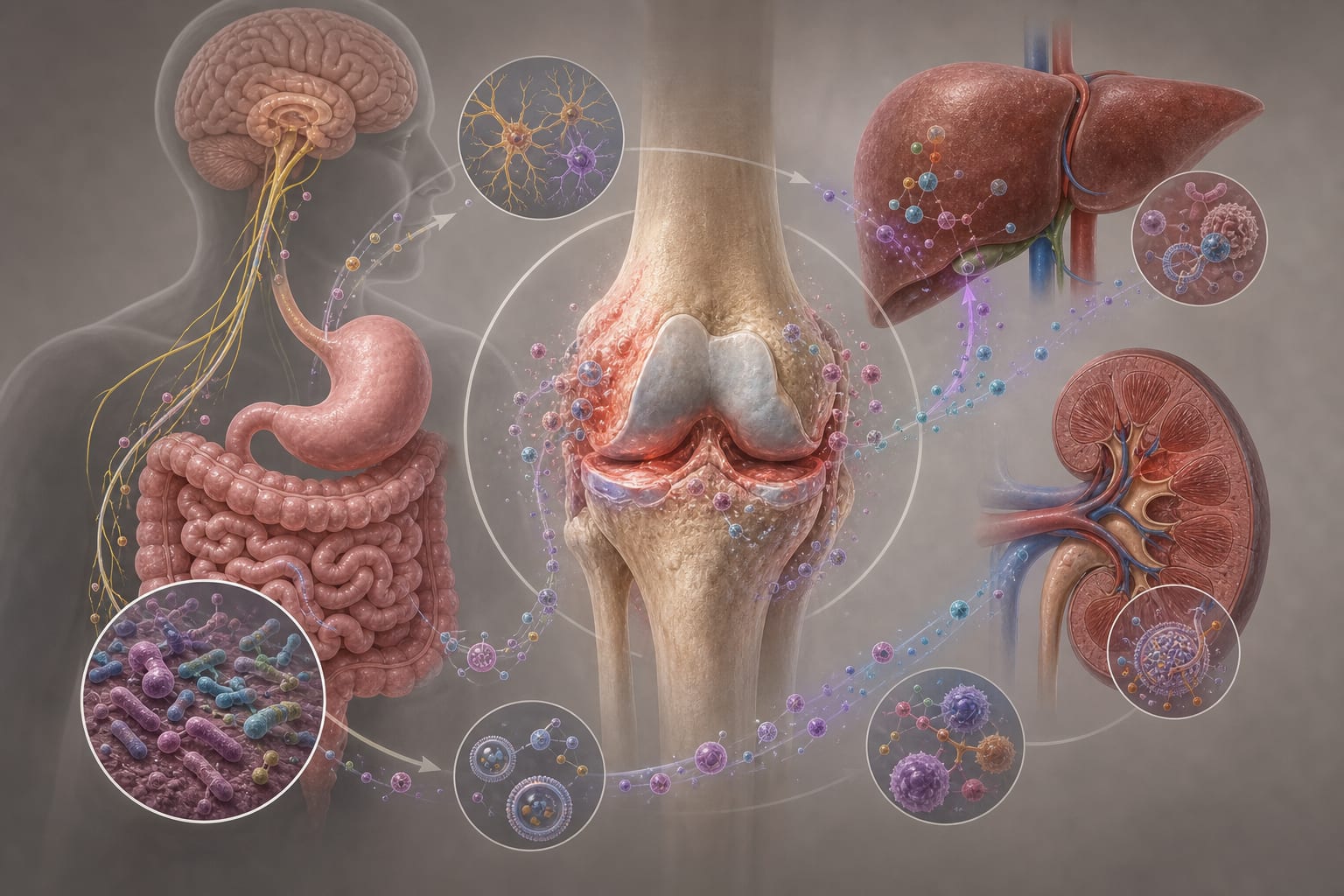
This editorial discusses the functional heterogeneity of synovial macrophages and their roles in joint homeostasis and inflammation.
Background
Macrophages are crucial for tissue homeostasis and respond to inflammation by differentiating from peripheral blood monocytes. In the synovium, their location correlates with specific functions, making it essential to understand their diversity in relation to joint diseases such as rheumatoid arthritis and osteoarthritis.
Data Highlights
No numerical data provided in the source material.
Key Findings
- Synovial macrophages exhibit divergent functions influenced by local and systemic signals.
- Age and sex affect the transcriptional profiles of synovial macrophages, with notable differences observed between males and females.
- In aging females, there is an increase in Arg1-expressing MHCII+ macrophages, while aging males show a decrease.
- RELMα+ interstitial macrophages are positioned near blood vessels and are key in recruiting monocytes during inflammatory arthritis.
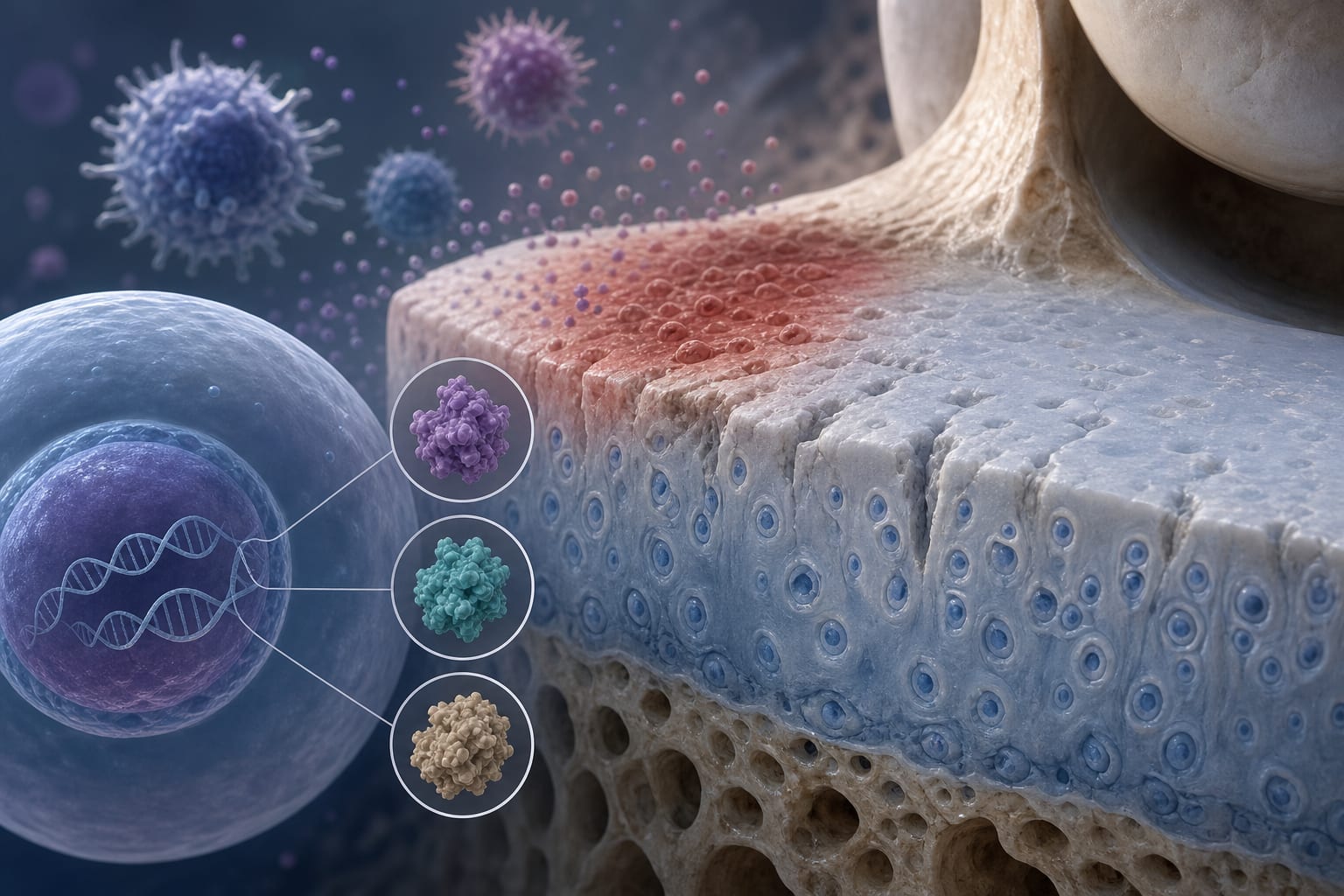
- Pyroptosis, a form of inflammatory cell death, may play a role in the pathogenesis of osteoarthritis.
Clinical Implications
Understanding the functional diversity of synovial macrophages can inform strategies for targeting inflammatory joint diseases. Recognizing sex and age-related differences in macrophage behavior may lead to more personalized approaches in treatment.
Conclusion
The editorial emphasizes the complexity of synovial macrophage functions and their implications for joint health, particularly in the context of aging and sex differences.
Related Resources & Content
- Basic Research in Cardiology, 2020 -- Cardiac Resident Macrophages: Essential Regulators of Cardiac Physiology and Pathology
- Frontiers in Immunology, 2026 -- Molecular and spatial specialization of lung interstitial macrophage subsets: beyond chemokines
- Frontiers in Immunology, 2026 -- Macrophage dysregulation in inflammatory bowel disease: cellular heterogeneity, pathogenic mechanism, and treatment
- Acta Neuropathologica, 2014 -- Investigating Microglia's Function in Human Diseases: Potential Therapeutic Approaches and Targets
- 2025 UPDATE FOR RHEUMATOID ARTHRITIS
- Efficacy of synthetic and biological DMARDs: a systematic literature review informing the 2025 update of the EULAR recommendations for the management of rheumatoid arthritis
- Dynamic macrophage phenotypes in autoimmune and inflammatory rheumatic diseases | Nature Reviews Rheumatology
- 2025 UPDATE FOR RHEUMATOID ARTHRITIS
- Efficacy of synthetic and biological DMARDs: a systematic literature review informing the 2025 update of the EULAR recommendations for the management of rheumatoid arthritis
- Dynamic macrophage phenotypes in autoimmune and inflammatory rheumatic diseases | Nature Reviews Rheumatology
Based on findings from:
Editorial: Characterising the functional heterogeneity of synovial macrophages
Anna B. Montgomery, Deborah R. Winter. Frontiers In Immunology, 2026.
https://www.frontiersin.org/journals/immunology/articles/10.3389/fimmu.2026.1907859/full
This content is an AI-generated, fully rewritten summary based on a published scholarly article. It does not reproduce the original text and is not a substitute for the original publication. Readers are encouraged to consult the source for full context, data, and methodology.