Two cases of pancytopenia characterized by severe neutropenia induced by anti-PD-1 tislelizumab combined with chemotherapy in non-small cell lung cancer patients and a literature review - Report - MDSpire
Advertisement
Two cases of pancytopenia characterized by severe neutropenia induced by anti-PD-1 tislelizumab combined with chemotherapy in non-small cell lung cancer patients and a literature review
Clinical Report: Immune-Related Pancytopenia Following Anti-PD-1 Therapy
Background
The use of immune checkpoint inhibitors (ICIs) in lung cancer treatment has increased, leading to the identification of various immune-related adverse events (irAEs). Hematologic irAEs, although rare, can have severe consequences and are often difficult to distinguish from chemotherapy-induced myelosuppression, such as neutropenia and thrombocytopenia. Understanding these events is crucial for timely intervention and management.
Data Highlights
No numerical data or trial data presented in the source material.
Key Findings
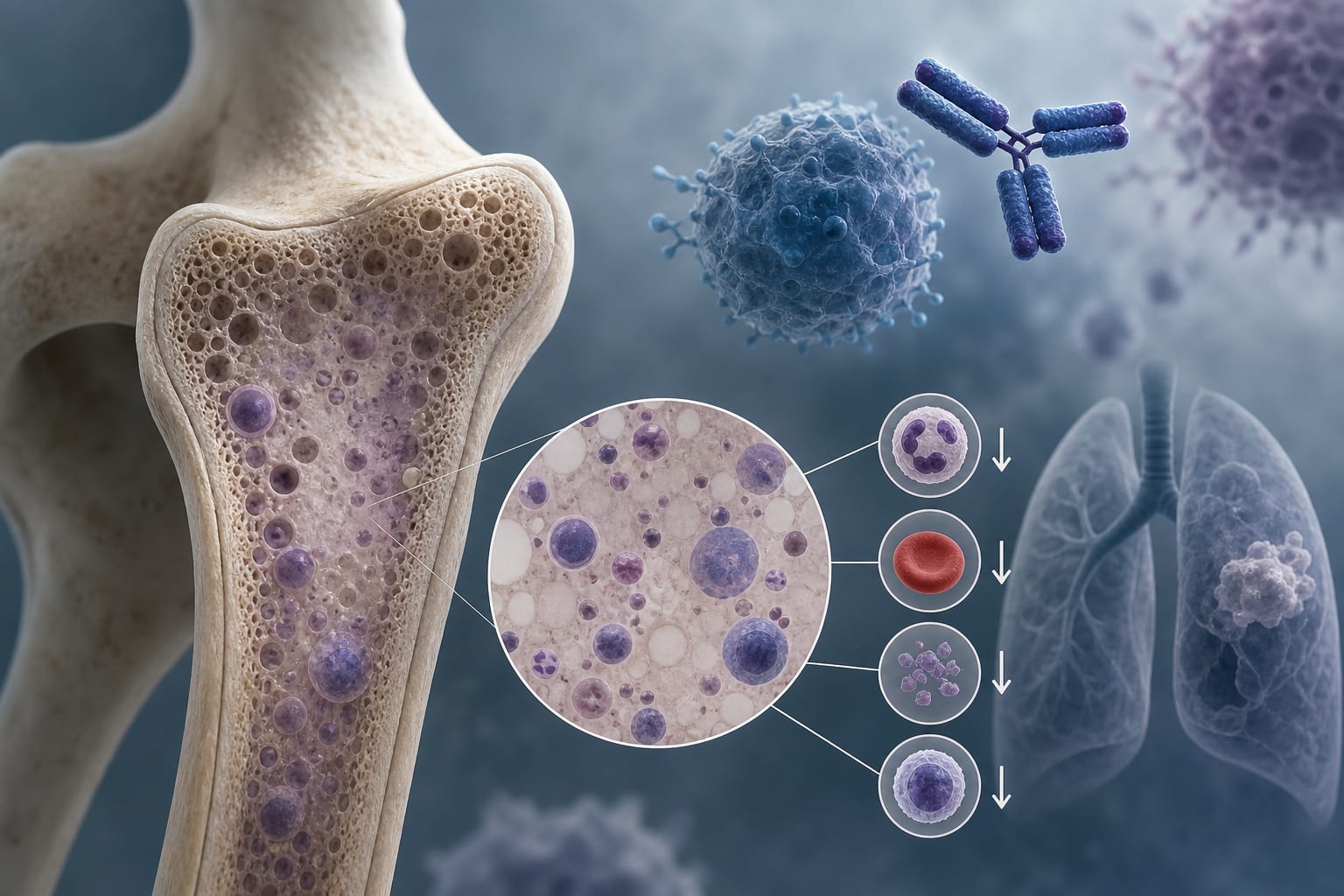
Two patients with non-small cell lung cancer developed immune-related pancytopenia after treatment with tislelizumab and chemotherapy.
Case 1 experienced grade 4 neutropenia, grade 3–4 thrombocytopenia, and grade 3 anemia after the third cycle of treatment.
Case 2 developed similar hematologic complications after the second cycle, along with immune-related mucositis and renal insufficiency.
Both patients received supportive treatments including G-CSF, thrombopoietin, and corticosteroids, but their conditions deteriorated, leading to death from multiple organ dysfunction syndrome.
The Naranjo Scale rated the pancytopenia as possibly induced by tislelizumab in both cases.
Clinicians should monitor blood cell counts regularly and differentiate hem-irAEs from chemotherapy-induced effects.
Clinical Implications
Healthcare professionals should be aware of the potential for severe hematologic irAEs in patients receiving ICIs, particularly in combination with chemotherapy. Regular monitoring of blood counts and prompt intervention are essential to manage these adverse events effectively.
Conclusion
The cases highlight the need for increased vigilance regarding hematologic irAEs in patients treated with immune checkpoint inhibitors, as they can lead to significant morbidity and mortality.