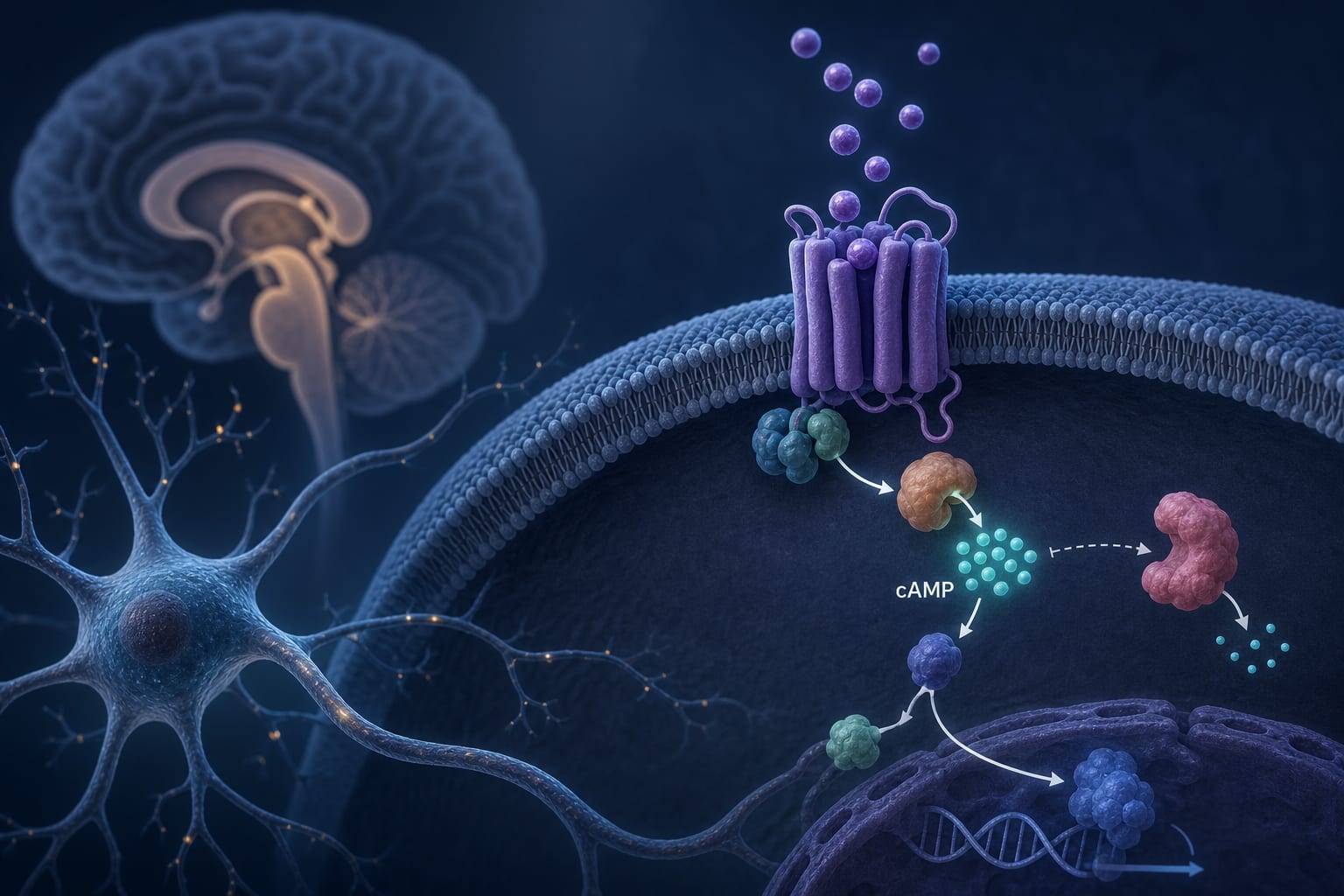
NIH researchers identify avenue for enhanced GLP-1-induced weight loss
-
May 22, 2026
-
0 min
Clinical Report: NIH Study Reveals Pathway to Enhance Weight Loss Effects of GLP-1 Agonists
Overview
NIH researchers have identified intracellular signaling processes that enhance the weight-loss effects of GLP-1 receptor agonists, specifically semaglutide, in mice. The study highlights the role of cyclic adenosine monophosphate (cAMP) in modulating these effects, suggesting potential avenues for improving treatment outcomes.
Background
GLP-1 receptor agonists are increasingly used for weight management and diabetes treatment, yet variability in patient response and treatment plateau remain significant challenges. Understanding the underlying mechanisms of action within the brain can inform future therapeutic strategies and improve patient outcomes.
Data Highlights
The study utilized fluorescence imaging techniques to explore intracellular activity in living brain tissue from mice, revealing that cAMP levels varied among neurons in response to semaglutide.
Key Findings
- Increased cAMP levels in the area postrema are crucial for the weight-loss effects of semaglutide.
- Responses to semaglutide varied among neurons, indicating a continuum of cAMP responses.
- Some neurons maintained elevated cAMP levels while others experienced temporary increases.
- Inhibition of the enzyme PDE4 with roflumilast skewed neurons towards a sustained cAMP response.
- Future studies aim to investigate the intracellular effects of GLP-1s over extended periods.
Clinical Implications
The findings suggest that modulating cAMP levels may enhance the efficacy of GLP-1 receptor agonists, potentially leading to improved weight-loss outcomes and reduced frequency of drug administration. Further research is necessary to explore these mechanisms in human subjects.
Conclusion
This study provides valuable insights into the intracellular mechanisms of GLP-1 receptor agonists, paving the way for future research aimed at optimizing their therapeutic effects.
Related Resources & Content
- National Institutes of Health (NIH), NIH, 2026 -- Oral small-molecule GLP-1 drugs penetrate deep into the brain to suppress cravings
- roswell park comprehensive cancer center, Roswell Park, 2026 -- Study Led by Roswell Park’s Dr. Sai Yendamuri Finds GLP-1 Receptor Agonists Improve Lung Cancer Outcomes
- the pathologist, The Pathologist, 2026 -- Weight-loss Drug Response Varies, But Why?
- retinal physician, Retinal Physician, 2025 -- The Effect of GLP-1RAs in Diabetic Retinopathy
- FDA, FDA, 2024 -- FDA Approves First Treatment to Reduce Risk of Serious Heart Problems Specifically in Adults with Obesity or Overweight
- American College of Cardiology, ACC, 2023 -- Semaglutide Effects on Cardiovascular Outcomes in People With Overweight or Obesity
- FDA Approves First Treatment to Reduce Risk of Serious Heart Problems Specifically in Adults with Obesity or Overweight | FDA
- Semaglutide Effects on Cardiovascular Outcomes in People With Overweight or Obesity - American College of Cardiology
- Tirzepatide for Obesity Treatment and Diabetes Prevention | New England Journal of Medicine
This content is an AI-generated, fully rewritten summary based on a published scholarly article. It does not reproduce the original text and is not a substitute for the original publication. Readers are encouraged to consult the source for full context, data, and methodology.