Immune checkpoint inhibitor-driven smooth muscle cell phenotypic modulation: a potential contributor to atherosclerotic risk associated with these therapies - Report - MDSpire
Advertisement
Immune checkpoint inhibitor-driven smooth muscle cell phenotypic modulation: a potential contributor to atherosclerotic risk associated with these therapies
Clinical Report: Modulation of Smooth Muscle Cell Phenotype Induced by Immune Checkpoint Inhibitors
Overview
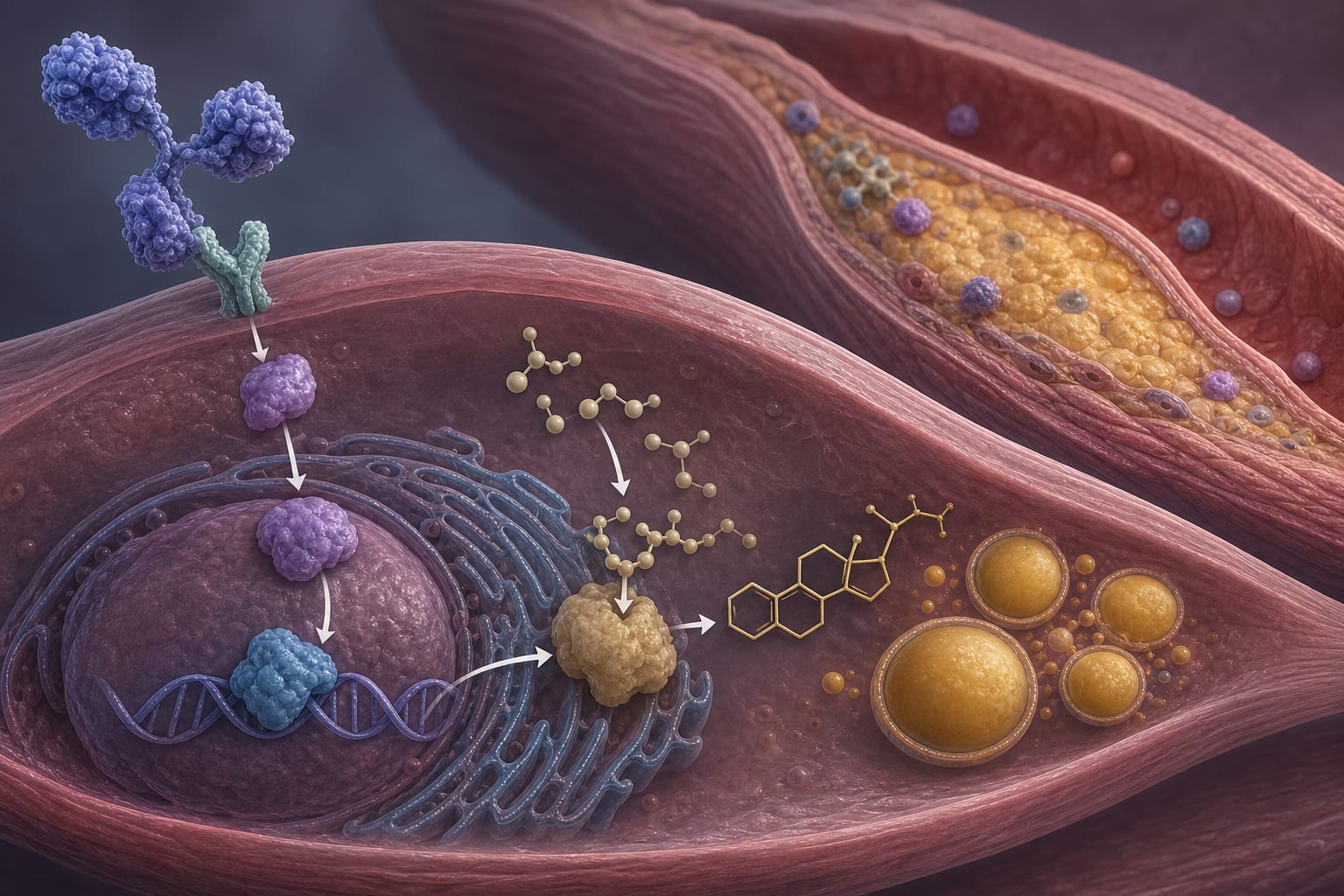
Nivolumab, an immune checkpoint inhibitor, induces significant changes in vascular smooth muscle cells (SMCs) that may increase atherosclerotic cardiovascular disease (ASCVD) risk. This study highlights the role of HSF1 and HMGCR activation in SMC phenotypic modulation.
Background
Immune checkpoint inhibitors (ICIs) have transformed cancer treatment but are associated with increased ASCVD risk, independent of cholesterol levels. Understanding the mechanisms behind this risk is crucial for managing cardiovascular health in cancer survivors. Recent findings suggest that SMCs play a significant role in the atherosclerotic process linked to ICI therapy.
Data Highlights
No numerical data or trial data provided in the source material.
Key Findings
Nivolumab activates heat shock factor 1 (HSF1) in cultured human SMCs.
HSF1 activation leads to increased activation of HMG-CoA reductase (HMGCR) and accumulation of cholesteryl esters.