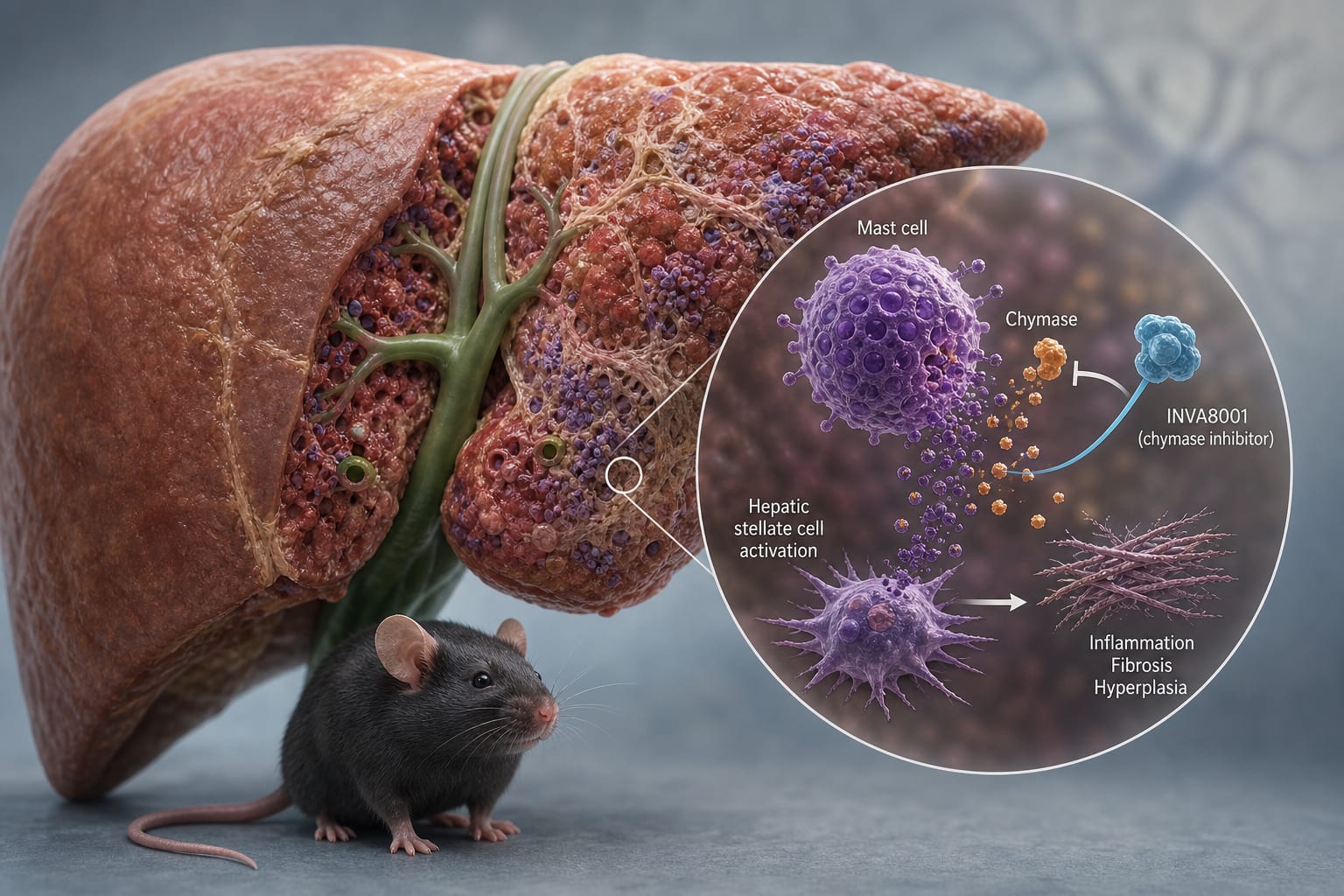
Clinical Report: INVA8001 Reduces Liver Inflammation and Fibrosis in Mdr2 Mice
Overview
The chymase inhibitor INVA8001 significantly reduced liver inflammation, fibrosis, and hyperplasia in Mdr2 knockout mouse models of primary sclerosing cholangitis (PSC).
Background
Primary sclerosing cholangitis (PSC) is a chronic cholestatic liver disease with no FDA-approved treatments, leading to high morbidity and mortality. Mast cells (MCs) and their mediators, such as chymase, have been implicated in the pathogenesis of PSC, making them potential therapeutic targets. Understanding the role of chymase in PSC could pave the way for new treatment options.
Data Highlights
Parameter
Effect of INVA8001
Chymase Activity
Reduced
Mast Cell Accumulation
Decreased
Inflammation
Reduced
Histological Damage
Decreased
Fibrosis
Reduced
Biliary Senescence
Decreased
Key Findings
INVA8001 treatment reduced chymase activity in Mdr2−/− mice.
Chymase-positive cell numbers were increased in liver biopsies from PSC patients compared to controls.
INVA8001 was associated with decreased mast cell accumulation and inflammation.
The treatment led to reduced histological damage and fibrosis in the liver.
INVA8001 also decreased biliary senescence in the Mdr2−/− mouse model.
Clinical Implications
Further research is needed to explore the therapeutic potential of INVA8001 in clinical settings.
Conclusion
Chymase inhibition with INVA8001 shows effects in reducing key pathological features of PSC in a mouse model.