Single-point insulin sensitivity estimator and left main and/or three-vessel disease in patients aged 45 years or older with acute coronary syndrome: findings from the CCC-ACS project - Report - MDSpire
Advertisement
Single-point insulin sensitivity estimator and left main and/or three-vessel disease in patients aged 45 years or older with acute coronary syndrome: findings from the CCC-ACS project
Clinical Report: Association of SPISE with Severe Coronary Disease in ACS Patients
Overview
This study investigates the relationship between the single-point insulin sensitivity estimator (SPISE) and severe coronary anatomical involvement in patients aged 45 and older experiencing acute coronary syndrome (ACS).
Background
Acute coronary syndrome (ACS) is a significant contributor to morbidity and mortality globally, with severe coronary anatomical involvement indicating a higher ischemic burden and poorer clinical outcomes. Insulin resistance (IR) is linked to the progression of atherosclerotic cardiovascular disease, and identifying reliable markers of IR could enhance risk stratification in ACS patients. The SPISE offers a non-invasive method to evaluate insulin sensitivity.
Data Highlights
Outcome
Odds Ratio (OR)
95% Confidence Interval (CI)
Left main and/or three-vessel disease
0.977
0.957–0.998
Isolated three-vessel disease
0.957
0.935–0.980
Key Findings
Higher SPISE is associated with lower odds of severe coronary anatomical outcomes.
Each 1-unit increase in SPISE correlates with reduced odds of left main and/or three-vessel disease.
Patients in the highest SPISE tertile have lower odds of severe coronary disease compared to those in the lowest tertile.
Age-related heterogeneity was observed, with stronger associations in patients aged <65 years.
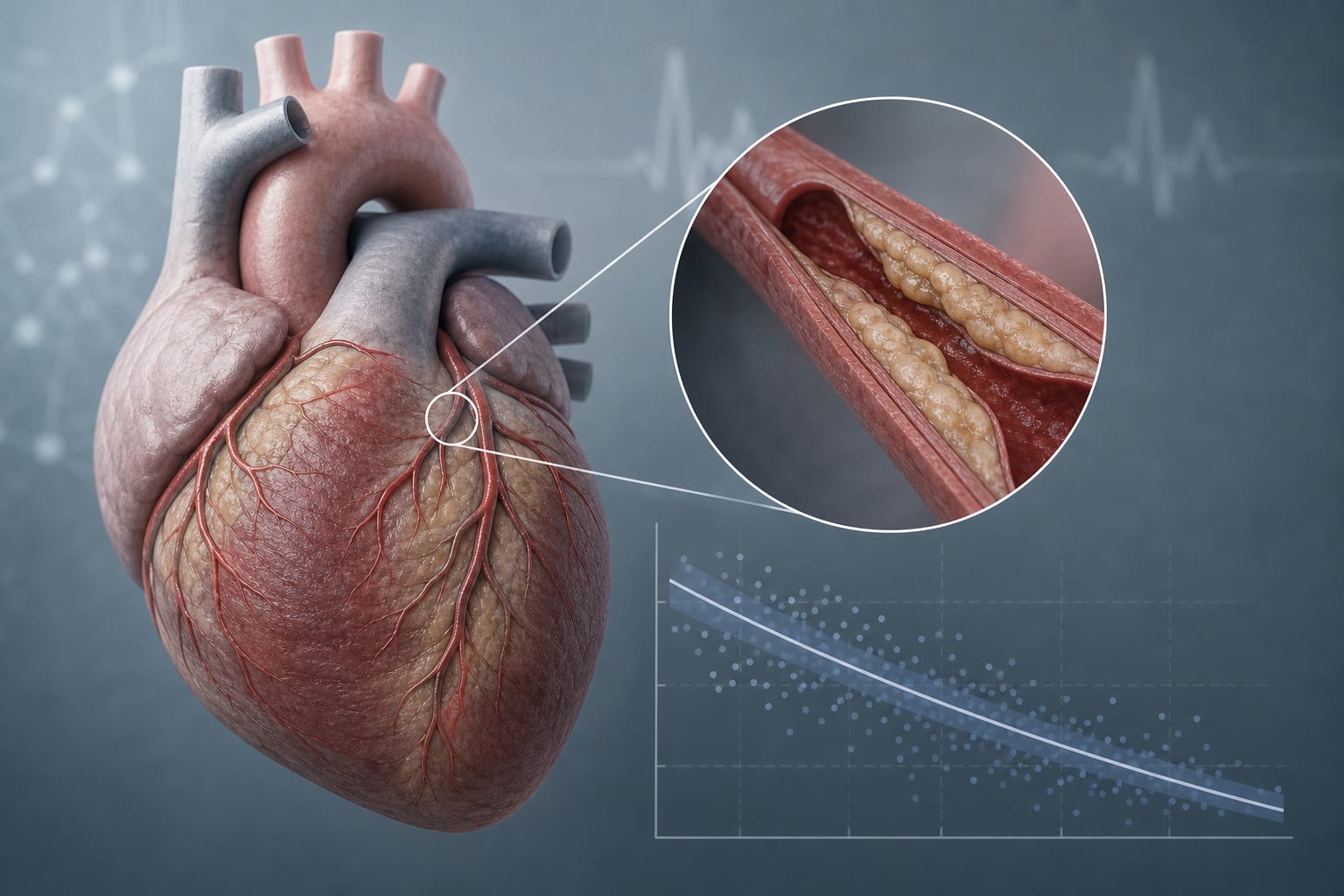
Restricted cubic spline analyses indicated dose-response relationships between SPISE and coronary disease severity.
Clinical Implications
The findings indicate a relationship between SPISE and severe coronary anatomical involvement in ACS.
Conclusion
Higher SPISE values are linked to lower odds of severe coronary disease in ACS patients aged 45 and older, particularly in those younger than 65.