Clinical Report: Exploring the Role of miRNA Biomarkers in Acute Myocardial Infarction Patients
Overview
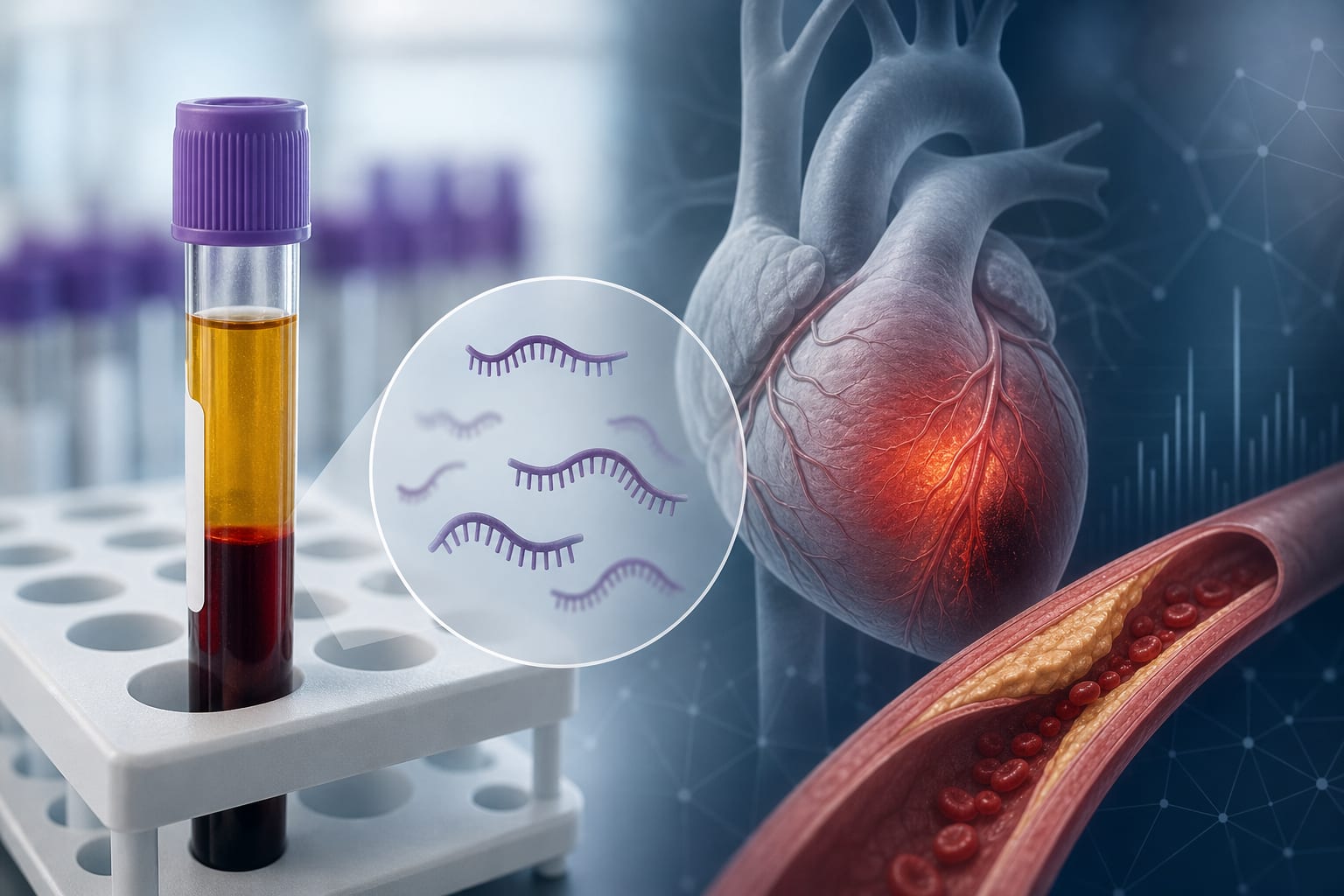
This study investigates the expression of circulating microRNAs (miRNAs) in patients with acute myocardial infarction (AMI) compared to stable coronary artery disease (CAD) patients and healthy controls. Significant upregulation and downregulation of specific miRNAs were identified, indicating their potential as biomarkers for AMI.
Background
Acute myocardial infarction (AMI) is a major global health concern, particularly in South Asian populations where it occurs at an earlier age and with greater severity. The identification of reliable biomarkers for early diagnosis and prognosis of AMI is crucial for improving patient outcomes. Circulating microRNAs (miRNAs) have emerged as promising non-invasive biomarkers that may enhance our understanding of the molecular mechanisms underlying AMI.
Data Highlights
miRNA
Expression Change
p-value
let-7b
Upregulated
< 0.05
let-7c-5p
Upregulated
< 0.05
miR-24-1
Upregulated
< 0.05
miR-342-3p
Upregulated
< 0.05
miR-362-3p
Upregulated
< 0.05
miR-4485-3p
Downregulated
< 0.05
miR-494-3p
Downregulated
< 0.05
miR-939
Downregulated
< 0.05
miR-4505
Downregulated
< 0.05
Key Findings
Significant upregulation of let-7b, let-7c-5p, miR-24-1, miR-342-3p, and miR-362-3p in AMI patients.
Downregulation of miR-4485-3p, miR-494-3p, miR-939, and miR-4505 in AMI patients.
Distinct segregation of AMI cases from CAD patients in clustering analyses.
Pathway enrichment analysis implicated ECM–receptor interaction, platelet activation, and PI3K/AKT signaling in AMI.
ROC analysis showed miR-4485-3p with an AUC of 1.000, indicating excellent discriminatory performance.
No significant expression differences for miR-3195 and miR-6780b-5p between CAD and AMI patients.
Clinical Implications
The findings suggest that circulating miRNAs could serve as valuable biomarkers for the early diagnosis and prognosis of AMI, particularly in South Asian populations. Clinicians may consider integrating miRNA profiling into diagnostic pathways to enhance patient management strategies.
Conclusion
This study underscores the potential of circulating miRNAs as biomarkers for AMI, highlighting their role in reflecting key molecular processes associated with the condition. Further research is warranted to validate these findings and explore their clinical applications.
Pregnant patients who sat less and moved more at light intensity had a lower risk of adverse outcomes in a prospective cohort study, but the findings do not prove causation.