Clinical Report: Ultrastructural Analysis of Lewy Pathology in PD and DLB
Overview
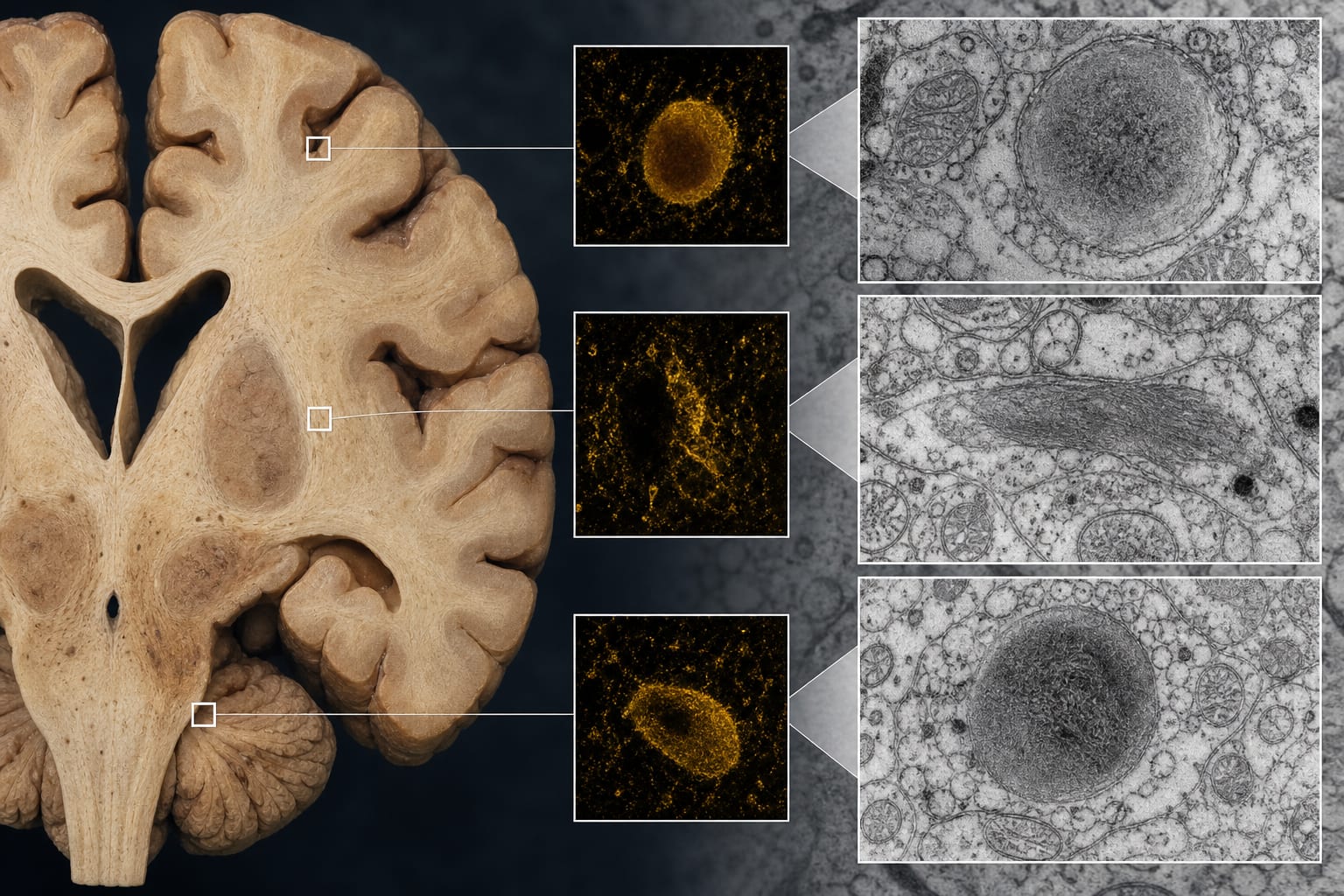
This study investigates the regional diversity of alpha-synuclein pathology in Parkinson's disease (PD) and dementia with Lewy bodies (DLB) using correlative light and electron microscopy. Findings reveal that Lewy body ultrastructure varies by brain region.
Background
Parkinson's disease and dementia with Lewy bodies are neurodegenerative disorders characterized by the accumulation of alpha-synuclein, leading to Lewy bodies and neurites. Understanding the differences in Lewy pathology between these conditions is important due to their overlapping clinical features and underlying mechanisms.
Data Highlights
No numerical data or trial data was provided in the source material.
Key Findings
Lewy body ultrastructure varies by brain region, with distinct fibrillar densities observed in the entorhinal cortex and anterior cingulate cortex.
Inclusion morphology in PD and DLB shows significant differences, particularly in cortical regions.
Neuritic pathology was described across multiple cortical regions in DLB for the first time.
Regional and disease-specific differences in mitochondrial morphology were associated with alpha-synuclein inclusions.
Findings extend previous ultrastructural descriptions of cortical Lewy pathology, emphasizing its molecular complexity.
Clinical Implications
The study's findings may assist in understanding regional pathology in PD and DLB.
Conclusion
This research provides new insights into the regional heterogeneity of Lewy pathology in PD and DLB, emphasizing the need for further studies to elucidate the implications of these findings on clinical practice.
by Notash Shafiei, Daria Proniakova, Marija Simjanoska, Anniken Mathea Rafnum Sjødal, Daniel Stähli, Lukas van den Heuvel, Marta Di Fabrizio, Eve Aaron, Sandor Kasas, Mathis Solal Krause, Mallory Wittwer, Julika Radecke, Henning Stahlberg, Wilma D. J. van de Berg, Amanda J. Lewis