Integrative Multi-Omics Investigation of Kidney Renal Clear Cell Carcinoma
Overview
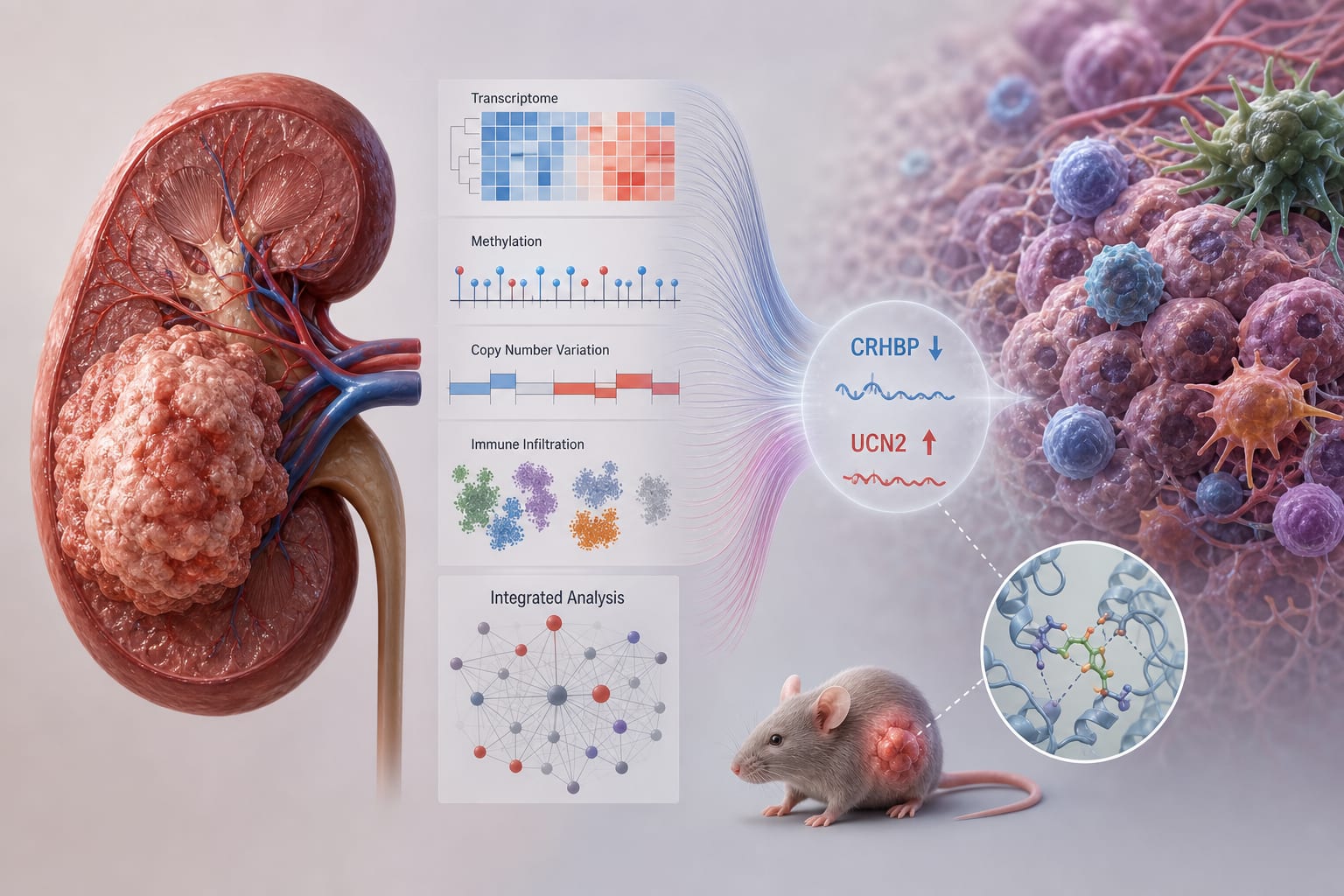
This study identifies CRHBP as a key downregulated prognostic biomarker in kidney renal clear cell carcinoma (KIRC) and explores its relationship with UCN2 and immune microenvironment factors. The findings suggest potential therapeutic targets and biomarkers for improving patient outcomes.
Background
Kidney renal clear cell carcinoma (KIRC) is a prevalent and aggressive form of kidney cancer, often associated with poor prognosis due to late diagnosis and metastasis. Understanding the genomic and immune landscape of KIRC is crucial for developing effective therapeutic strategies and improving patient survival rates. This study aims to integrate multi-omics data to identify biomarkers that can inform prognosis and treatment.
Data Highlights
Biomarker
Expression
Survival Predictive Value
CRHBP
Downregulated
OS HR = 0.42, 95%CI: 0.395–0.45, P<0.05
UCN2
Elevated in KIRC tissues
Negatively correlated with tumor angiogenesis and hypoxia
Key Findings
CRHBP is a core downregulated prognostic biomarker in KIRC.
CRHBP expression is stage-dependent and correlates with favorable survival outcomes.
UCN2 is confirmed as a causal risk factor for KIRC and is negatively correlated with tumor characteristics.
Dabrafenib shows promise as a candidate drug targeting the CRHBP/UCN2 axis.
Single-cell RNA sequencing reveals differential regulation of CRHBP by immune checkpoint blockade treatment.
Clinical Implications
CRHBP may serve as a reliable prognostic biomarker for KIRC, aiding in patient stratification and treatment planning. The identification of the CRHBP-UCN2 axis provides a potential target for therapeutic intervention in KIRC.
Conclusion
The study highlights the significance of the CRHBP-UCN2 axis in KIRC prognosis and immune microenvironment dynamics, suggesting avenues for future research and therapeutic development.