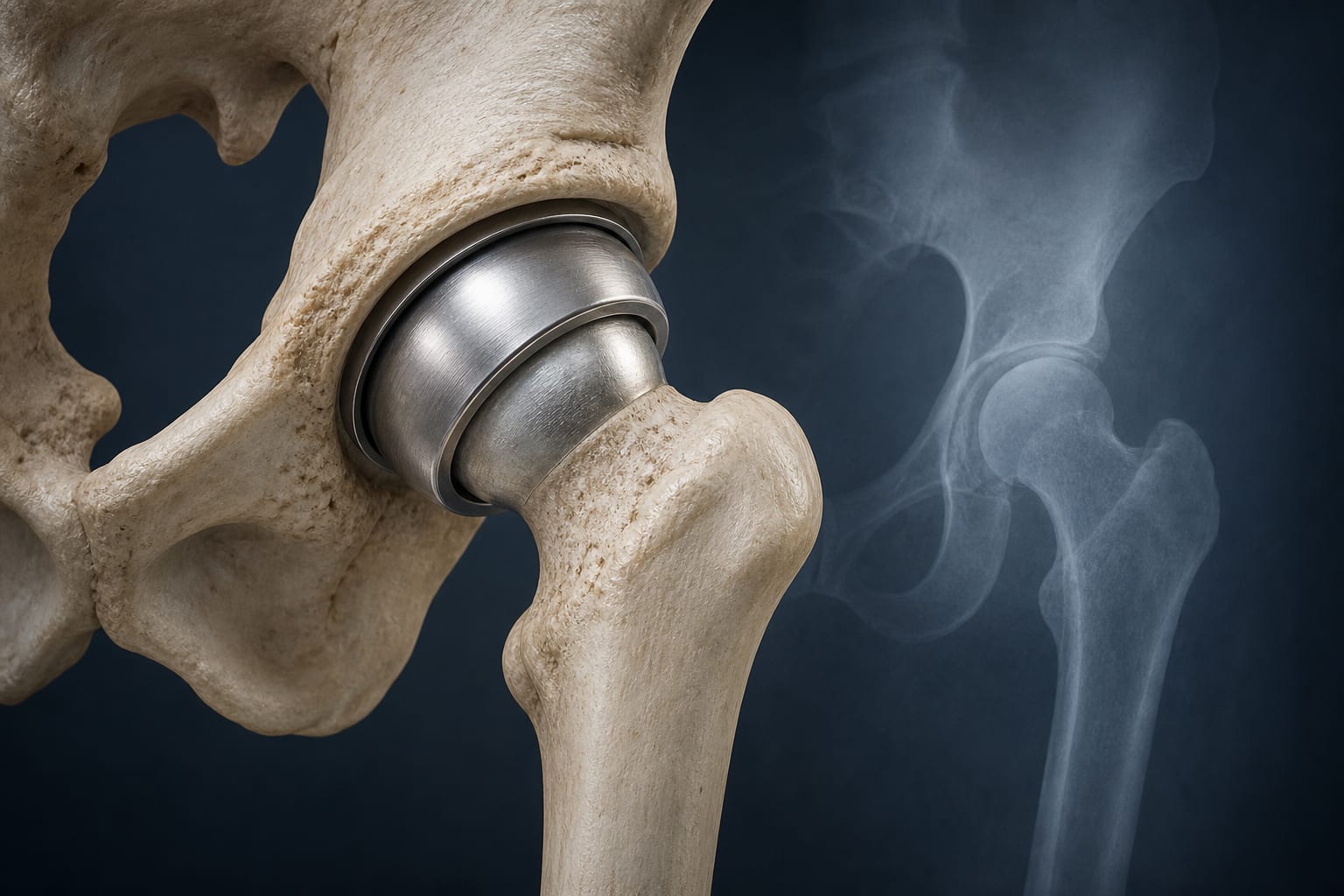
Hip resurfacing arthroplasty at a minimum of 14 years: revision is concentrated among female patients with dysplasia and small components - Report - MDSpire
Long-term Outcomes of Hip Resurfacing Arthroplasty: Higher Revision Rates in Female Patients with Dysplasia and Smaller Components After 14 Years
Overview
This study evaluates long-term outcomes of hip resurfacing arthroplasty (HRA) after a minimum follow-up of 14 years, highlighting higher revision rates in female patients with developmental dysplasia of the hip (DDH) and smaller component sizes. Dysplastic hips have poorer survivorship compared to hips with primary osteoarthritis or non-OA etiologies.
Background
Hip resurfacing arthroplasty (HRA) is a bone-conserving alternative to total hip arthroplasty (THA) for young, active patients with advanced hip disease. Understanding the long-term outcomes and factors influencing survivorship is crucial, particularly as female patients and those with smaller components are at increased risk for implant failure.
Data Highlights
No numerical data or trial data provided in the source material.
Key Findings
Survivorship rates for HRA after 20 years are 96.5% for men and 87.0% for women.
By 25 years, survivorship rates decrease to 89.5% for men and 66.9% for women.
Female sex, smaller component size, and developmental dysplasia of the hip (DDH) are identified as risk factors for failure.
Dysplasia alone does not constitute a contraindication to resurfacing when adjusted for sex and component size.
Long-term outcomes for non-OA causes, including avascular necrosis (AVN), remain inadequately defined.
Clinical Implications
The findings emphasize the need for careful patient selection in HRA, particularly for female patients and those with smaller components. Clinicians should consider these factors when discussing surgical options and potential outcomes with patients.
Conclusion
This study highlights the importance of understanding the long-term outcomes of HRA, particularly in at-risk populations, to inform clinical decision-making and improve patient care.