Intrathecal nivolumab in metastatic solid tumors with leptomeningeal disease: dose escalation part of the multicenter IT-PD1/NOA-26 phase 1 trial - Report - MDSpire
Conexiant’s news site is now MDSpire News. Learn more
Advertisement
Intrathecal Administration of Nivolumab for Leptomeningeal Disease in Metastatic Solid Tumors: Dose Escalation Findings from the Multicenter IT-PD1/NOA-26 Phase 1 Study
Clinical Report: Intrathecal Administration of Nivolumab for Leptomeningeal Disease
Overview
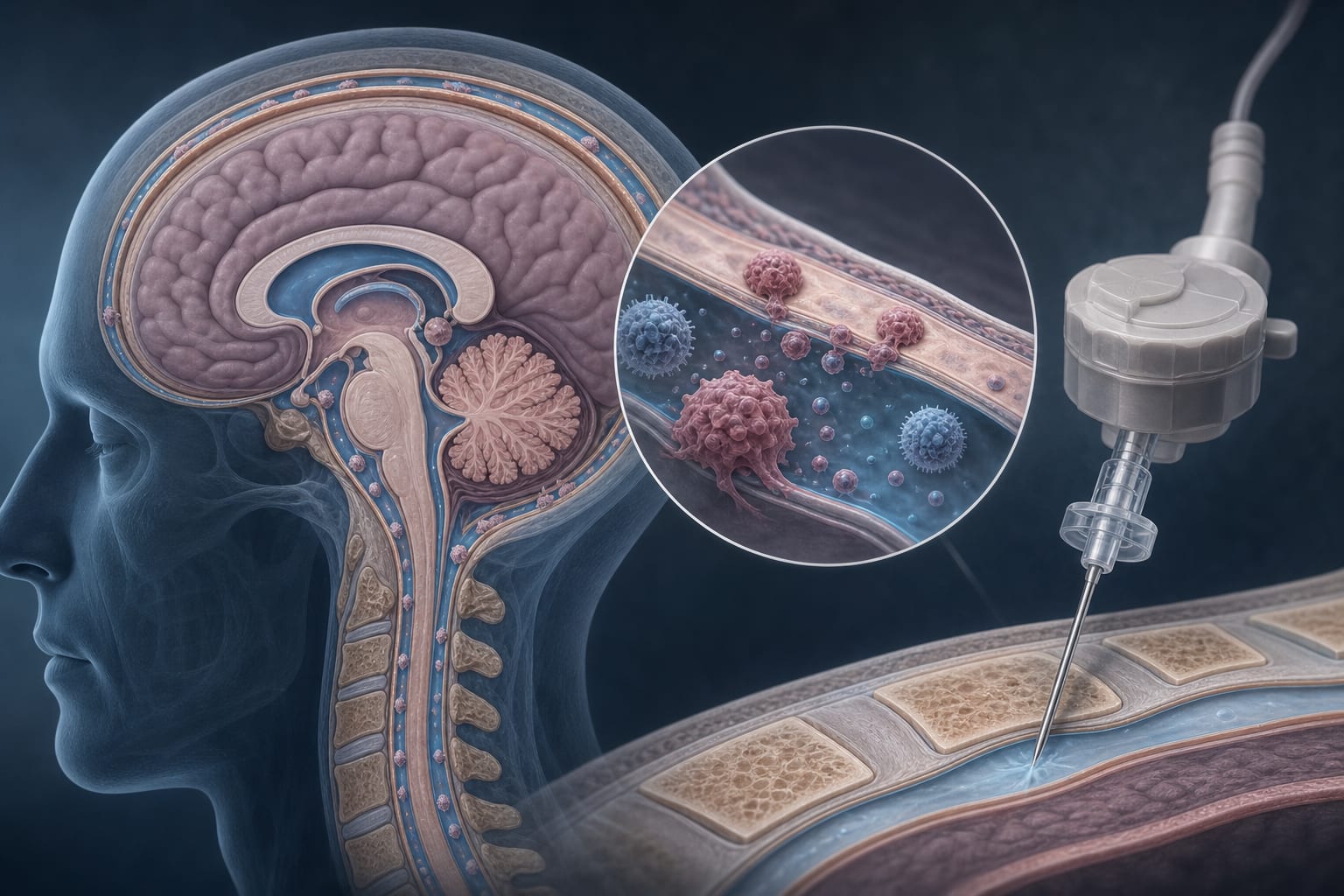
This report presents findings from the IT-PD1/NOA-26 phase 1 trial, which evaluated the safety and feasibility of intrathecal nivolumab in patients with leptomeningeal disease (LMD) from various solid tumors. The trial aims to explore localized immune modulation as a potential treatment strategy for this aggressive condition.
Background
Leptomeningeal disease (LMD) is a severe complication of solid tumors, affecting approximately 5–10% of patients and associated with poor prognosis. Current treatment options are limited, and LMD is characterized by rapid neurological decline and a median overall survival of only 4 to 8 weeks post-diagnosis. The exploration of immune checkpoint inhibitors like nivolumab represents a novel approach to managing this challenging condition.
Data Highlights
No numerical data available in the provided source material.
Key Findings
The IT-PD1/NOA-26 trial is a phase 1 study investigating intrathecal nivolumab for LMD.
Participants included those with a high tumor mutational burden (>10 mutations per Mb).
The trial design features a dose escalation phase with four levels: 20, 30, 40, and 50 mg.
Primary endpoints include safety and dose-limiting toxicity (DLT).
Secondary endpoints focus on overall survival and participant-reported outcomes.
Clinical Implications
The findings from this trial may inform future studies on the use of intrathecal immunotherapy in LMD. Understanding the safety profile and potential efficacy of localized immune modulation could lead to improved management strategies for patients with this condition.
Conclusion
The IT-PD1/NOA-26 trial provides valuable insights into the feasibility of intrathecal nivolumab for LMD, warranting further investigation into compartment-specific immunotherapy approaches.
by Ghazaleh Tabatabai, Isabel Ramirez, Beatrix Welte, Paula Bombach, Hannes Becker, Denise Bernhardt, Regine Mayer-Steinacker, Friedegund Meier, Nicolas Neidert, Roland Roelz, Iris Mildenberger, Lukas Bunse, Michael Platten, Ulrich Herrlinger, Uwe M. Martens, Ulrike Ernemann, Manuela Neumann, Marcos Tatagiba, Lina Maria Serna-Higuita, Peter Martus, Mirjam Renovanz