Clinical Report: THOR Methylation as a Mechanism for TERT Activation in Cancer
Overview
THOR methylation is identified as a significant epigenetic mechanism driving TERT activation across various cancers. This review discusses its biological role and molecular mechanisms.
Background
Telomerase activation, primarily through TERT re-expression, is crucial in oncogenesis. While TERT promoter mutations are well-known mechanisms, many cancers exhibit telomerase activity without these mutations.
Data Highlights
No numerical data or trial data provided in the source material.
Key Findings
THOR methylation is associated with increased TERT expression in various cancers.
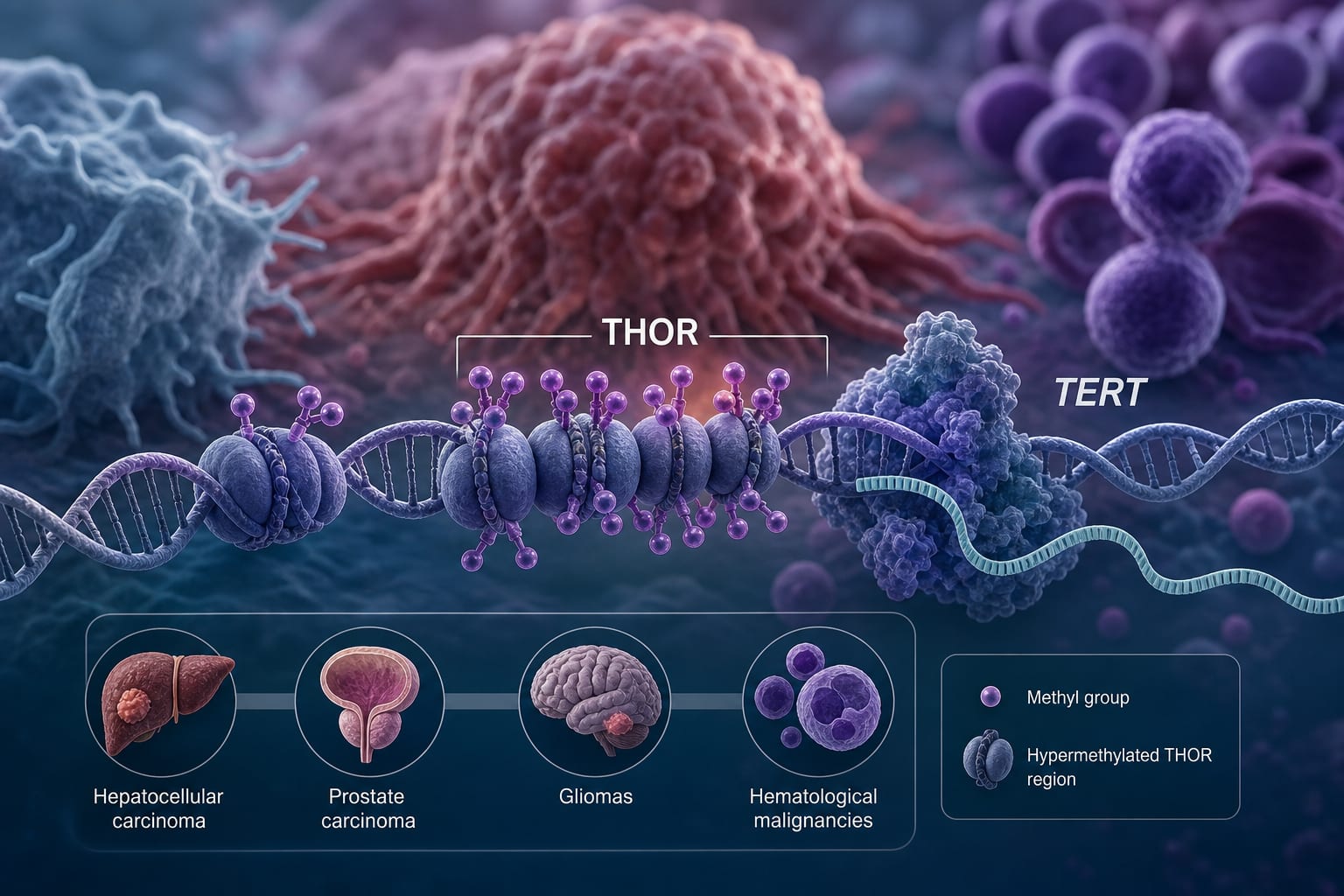
Hypermethylation of THOR prevents the binding of transcriptional repressors, facilitating TERT transcription.
THOR methylation patterns differ from classical promoter methylation.
Evidence suggests THOR methylation is present in gliomas, hepatocellular carcinoma, prostate cancer, and other malignancies.
Current limitations include methodological heterogeneity and the need for assay standardization.
Clinical Implications
Further research is needed to standardize assays and validate THOR's clinical utility.
Conclusion
THOR methylation represents a critical mechanism of telomerase activation in cancer.