The effect of non-immersive virtual reality on upper limb motor function and activities of daily living in stroke patients: a systematic review and meta-analysis - Report - MDSpire
Advertisement
The effect of non-immersive virtual reality on upper limb motor function and activities of daily living in stroke patients: a systematic review and meta-analysis
Clinical Report: Impact of Non-Immersive Virtual Reality on Stroke Recovery
Overview
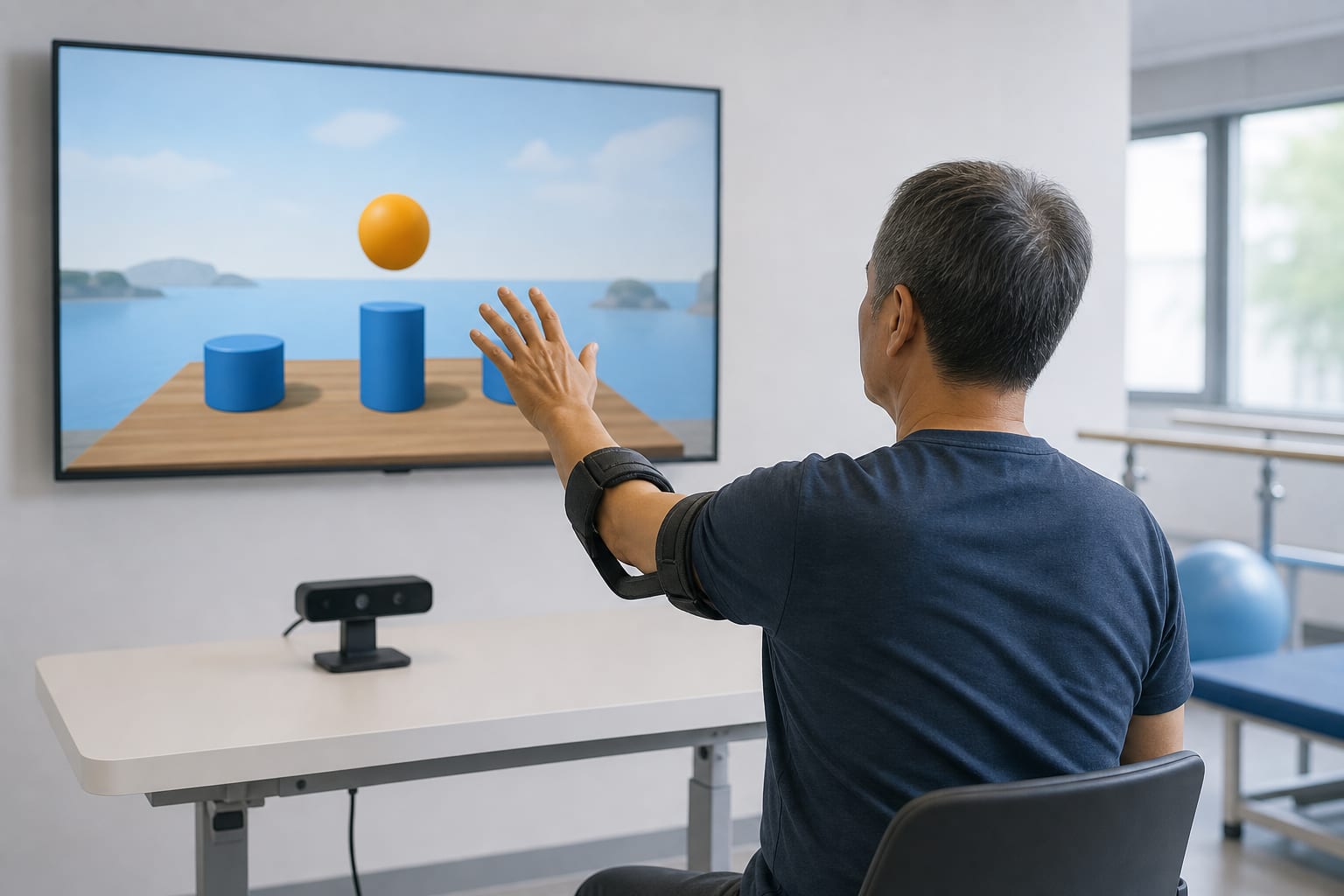
This systematic review and meta-analysis found that non-immersive virtual reality (NIVR) significantly improves upper limb motor function and activities of daily living in stroke survivors when combined with conventional therapy.
Background
Stroke is a major cause of disability, with upper limb dysfunction affecting a significant proportion of survivors. Conventional rehabilitation methods often face challenges such as low patient adherence and limited access.
Data Highlights
Outcome Measure
Mean Difference (MD)
95% Confidence Interval (CI)
Fugl-Meyer Assessment for Upper Extremity (FMA-UE)
5.40
(1.58, 9.22)
Box and Block Test (BBT)
4.57
(0.35, 8.79)
Functional Independence Measure (FIM)
5.99
(2.27, 9.71)
Barthel Index/Modified Barthel Index (BI/MBI)
5.47
(0.30, 10.63)
Key Findings
NIVR significantly improved upper limb motor function as measured by FMA-UE and BBT.
Functional Independence Measure (FIM) scores showed significant improvement with NIVR.
Barthel Index/Modified Barthel Index (BI/MBI) analysis indicated a marginally significant effect.
Subgroup analyses for BI and MBI did not reach statistical significance, suggesting limited power.
Three studies had dose imbalances, which may affect the interpretation of results.
The review included 12 randomized controlled trials with a total of 498 stroke patients.
Clinical Implications
Clinicians should consider the potential benefits of incorporating NIVR into rehabilitation programs.
Conclusion
NIVR appears to enhance upper limb function and activities of daily living in stroke survivors.