Impact of exercise rehabilitation and behavioral interaction nursing on postoperative quality of life and psychological outcomes in lung cancer patients - Report - MDSpire
Advertisement
Impact of exercise rehabilitation and behavioral interaction nursing on postoperative quality of life and psychological outcomes in lung cancer patients
Effects of Combined Exercise Rehabilitation and Behavioral Nursing on Postoperative Quality of Life and Psychological Well-Being in Lung Cancer Patients
Overview
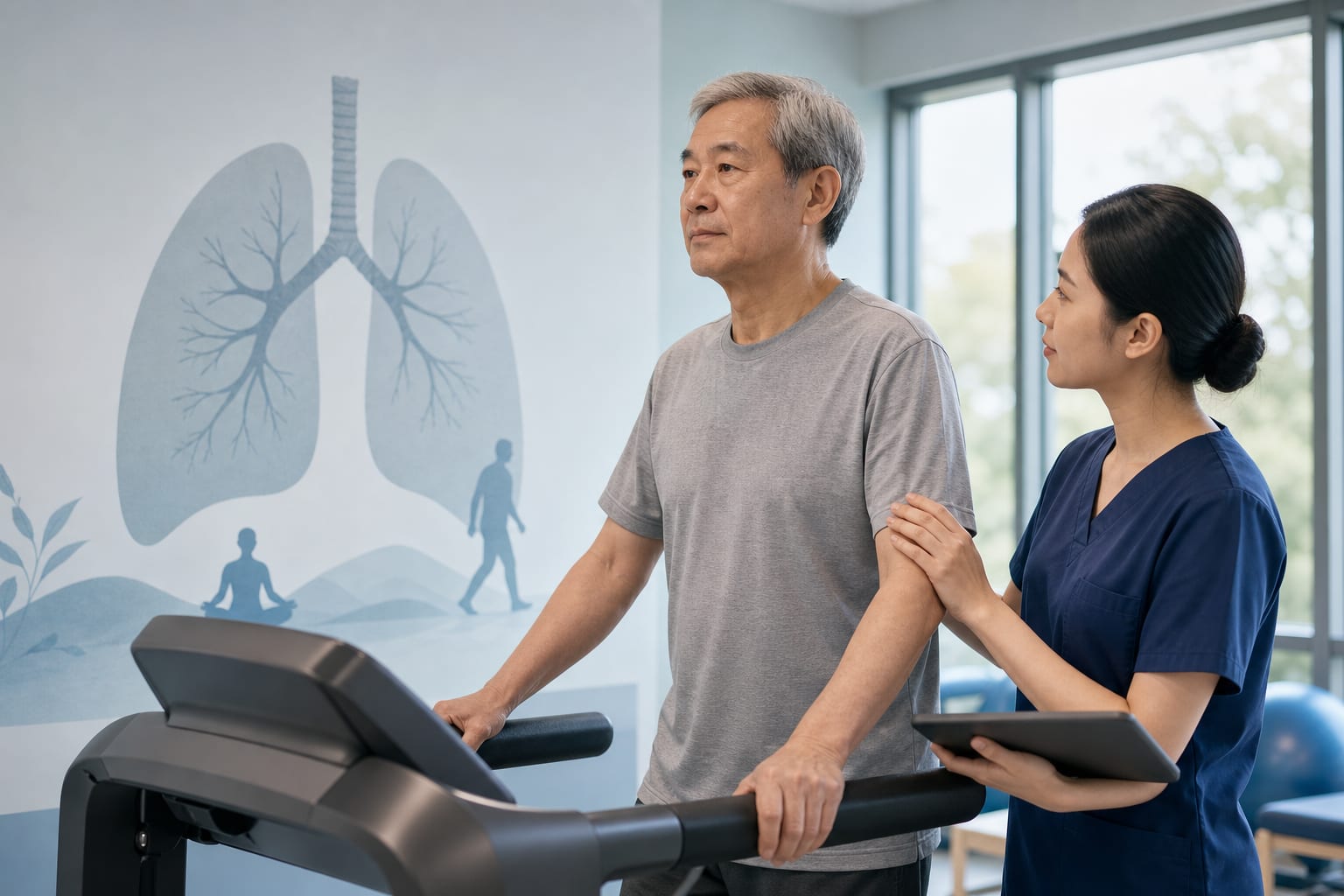
This study evaluates the impact of combined exercise rehabilitation and behavioral nursing on postoperative outcomes in lung cancer patients. Significant improvements in quality of life, arterial oxygenation, muscle tone recovery, and psychological well-being were observed in the intervention group compared to controls.
Background
Lung cancer remains the leading cause of cancer-related mortality, with significant postoperative challenges affecting recovery and quality of life. The interplay between physical and psychological factors during recovery is crucial for improving patient outcomes. Understanding effective rehabilitation strategies is essential for enhancing postoperative recovery in lung cancer patients.
Data Highlights
Outcome
Intervention Group
Control Group
P-value
Quality of Life (QLICP-LU)
79.6 ± 6.3
60.5 ± 9.2
<0.001
PaO2 (mmHg)
89.3 ± 5.7
78.2 ± 6.1
<0.001
SaO2 (%)
98.0 ± 1.3
94.5 ± 2.0
<0.001
Muscle Tone Recovery (Upper Extremities)
48.2% improvement
-
<0.001
Muscle Tone Recovery (Lower Extremities)
55.5% improvement
-
<0.001
Depression Prevalence
17.5%
46.1%
<0.001
Anxiety Prevalence
24.3%
52.0%
<0.001
Key Findings
Quality of life scores improved by 27.3% in the intervention group.
Significant improvements in arterial oxygenation were observed (PaO2 and SaO2).
Muscle tone recovery showed substantial enhancements in both upper and lower extremities.
Systemic inflammation decreased markedly, with a 20.9% reduction in hs-CRP levels.
Depression prevalence decreased by 62.0%, and anxiety declined by 53.3% in the intervention group.
Improvements in hope scores (34.5%) and self-efficacy (28.5%) were noted.
Clinical Implications
The findings suggest that integrating exercise rehabilitation with behavioral nursing may enhance postoperative recovery in lung cancer patients. Clinicians should consider these combined approaches to improve both physical and psychological outcomes in this patient population.
Conclusion
The study indicates that combined exercise rehabilitation and behavioral nursing can significantly improve postoperative recovery in lung cancer patients. Further prospective randomized controlled trials are needed to confirm these findings.