Clinical Report: Radiological Risk Factors in T2-T3 Glottic Carcinoma Patients
Overview
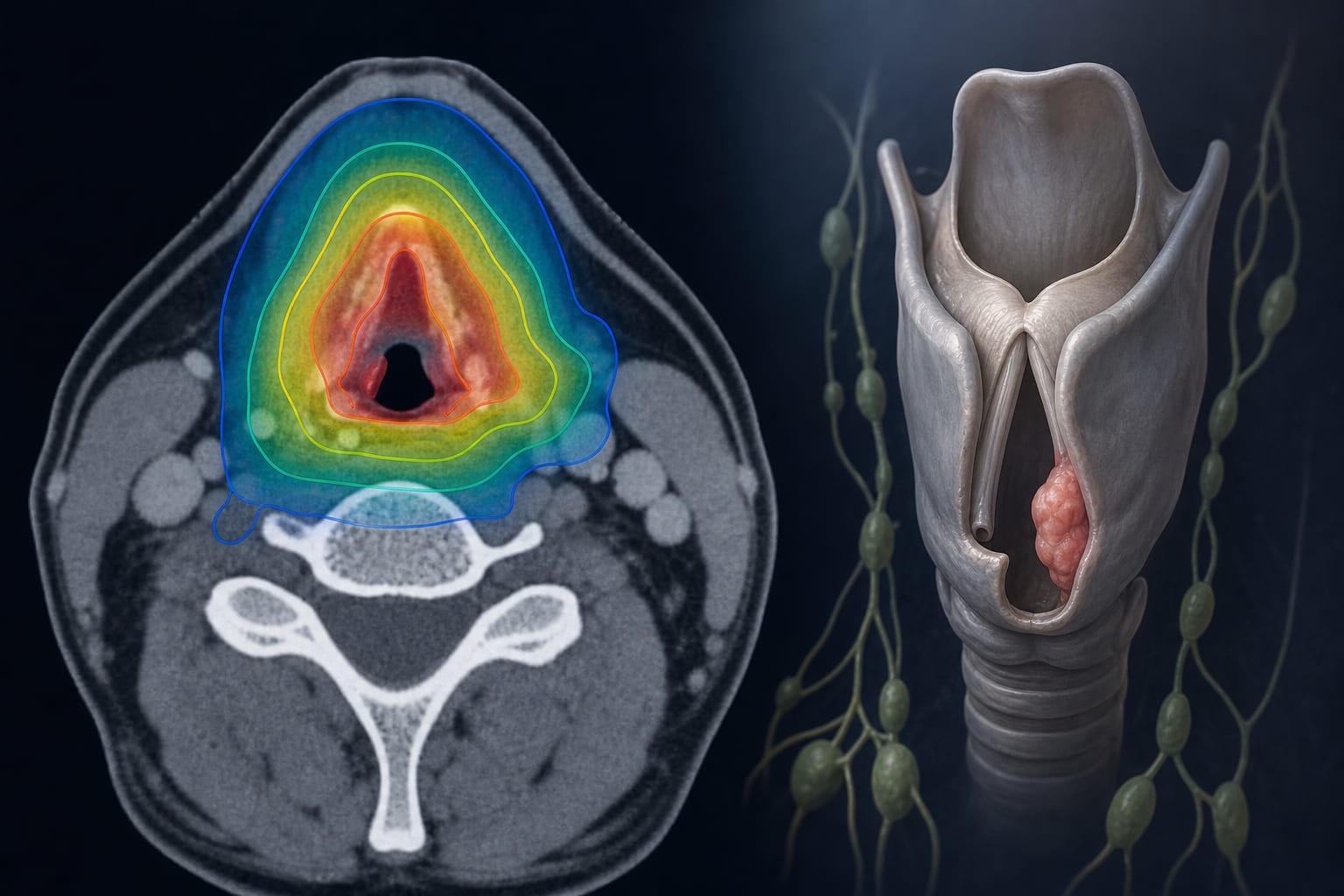
This multicenter study investigates radiological risk factors associated with radiation failure in T2-T3 glottic carcinoma patients undergoing (chemo)radiotherapy.
Background
The management of T2-T3 glottic carcinoma is complex due to the intricate anatomy of the larynx and varying tumor spread patterns. This study aims to clarify the effectiveness of (C)RT compared to surgical options in high-risk tumor sub-localizations.
Data Highlights
No numerical data or trial data provided in the source material.
Key Findings
Identified vertical anterior commissure involvement as a predictive factor for radiation failure.
Horizontal anterior commissure involvement and deep vocal muscle infiltration showed non-significant trends toward poorer outcomes.
Patients with surgical risk factors may not necessarily have better outcomes with conservative treatment.
Understanding tumor behavior is essential for adequate treatment comparison and patient counseling.
Current TNM system inconsistencies may impact treatment and follow-up strategies.
Clinical Implications
Clinicians should evaluate radiological characteristics in T2-T3 glottic carcinoma patients to identify those at higher risk for radiation failure.
Conclusion
The study emphasizes the need for further investigation into the predictors of radiation failure in glottic carcinoma.
by Agatha S. Baidun, Yves M. H. F. Gorissen, Martine Hendriksma, Renske Gahrmann, Jose A. Hardillo, Sjoert Pegge, Robert P. Takes, Guido B. van den Broek, Martin A. de Jong, Federica Lucev, Elisabeth V. Sjogren, Berit M. Verbist