Comparative efficacy of virtual reality, robotics, and brain–computer interface interventions for upper limb rehabilitation after stroke: a systematic review and network meta-analysis - Report - MDSpire
Conexiant’s news site is now MDSpire News. Learn more
Advertisement
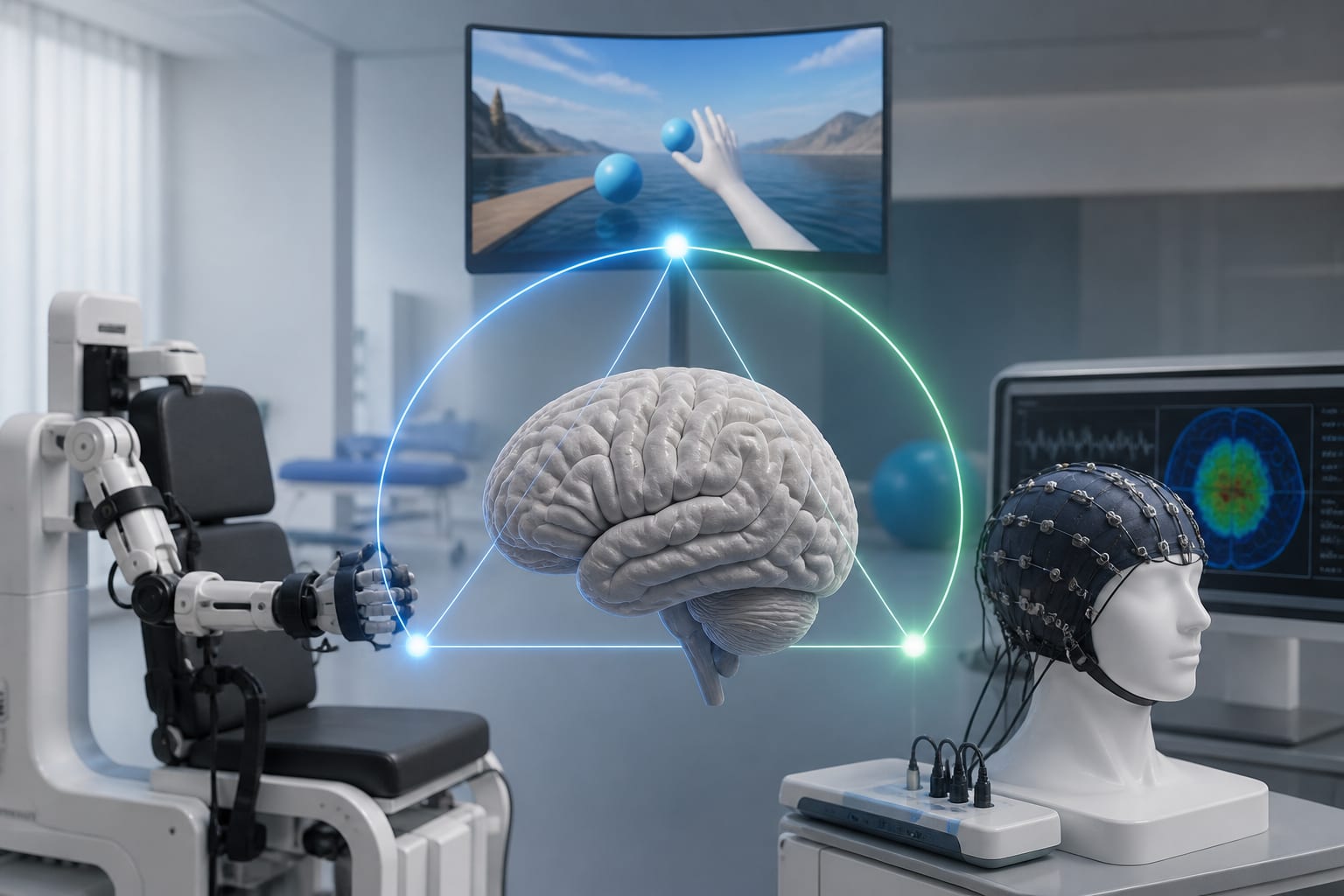
Efficacy Comparison of Virtual Reality, Robotics, and Brain-Computer Interface Techniques for Upper Limb Rehabilitation Post-Stroke: A Systematic Review and Network Meta-Analysis
Clinical Report: Efficacy Comparison of VR, Robotics, and BCI for Stroke Rehab
Overview
This systematic review and network meta-analysis evaluated the effectiveness of virtual reality (VR), robotics (ROT), and brain-computer interface (BCI) interventions for upper limb rehabilitation post-stroke.
Background
Upper-limb motor impairment is a common consequence of stroke, affecting a significant proportion of survivors and impacting their quality of life. Conventional physical therapy often lacks the intensity and engagement necessary for optimal recovery. Emerging technologies such as VR, ROT, and BCI have been studied, but comparative effectiveness data is limited.
Data Highlights
Intervention
SUCRA Value
Number of Studies
ROT-RFE
0.91
1
ROT-CPT
0.70
2
ROT
0.71
3
VR-CPT
0.59
1
Key Findings
Robotics-based interventions had the highest SUCRA ranking for improving upper-limb motor function.
ROT-CPT showed evidence for enhancing activities of daily living (MBI).
VR-based interventions provided benefits compared to robotics.
BCI interventions were represented by limited data, making conclusions difficult.
Patient characteristics may influence treatment effects, as suggested by subgroup analyses.
Clinical Implications
Clinicians should consider the findings when selecting rehabilitation strategies for their patients.
Conclusion
Robotics interventions demonstrate evidence for post-stroke upper-limb rehabilitation, while VR and BCI show limited effectiveness based on current data.
Baptist Health will bring together leading physicians, researchers and healthcare professionals from South Florida and across the country for the 14th Annual Baptist Health Miami Neuroscience Symposium, taking place Nov. 4-6, 2026, at Hilton Miami Dadeland and virtually via Zoom.