Clinical Report: The Role and Mechanisms of DOCK8 in Immune Cell Function
Overview
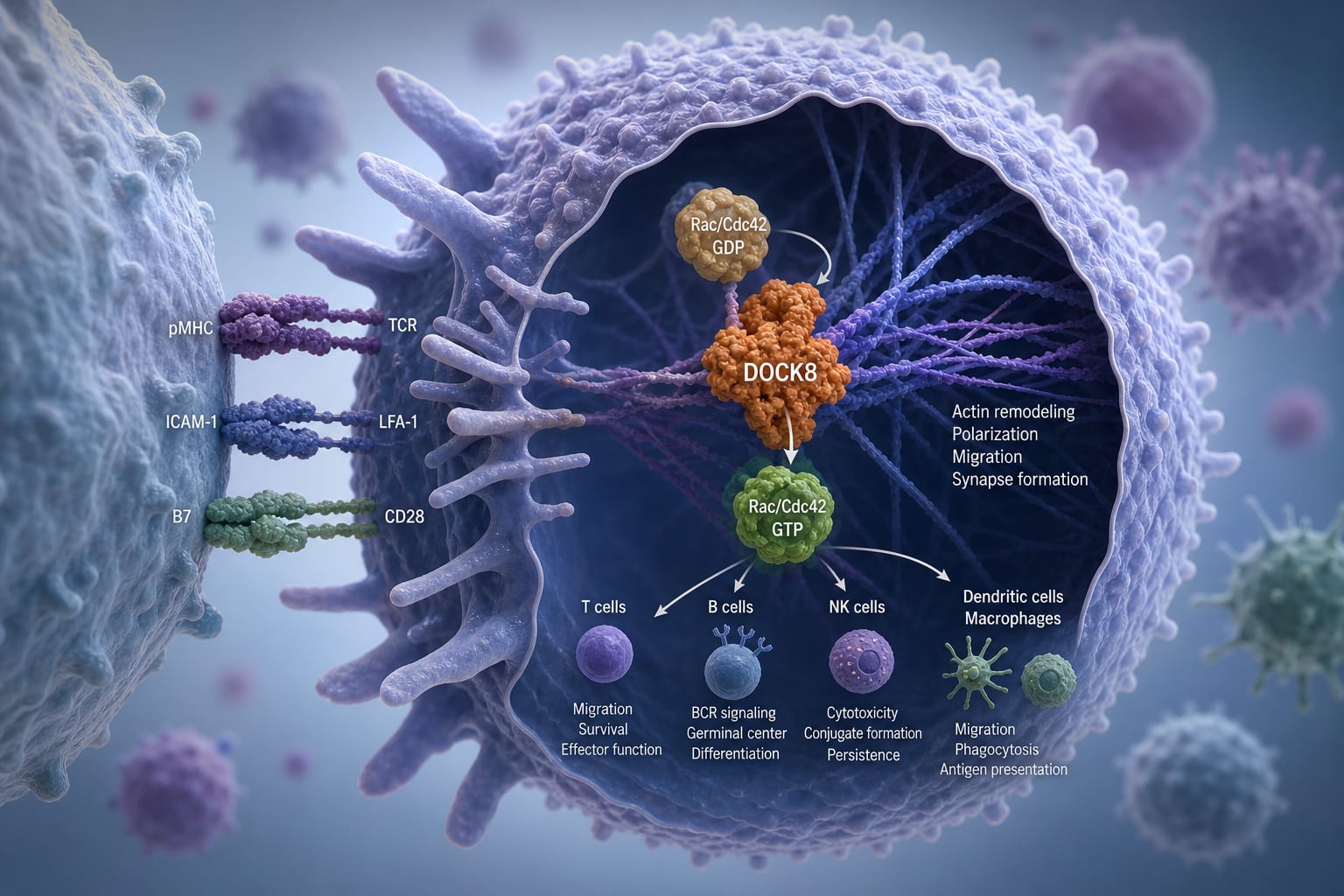
DOCK8 is a crucial guanine nucleotide exchange factor that regulates immune cell function by activating Rho family GTPases, particularly Cdc42. Its deficiency leads to a complex immunodeficiency syndrome characterized by increased susceptibility to infections and allergic manifestations.
Background
DOCK8 plays a vital role in both innate and adaptive immunity, influencing T cell migration, B cell signaling, and NK cell activity. Understanding its mechanisms is essential for developing targeted therapies for conditions associated with DOCK8 deficiency, which presents with severe immunological challenges, including recurrent infections and allergic diseases.
Data Highlights
No numerical data or trial data provided in the source material.
Key Findings
DOCK8 functions as an atypical guanine nucleotide exchange factor, primarily activating Cdc42.
It is essential for T cell migration, immunological synapse assembly, and long-term survival.
In B cells, DOCK8 fine-tunes BCR signaling and facilitates germinal center reactions.
Deficiency in DOCK8 leads to a combined immunodeficiency syndrome with recurrent infections and allergic manifestations.
Clinicians should be aware of the critical role of DOCK8 in immune function and the implications of its deficiency. Early diagnosis and management strategies, including potential hematopoietic stem cell transplantation, are essential for improving patient outcomes.
Conclusion
DOCK8 is a key regulator of immune cell function, and its deficiency results in significant clinical challenges. Further research is needed to elucidate its mechanisms and develop targeted interventions.