Comparative effectiveness of various exercise modalities on arterial stiffness and endothelial function in older adults: a systematic review and network meta-analysis of randomised controlled trials - Report - MDSpire

Comparative effectiveness of various exercise modalities on arterial stiffness and endothelial function in older adults: a systematic review and network meta-analysis of randomised controlled trials

  • By

  • Hao Wen

  • YaoSen Liu

  • Wenrui Huang

  • Zhihu Ma

  • Haibo Zhao

  • July 13, 2026

Share

Clinical Report: Efficacy of Different Exercise Modalities on Arterial Stiffness

Overview

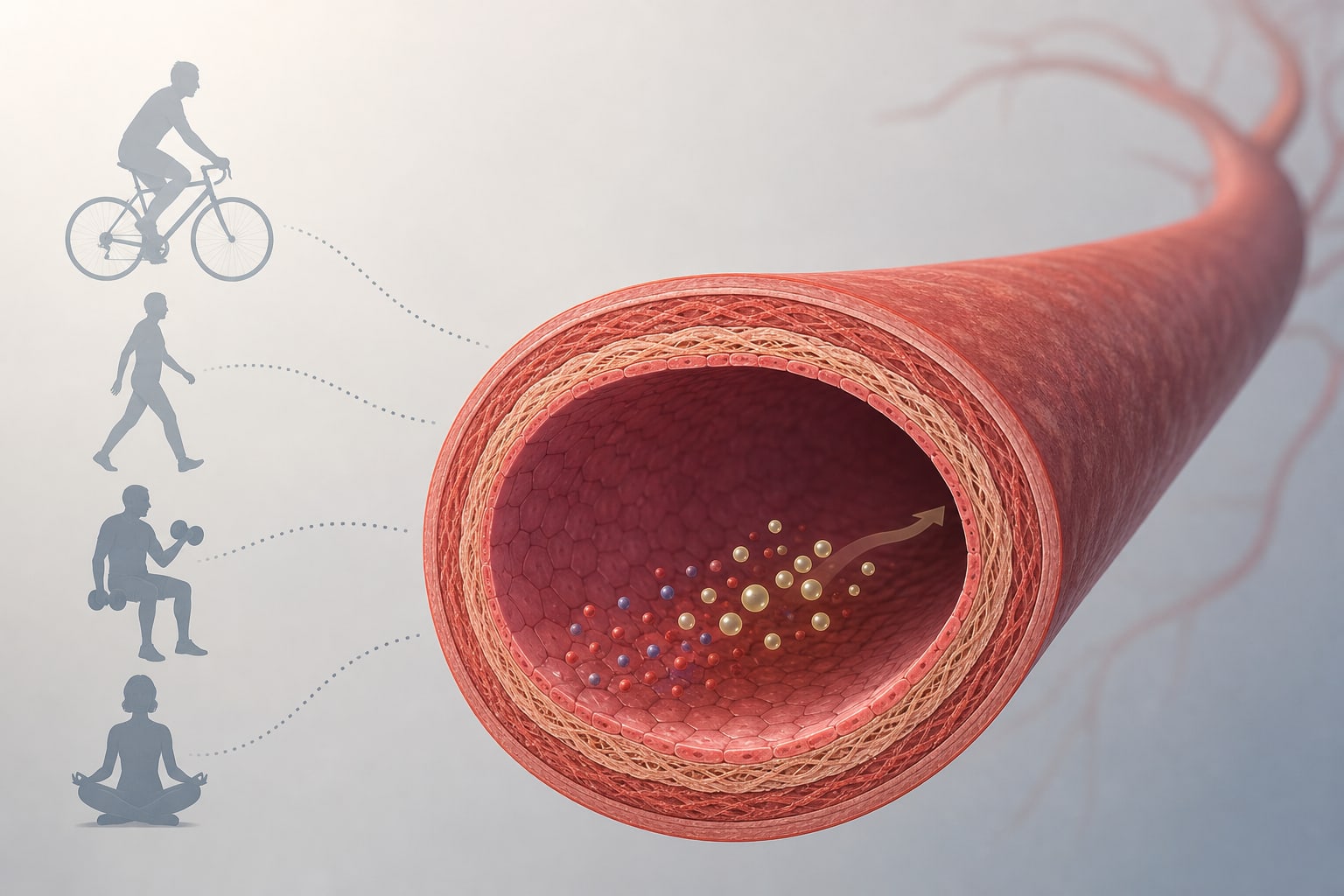
This systematic review and network meta-analysis evaluated the effects of various exercise modalities on endothelial function and arterial stiffness in older adults. Whole-body vibration and resistance training were found to enhance endothelial function, while aerobic training and walking were associated with reductions in arterial stiffness, though definitive claims of clinical superiority were not established.

Background

Vascular ageing leads to increased arterial stiffness and elevated blood pressure, significantly impacting cardiovascular health in older adults. Current pharmacological treatments may not fully address these issues.

Data Highlights

No numerical data available.

Key Findings

  • Whole-body vibration and resistance training ranked highest for enhancing endothelial function (FMD).
  • Aerobic training and walking were associated with greater improvements in arterial stiffness (baPWV).
  • Stretching exercise showed a higher probability of reducing systolic blood pressure (SBP).
  • Combined training ranked among the leading modalities for lowering diastolic blood pressure (DBP).
  • Reductions in SBP exceeding 10 mmHg are clinically relevant, correlating with a 20% reduction in major adverse cardiovascular events.
  • The certainty of evidence for FMD outcomes was moderate-to-high, while it was low-to-moderate for arterial stiffness comparisons.

Clinical Implications

Clinicians should consider incorporating specific exercise types into treatment plans for older adults to address arterial stiffness and endothelial function.

Conclusion

The findings indicate that exercise-induced vascular adaptations in older adults are modality-specific. Further research is warranted to refine clinical applications based on these results.

Related Resources & Content

  1. Frontiers in Cardiovascular Medicine, 2026 -- Comparative effectiveness of various exercise modalities on arterial stiffness and endothelial function in older adults: a systematic review and network meta-analysis of randomised controlled trials
  2. Frontiers in Cardiovascular Medicine — Can resistance training alone or resistance training combined with aerobic training improve arterial stiffness, endothelial function, and other vascular function indicators in adults with hypertension or overweight/obesity-related vascular risk? A systematic review and meta-analysis of randomized controlled trials
  3. Frontiers in Endocrinology — Does resistance training alone or in combination with aerobic training improve vascular function indices in adults with type 2 diabetes? A systematic review and meta-analysis of randomized controlled trials
  4. Frontiers in Medicine — Comparative efficacy of traditional and modern mind-body exercises in middle-aged and older adults with knee osteoarthritis: a network meta-analysis of randomized controlled trials
  5. Frontiers in Neurology — Comparative effectiveness of aerobic training intensities in chronic stroke: a network meta-analysis of randomized controlled trials
  6. Frontiers | Comparative effectiveness of various exercise modalities on arterial stiffness and endothelial function in older adults: a systematic review and network meta-analysis of randomised controlled trials
  7. Influence of different exercise types on vascular endothelial function in middle-aged and older adults – A systematic review and network meta-analysis

Original Source(s)

Related Content