Exploratory identification of candidate biomarkers and molecular contributors to paclitaxel-induced peripheral neuropathy in patients with breast cancer through proteomic analysis - Report - MDSpire

Exploratory identification of candidate biomarkers and molecular contributors to paclitaxel-induced peripheral neuropathy in patients with breast cancer through proteomic analysis

  • By

  • Nobuyoshi Kittaka

  • Hideaki Tahara

  • Takashi Akazawa

  • Yu Mizote

  • Takashi Kitajima

  • Keiichi Minami

  • Yurika Sugano

  • Takahiro Nakayama

  • June 16, 2026

  • 0 min

Share

Clinical Report: Identification of Potential Biomarkers for CIPN in Breast Cancer

Overview

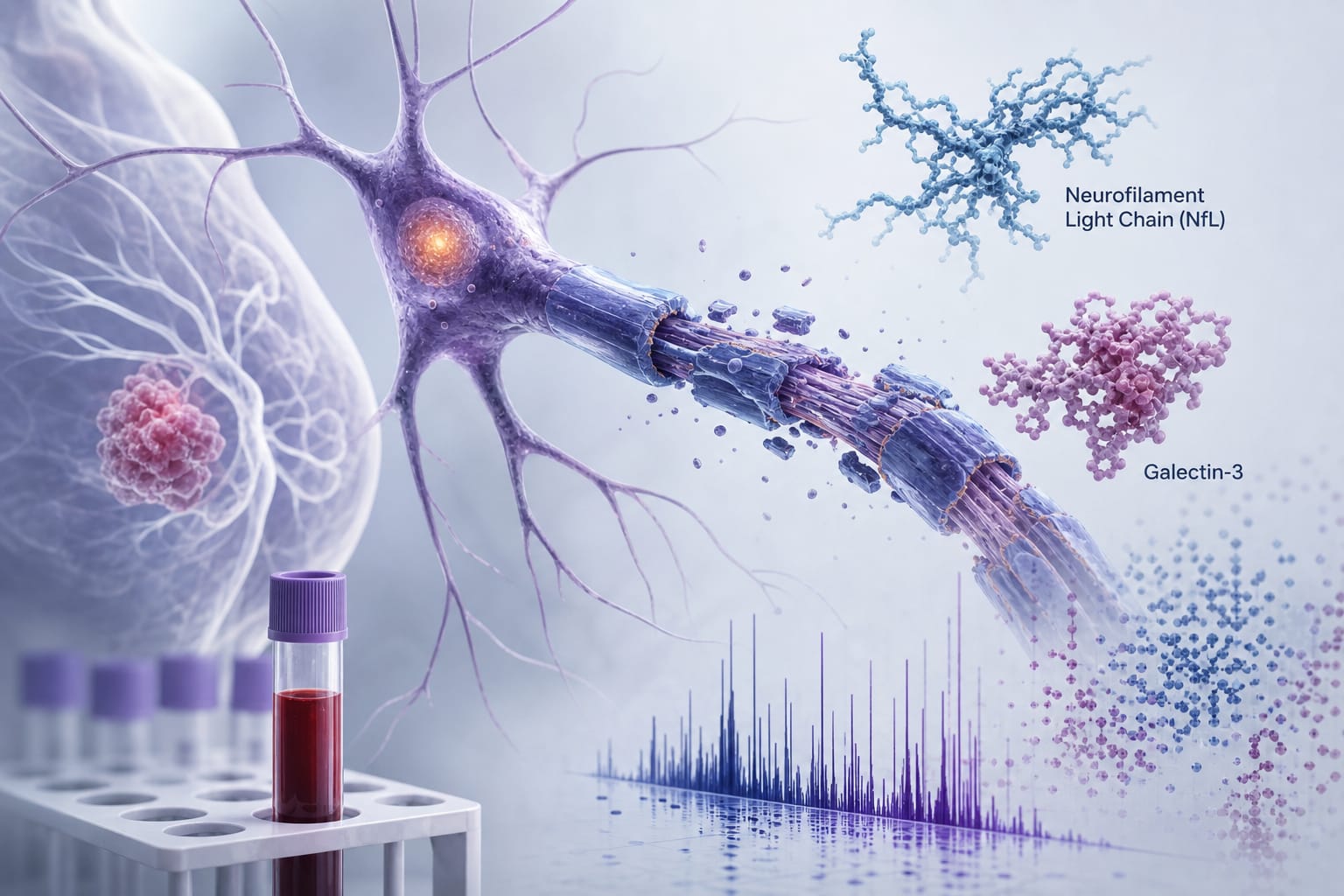
This study identifies neurofilament light chain (NfL) as a potential biomarker for early detection of chemotherapy-induced peripheral neuropathy (CIPN) in breast cancer patients receiving paclitaxel. Proteomic analysis revealed significant molecular changes associated with CIPN, including alterations in alcohol dehydrogenase 4 (ADH4) and vesicular overexpressed in cancer prosurvival protein 1 (VOPP1).

Background

Chemotherapy-induced peripheral neuropathy (CIPN) is a prevalent and debilitating side effect of paclitaxel treatment in breast cancer patients, affecting their quality of life and treatment adherence. Reliable biomarkers for early detection and monitoring of CIPN are crucial for optimizing patient management and therapeutic outcomes. Understanding the molecular mechanisms underlying CIPN can lead to improved prevention and treatment strategies.

Data Highlights

BiomarkerChange in LevelsTimeframe
NfLSignificantly increased in CIPN patients3 weeks post-treatment initiation
Galectin-3No significant changesN/A
ADH4Upregulated in CIPNN/A
VOPP1Downregulated in CIPNN/A

Key Findings

  • NfL levels significantly increased in patients with CIPN compared to those without.
  • No significant changes were observed in galectin-3 levels in relation to CIPN.
  • Proteomic analysis identified upregulation of ADH4 and downregulation of VOPP1 in CIPN patients.
  • Oxidative stress and disrupted mitochondrial dynamics were implicated in the pathogenesis of CIPN.
  • NfL serves as a candidate biomarker for early detection of CIPN in breast cancer patients.

Clinical Implications

The identification of NfL as a potential biomarker for CIPN may facilitate early detection and intervention strategies in breast cancer patients undergoing paclitaxel therapy. Understanding the molecular factors associated with CIPN can guide clinicians in developing personalized treatment plans to mitigate this adverse effect.

Conclusion

NfL represents a promising biomarker for early detection of CIPN, and the study's findings enhance our understanding of the molecular mechanisms involved in CIPN development. Further research is warranted to validate these biomarkers and their clinical utility.

Related Resources & Content

  1. Hertz, D. et al., The ASCO Post, 2012 -- Two Single Nucleotide Polymorphisms Associated with Risk for Paclitaxel-related Peripheral Neuropathy
  2. The ASCO Post, 2012 -- Neuropathy Not Predictive of Outcomes with Adjuvant Taxane Therapy in Breast Cancer
  3. Trivedi et al., The ASCO Post, 2023 -- Chemotherapy-Induced Peripheral Neuropathy May Be More Severe With Paclitaxel Than With Docetaxel
  4. Global estimates of prevalence of chronic painful neuropathy and moderate-to-severe neuropathy among patients with chemotherapy-induced peripheral neuropathy: a systematic review and meta-analysis of data from 29 countries between 2000 and 2024 - PubMed
  5. Distal-Extremity Cryotherapy in Preventing Chemotherapy-Induced Peripheral Neuropathy from Paclitaxel Administration in People Affected by Breast Cancer: A Systematic Review - PubMed
  6. Neurofilament light chain as a biomarker of chemotherapy-induced peripheral neuropathy - ScienceDirect
  7. The ASCO Post — Taxane-induced Neuropathy Does Not Correlate with Improved Outcomes in Operable Breast Cancer
  8. Global estimates of prevalence of chronic painful neuropathy and moderate-to-severe neuropathy among patients with chemotherapy-induced peripheral neuropathy: a systematic review and meta-analysis of data from 29 countries between 2000 and 2024 - PubMed
  9. Distal-Extremity Cryotherapy in Preventing Chemotherapy-Induced Peripheral Neuropathy from Paclitaxel Administration in People Affected by Breast Cancer: A Systematic Review - PubMed
  10. Neurofilament light chain as a biomarker of chemotherapy-induced peripheral neuropathy - ScienceDirect

Original Source(s)

Related Content