Dynamic urinary proteomics integrates single-cell and spatial transcriptomics to reveal tumour microenvironment and predict immunotherapy response in biliary tract cancer - Report - MDSpire
Advertisement
Dynamic urinary proteomics integrates single-cell and spatial transcriptomics to reveal tumour microenvironment and predict immunotherapy response in biliary tract cancer
Clinical Report: Integrative Analysis of Urinary Proteomics in Biliary Tract Cancer
Overview
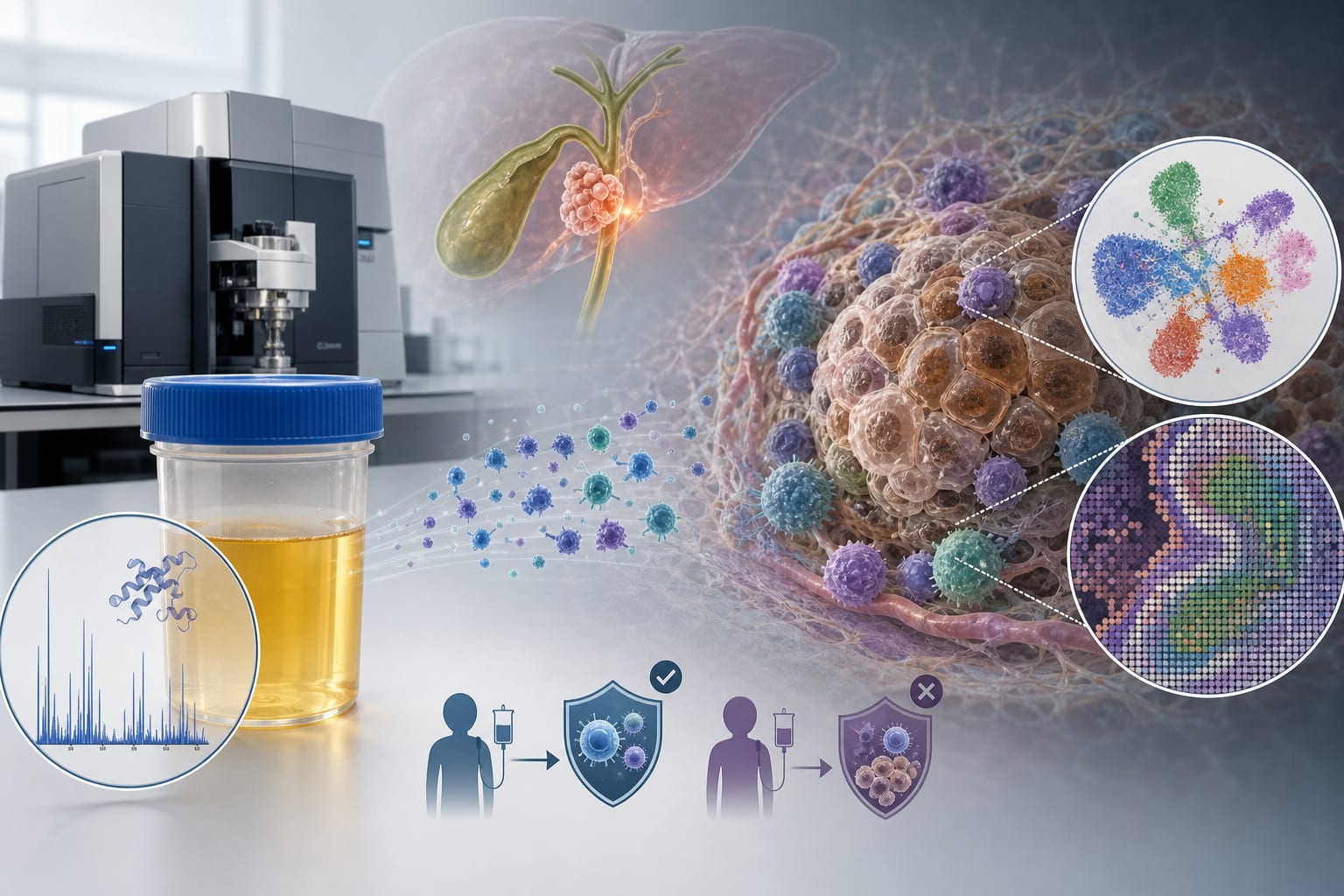
This study explores the use of urinary proteomics as a non-invasive method to predict responsiveness to immune checkpoint inhibitors (ICIs) in biliary tract cancer (BTC). The findings suggest that urinary biomarkers can capture tumor microenvironment dynamics and may guide therapeutic decisions in clinical practice.
Background
Biliary tract cancers are aggressive malignancies often diagnosed at advanced stages, where ICIs are the primary treatment. However, the lack of reliable biomarkers for predicting ICI efficacy poses a significant challenge. Current tissue-based biomarkers are limited by invasiveness and their inability to reflect the dynamic nature of tumor-immune interactions, highlighting the need for innovative non-invasive approaches.
Data Highlights
Sample Size
Urine Samples Analyzed
73
187 (64 pretreatment, 123 post-treatment)
Key Findings
Urinary proteomics provides a novel, non-invasive approach to predict ICI responsiveness in BTC.
Protein tyrosine phosphatase non-receptor 13 is identified as a promising biomarker for enhancing ICI outcomes.
The study integrates single-cell and spatial transcriptomics to elucidate tumor microenvironment dynamics.
Urinary biomarkers can facilitate early prediction and longitudinal monitoring of ICI responsiveness.
This approach may enable timely therapeutic adjustments in clinical practice.
Clinical Implications
The findings support the potential of urinary proteomics as a valuable tool for non-invasive biomarker discovery in immuno-oncology. Clinicians may utilize these biomarkers for better patient stratification and to monitor treatment responses in real-time, enhancing personalized therapy approaches.
Conclusion
Urinary proteomics represents a promising frontier in the search for dynamic biomarkers in biliary tract cancer, with the potential to significantly improve patient management and outcomes in immunotherapy.