Clinical Report: Innovative UHMWPE Sleeve for Enhancing Stability of Loose Suture Anchors
Overview
Revise to focus solely on the study's evaluation of the UHMWPE sleeve without implying outcomes.
Background
Rotator cuff tears are prevalent shoulder injuries that often lead to pain and limited mobility. The stability of suture anchors used in surgical repairs is critical, as anchor loosening can compromise the effectiveness of the procedure. Traditional methods to address anchor loosening have limitations, highlighting the need for innovative solutions.
Data Highlights
No numerical data or trial results were provided in the source material.
Key Findings
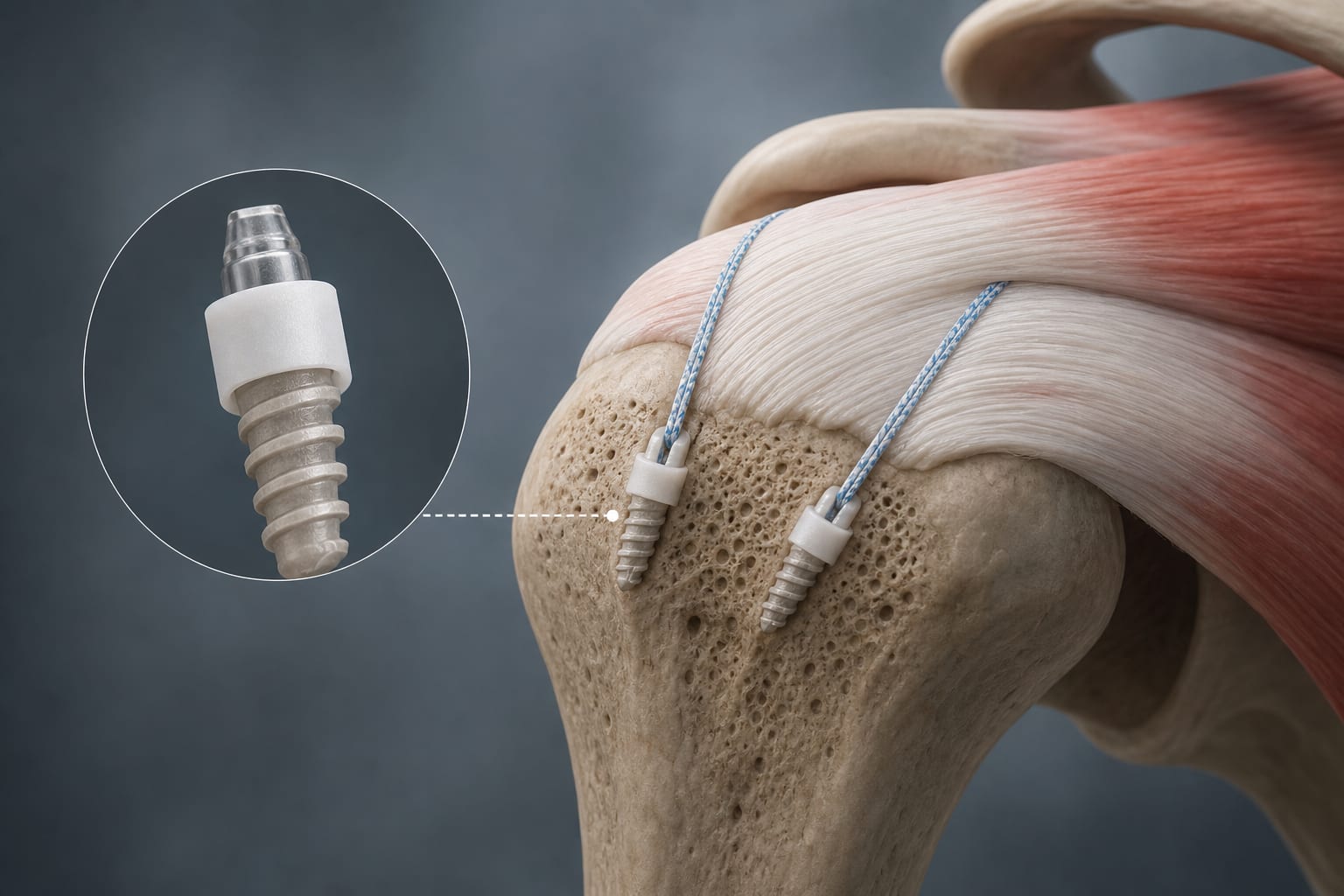
The UHMWPE sleeve increases the contact area with cancellous bone during revision surgery.
Anchor loosening can occur due to poor bone quality and other factors, complicating surgical repairs.
Revision techniques were tested using both same-diameter and larger-diameter anchors.
The energy absorbed to failure was measured to evaluate the strength of different revision strategies.
Two conditions of anchor loosening were simulated: intra-operative and post-operative.
Clinical Implications
The introduction of the UHMWPE sleeve may provide a new approach to improve anchor fixation in cases of loosening. Understanding the biomechanical properties of this sleeve could inform surgical techniques and improve patient outcomes.
Conclusion
The study presents a novel solution for enhancing the stability of suture anchors in rotator cuff repairs, potentially addressing a common complication in shoulder surgery.
Nearly 40% of registry patients would have been excluded from phase 3 randomized controlled trials, with exclusion criteria distributed unevenly across drug classes.