Transdermal entry of a non-pathogenic filamentous fungus Aspergillus oryzae induces an immunomodulatory response in skin-draining lymph nodes - Report - MDSpire

Transdermal entry of a non-pathogenic filamentous fungus Aspergillus oryzae induces an immunomodulatory response in skin-draining lymph nodes

  • By

  • Thanh Dat Ta

  • Madoka Ozawa

  • Yuka Kasuga

  • Midori Shida

  • Yui Kotani

  • Haruko Hayasaka

  • Michio Tomura

  • Eiji Umemoto

  • Tomoya Katakai

  • June 15, 2026

  • 0 min

Share

Clinical Report: Cutaneous Introduction of Aspergillus oryzae Triggers Immune Response

Overview

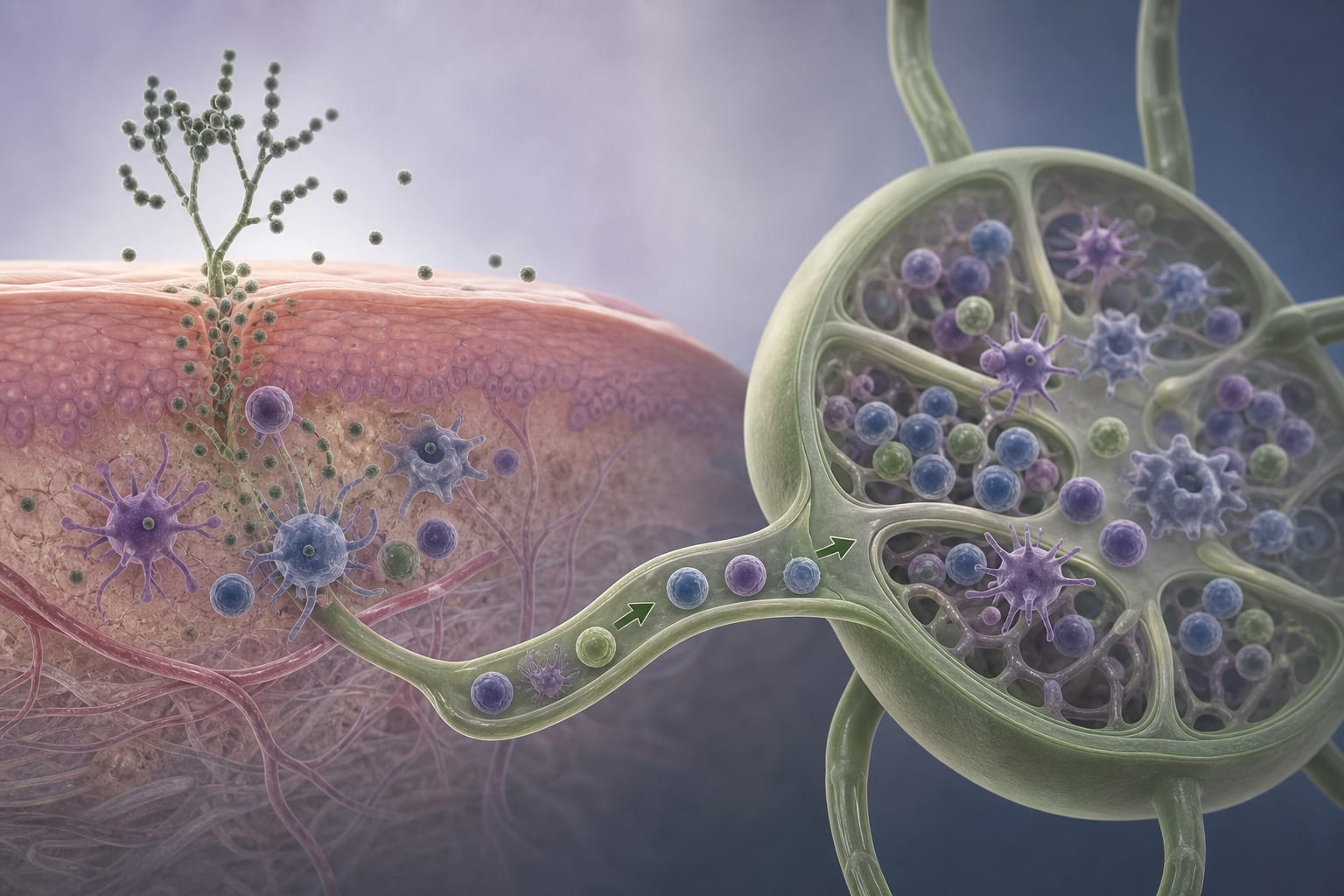
This study investigates the immune response elicited by the non-pathogenic fungus Aspergillus oryzae when introduced cutaneously. Findings indicate that Ao induces a mild immune response characterized by increased IL-4 expression and the development of immune memory without enhancing responses to other antigens.

Background

Understanding the immune response to non-pathogenic fungi like Aspergillus oryzae is crucial as it may inform approaches to managing immune-related disorders. The reduction of microbial exposure in modern environments has been linked to immune dysfunction, making the study of beneficial microorganisms increasingly relevant. Aspergillus oryzae, used in traditional Japanese fermentation, presents a unique opportunity to explore its immunomodulatory effects.

Data Highlights

Time PointImmune Response
4 daysMarked increase in activated B cells and type 2 resident dendritic cells
7 daysIncreased IL-4 expression

Key Findings

  • Aspergillus oryzae induces a marked enlargement of skin-draining lymph nodes.
  • Increased numbers of activated B cells and type 2 resident dendritic cells were observed.
  • IL-4 expression was significantly increased, while other cytokines remained suppressed or unchanged.
  • Immune memory was established with antibody production specific to Ao conidial proteins and β-glucan.
  • Pre-inoculation with Ao inhibited allergic responses.

Clinical Implications

The findings suggest that cutaneous exposure to Aspergillus oryzae may have immunomodulatory effects that could be leveraged in managing allergic diseases. Understanding the immune mechanisms involved may provide insights into therapeutic strategies for immune-related disorders.

Conclusion

Aspergillus oryzae entry through the skin induces a relatively mild adaptive immune response, highlighting its potential role in modulating immune function.

Related Resources & Content

  1. Open Forum Infectious Diseases, 2023 -- Case Study of Primary Cutaneous Invasive Aspergillosis in a Neutropenic Patient After Finger Trauma
  2. Intensive Care Medicine, 2023 -- Fungal Infections in Critically Ill Patients with Liver Disease: Clinical and Immunological Insights for Intensive Care Management
  3. International Journal of Infectious Diseases, 2023 -- Establishing thresholds for azole tolerance and persistence in Aspergillus fumigatus to study their impact on voriconazole treatment in vivo
  4. Practice Guidelines for the Diagnosis and Management of Aspergillosis: 2016 Update by the Infectious Diseases Society of America
  5. Open Forum Infectious Diseases — Pulmonary Infections Associated with Trametes elegans and Peniophora incarnata
  6. Practice Guidelines for the Diagnosis and Management of Aspergillosis: 2016 Update by the Infectious Diseases Society of America
  7. Efficacy and safety of isavuconazole versus voriconazole for the treatment of invasive fungal infections: a meta-analysis with trial sequential analysis | BMC Infectious Diseases | Springer Nature Link

Original Source(s)

Related Content