Vitamin D status and Its association with haematological inflammatory indices and cardiometabolic risk profiles: a retrospective cross-sectional study - Report - MDSpire
Advertisement
Vitamin D status and Its association with haematological inflammatory indices and cardiometabolic risk profiles: a retrospective cross-sectional study
Clinical Report: The Relationship Between Vitamin D Levels and Cardiometabolic Risk
Overview
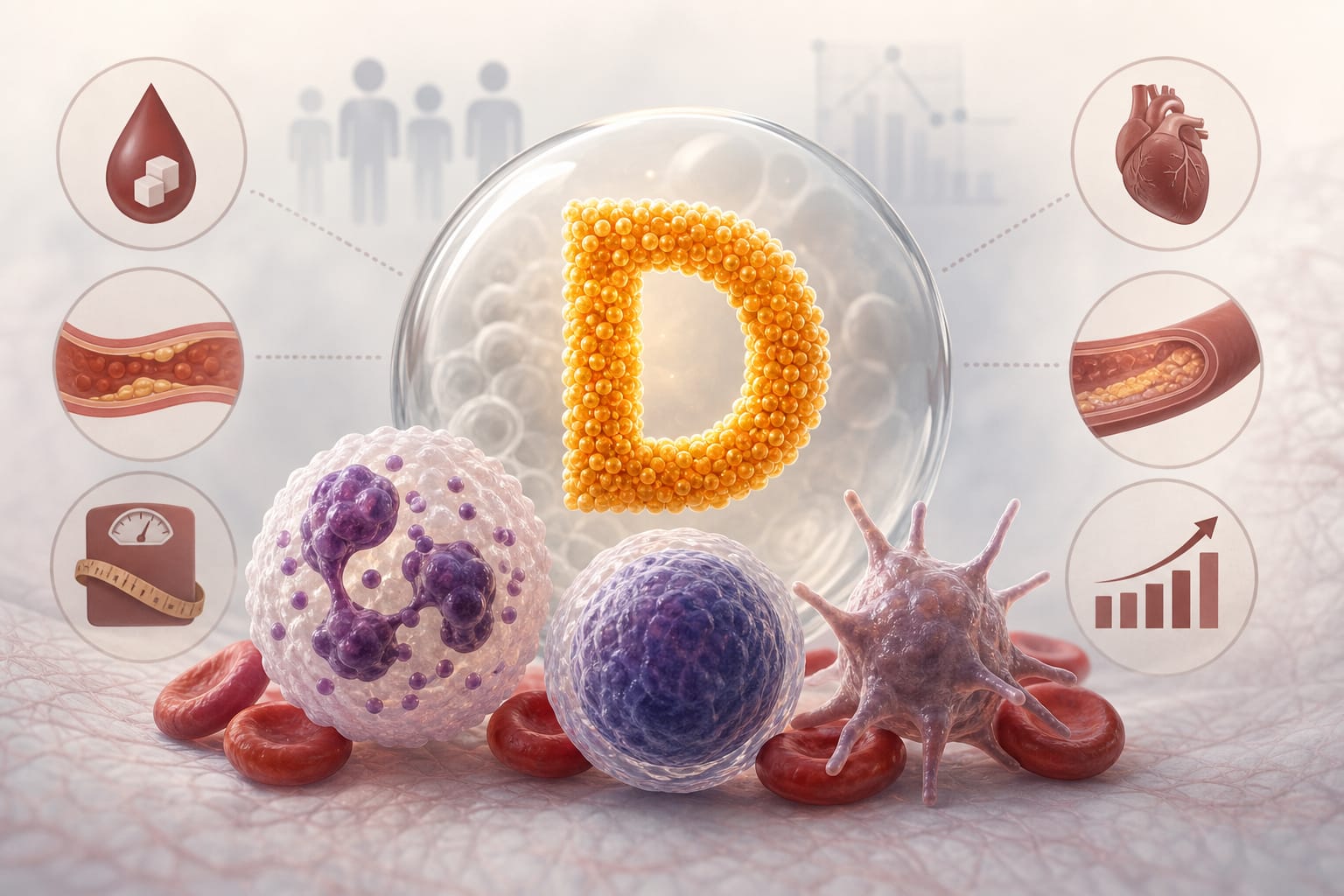
This study investigates the associations between vitamin D levels, hematological inflammatory markers, and cardiometabolic risk factors in a cohort of 1,100 adults. Findings indicate that vitamin D deficiency correlates with adverse inflammatory and metabolic profiles, suggesting a potential interaction between vitamin D status and cardiometabolic risk markers.
Background
Cardiovascular disease (CVD) is a leading cause of mortality globally, with modifiable risk factors such as dyslipidaemia and impaired glycaemic control. Chronic low-grade inflammation is also linked to the progression of cardiometabolic diseases. Understanding the relationship between vitamin D status and inflammatory markers may provide insights into managing cardiometabolic risks.
Data Highlights
Vitamin D Status
Participants
Sufficient (≥30 ng/mL)
175
Insufficient (20–29 ng/mL)
470
Deficient (<20 ng/mL)
455
Key Findings
Vitamin D deficiency is associated with unfavorable inflammatory and metabolic profiles.
Hematological indices such as NLR, PLR, and SII are consistent markers of systemic inflammation.
Associations between inflammatory indices and metabolic parameters differ across vitamin D categories.
Modest discriminatory performance of inflammatory markers limits their standalone diagnostic utility.
Vitamin D status may influence the relationship between inflammation and cardiometabolic risk factors.
Clinical Implications
Clinicians should consider assessing vitamin D levels in patients with cardiometabolic risk factors, as deficiency may exacerbate inflammatory profiles. While hematological indices provide insights into systemic inflammation, their limited diagnostic performance suggests they should not be used in isolation for risk assessment.
Conclusion
The study highlights the importance of vitamin D status in relation to inflammatory and cardiometabolic risk markers, suggesting a need for further research to explore these associations in clinical practice.
by Yaqeen Mohammed Al-Essa, Hussain Khalifa Aljumah, Zainab Younis Al saeed, Raneem Abdullah AlQattan, Danah Yousef Alquwayzani, Ghadeer kazem Al-Yousef, Ayah Salem AL owdah, Mujtaba Abbas Alzuwayr, Eman Elsheikh