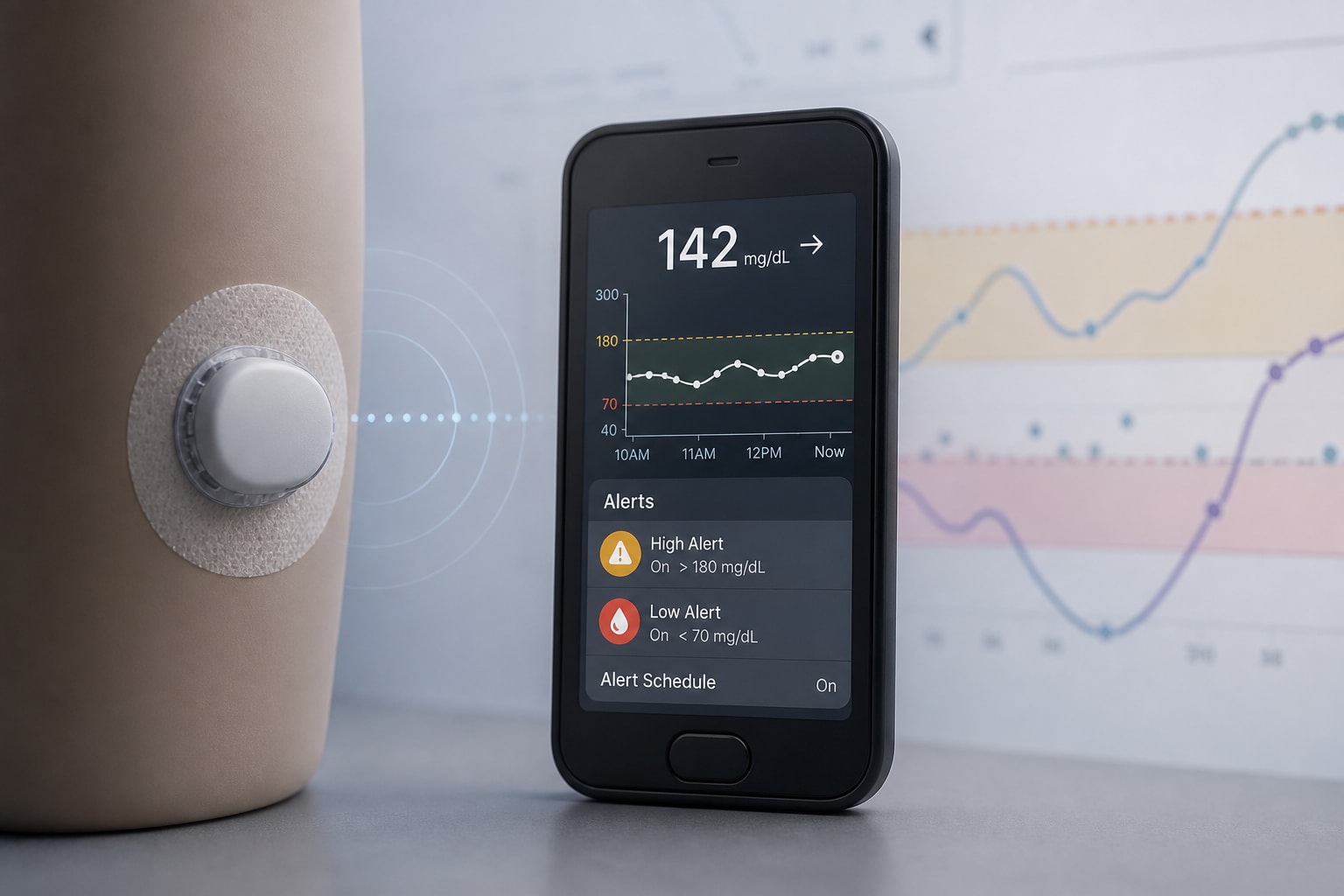
Clinical Report: Impact of Custom Alert Settings in Continuous Glucose Monitoring
Overview
This study evaluates the impact of customizable alert settings in continuous glucose monitoring (CGM) on glycemic management among patients with type 1 and type 2 diabetes. Findings indicate that activation of high-glucose alerts is associated with improved glycemic outcomes.
Background
Continuous glucose monitoring (CGM) is a standard of care for individuals with type 1 and insulin-treated type 2 diabetes, providing real-time glucose data and alerts. Understanding the relationship between alert settings and glycemic control is crucial for optimizing CGM use. This study aims to clarify how different alert configurations affect glycemic outcomes.
Data Highlights
Alert Type
Outcome
Effect
Low-Glucose Alert
Time Below Range (TBR) 54-70 mg/dL
Reduced
High-Glucose Alert
Average Glucose
Lowered
High-Glucose Alert
Time in Range (TIR)
Increased
Key Findings
Activation of low-glucose alerts was associated with reduced TBR from 54 to 70 mg/dL.
High-glucose alert activation correlated with lower average glucose and GMI, and increased TIR.
Among T1D patients, high-alert activation was linked to TIR and TBR from 54 to 70 mg/dL.
Review identifies recurring sex-based differences across specialties, including lower use of intensive and guideline-compliant treatment among female patients.