Construction and verification of a prediction model for sleep disorders in older patients with coronary heart disease based on machine learning algorithms - Report - MDSpire
Advertisement
Construction and verification of a prediction model for sleep disorders in older patients with coronary heart disease based on machine learning algorithms
Clinical Report: Predictive Model for Sleep Disorders in Elderly with CHD
Overview
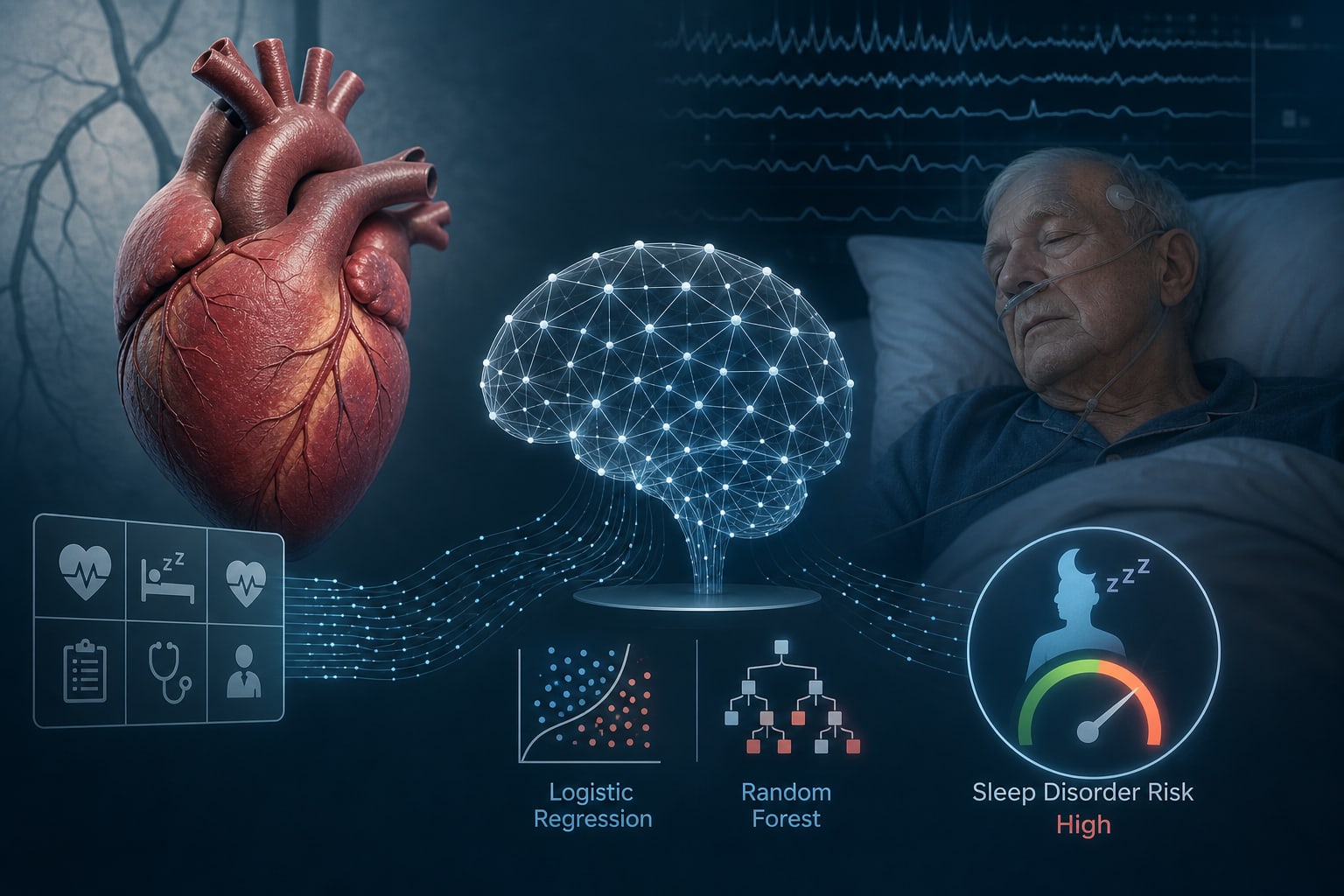
This study developed and validated a machine learning-based predictive model for sleep disorders in older adults with coronary heart disease (CHD). The model identified key risk factors such as sex, duration of CHD, chronic gastritis, anxiety, and depression.
Background
Coronary heart disease (CHD) is a leading cause of morbidity and mortality, particularly among older adults. Sleep disorders are prevalent in this population and can significantly impact recovery and long-term outcomes.
Data Highlights
Model
AUC
Accuracy
Sensitivity
Specificity
F1 Score
Random Forest (Training Set)
0.839
0.766
0.812
N/A
0.818
Gradient Boosting Machine (Validation Set)
0.838
0.733
N/A
N/A
0.825
Logistic Regression (Validation Set)
0.785
N/A
0.798
0.875
0.825
Key Findings
24.26% of older adults with CHD experienced sleep disorders.
LASSO regression identified five key risk factors: sex, duration of CHD, chronic gastritis, anxiety, and depression.
The Random Forest model achieved the highest AUC of 0.839 in the training set.
The Gradient Boosting Machine model showed an AUC of 0.838 in the validation set.
Logistic regression demonstrated the best specificity (0.875) in the validation cohort.
External validation of the Logistic regression model yielded an AUC of 0.785.
Clinical Implications
The predictive models developed in this study can assist clinicians in identifying older CHD patients at risk for sleep disorders.
Conclusion
The study developed machine learning models that predict sleep disorders in older adults with CHD.
In two population-based cohorts, metabolically unhealthy status generally showed higher dementia risk estimates, while metabolically healthy obesity was not associated with increased risk in primary analyses.