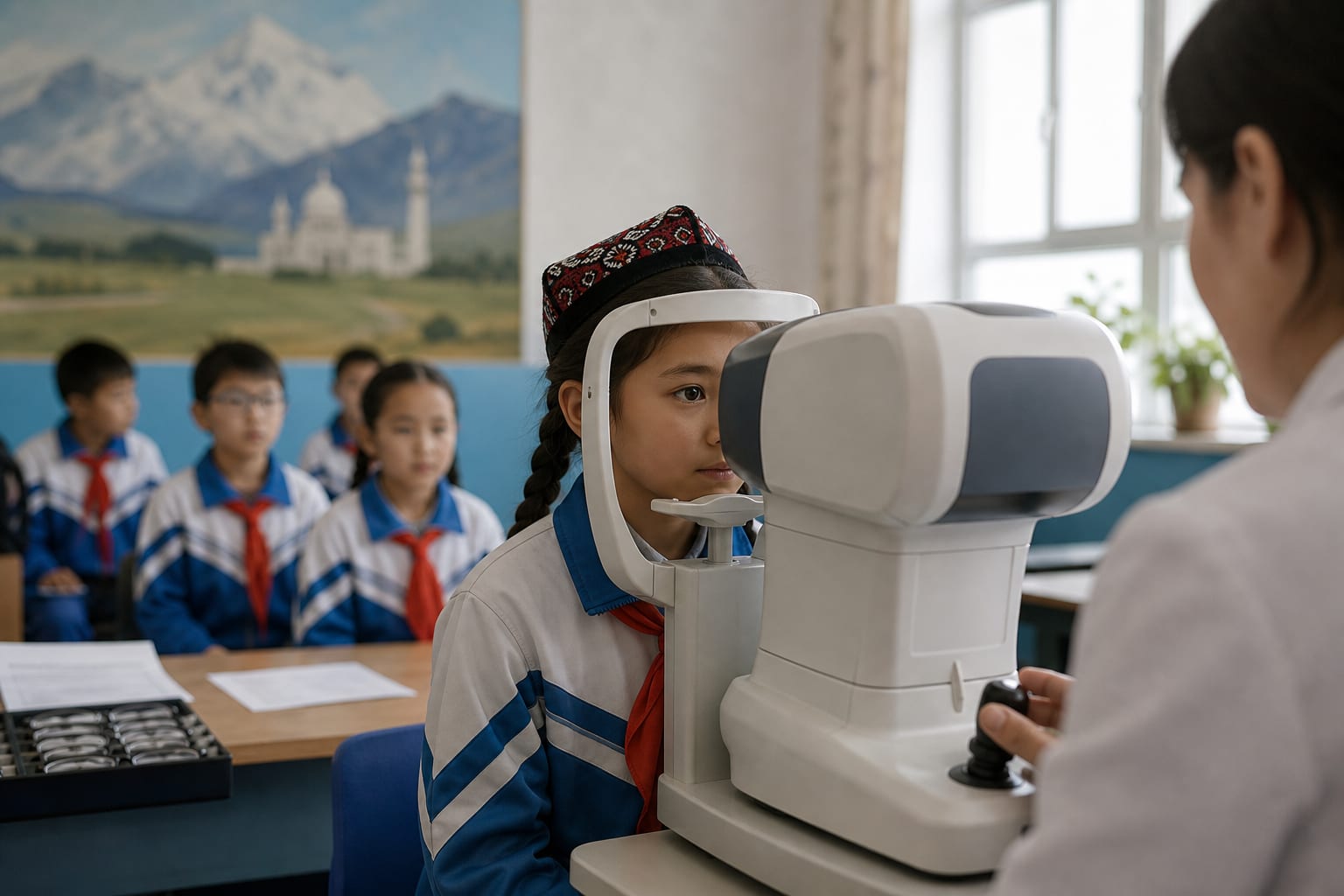
Clinical Report: Assessment of Refractive Error Management in Xinjiang, China
Overview
This study provides a WHO-standardized estimate of effective refractive error coverage (eREC) among schoolchildren in Xinjiang, China, revealing that over 95% of vision impairment was due to uncorrected refractive error (URE). The eREC rate was found to be 51.76%, with lower rates in primary school students compared to secondary school students.
Background
Uncorrected refractive error is the leading cause of vision impairment in children, significantly impacting their learning and quality of life. The WHO has established eREC as a key metric for tracking progress in eye care, yet reliable data for children remain scarce, particularly in regions like China, which has a high prevalence of myopia among school-aged children.
Data Highlights
This study provides essential baseline metrics for monitoring refractive services in Xinjiang, China.
Key Findings
Over 95% of vision impairment in the studied population was attributable to uncorrected refractive error.
The effective refractive error coverage (eREC) rate was 51.76% among schoolchildren.
eREC was lower in primary school students compared to secondary school students.
Clinical Implications
The findings emphasize the importance of enhancing refractive error management strategies in schools to address the high prevalence of vision impairment. Strengthening referral and follow-up processes for vision correction can help meet the WHO's 2030 eREC targets.
Conclusion
This study underscores the critical need for improved refractive error coverage among school-aged children in Xinjiang, China, to prevent vision impairment and support educational outcomes.