Primary orbital solitary fibrous tumor with an 18-year course of five recurrences and extensive sinonasal metastasis following eyeball enucleation: a case report - Report - MDSpire
Advertisement
Primary orbital solitary fibrous tumor with an 18-year course of five recurrences and extensive sinonasal metastasis following eyeball enucleation: a case report
Long-Term Case Study of a Primary Orbital Solitary Fibrous Tumor
Overview
This report details a rare case of a female patient with an 18-year history of recurrent orbital solitary fibrous tumor (OSFT), highlighting the aggressive nature of the disease and the challenges in management. The case emphasizes the need for comprehensive surgical and adjuvant treatment strategies to improve patient outcomes.
Background
Orbital solitary fibrous tumors are rare mesenchymal neoplasms that typically exhibit benign behavior but can present with aggressive variants leading to significant local recurrence and metastasis. Understanding the clinical trajectory of OSFT is crucial for developing effective management strategies, particularly given the potential for extensive tissue invasion and delayed metastasis. This case underscores the importance of long-term surveillance and intervention in patients with recurrent OSFT.
Data Highlights
No numerical data or trial data presented.
Key Findings
The patient experienced five recurrences over an 18-year period, indicating the aggressive potential of OSFT.
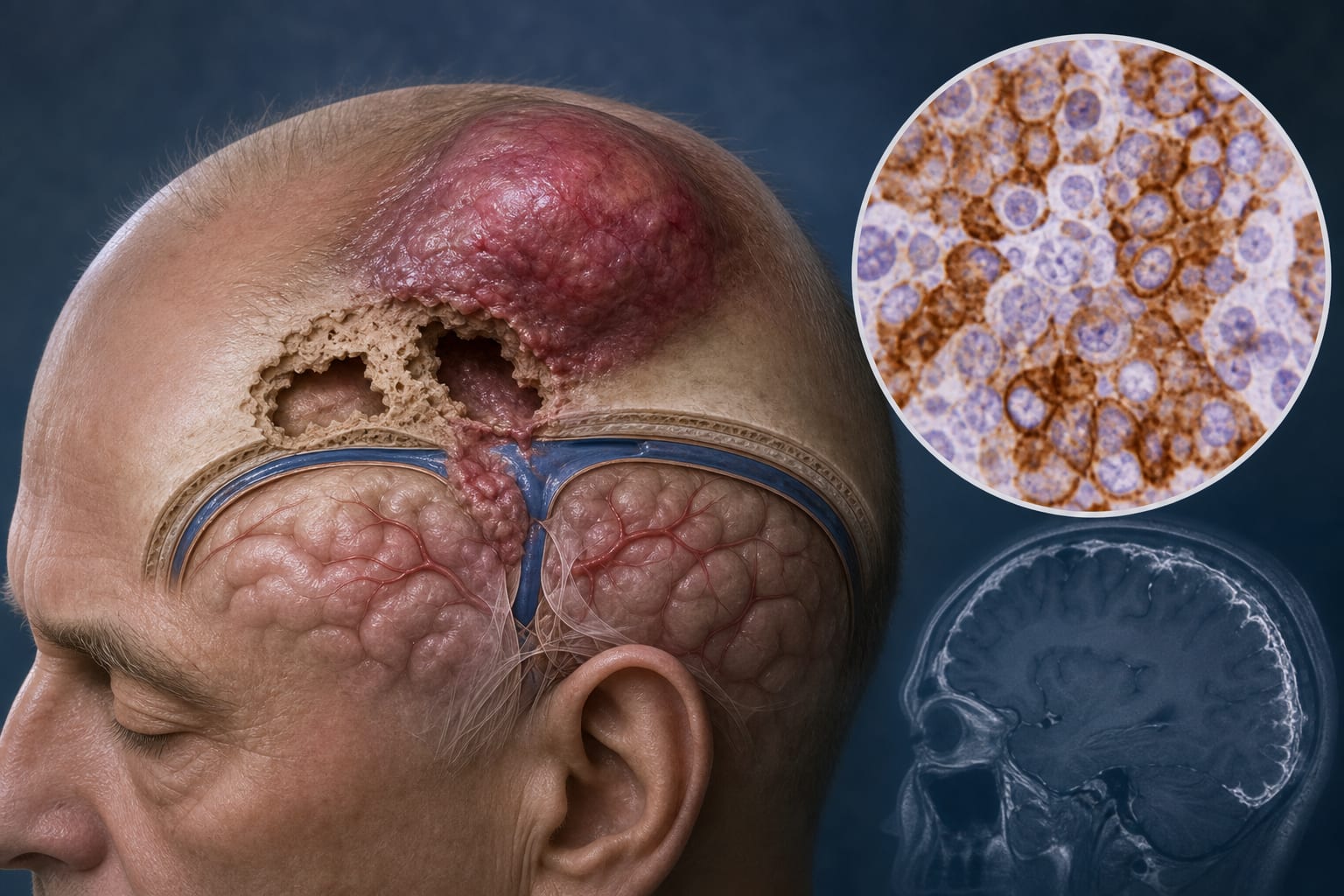
Histopathological analysis confirmed the diagnosis with consistent nuclear STAT6 positivity.
The latest recurrence showed increased cellular atypia and a Ki-67 proliferation index of approximately 20%.
Orbital exenteration was performed during the fourth recurrence to achieve maximal tumor resection.
Adjuvant radiotherapy was administered following the fifth recurrence, which involved extensive paranasal sinus invasion.
Clinical Implications
Early complete surgical excision is critical in managing OSFT to reduce the risk of recurrence and associated complications. The integration of adjuvant radiotherapy for high-risk cases may improve long-term outcomes. Continuous surveillance through clinical and imaging assessments is essential for managing potential recurrences.
Conclusion
This case highlights the aggressive nature of orbital solitary fibrous tumors and the necessity for a multidisciplinary approach in their management. Comprehensive strategies, including early intervention and lifelong monitoring, are vital for improving patient prognosis.