Clinical Report: Advancements in CAR-T Cell Engineering for Colorectal Cancer
Background
Colorectal cancer (CRC) is a leading cause of cancer-related mortality worldwide. Advanced-stage disease has a poor prognosis, with five-year survival rates remaining below 15%. Traditional therapies often fail due to toxicity and resistance, necessitating innovative approaches like CAR-T cell therapy. However, translating CAR-T strategies to solid tumors such as CRC has proven challenging due to specific biological barriers.
Data Highlights
The source material did not provide numerical data or trial results, which limits the ability to quantify the findings.
Key Findings
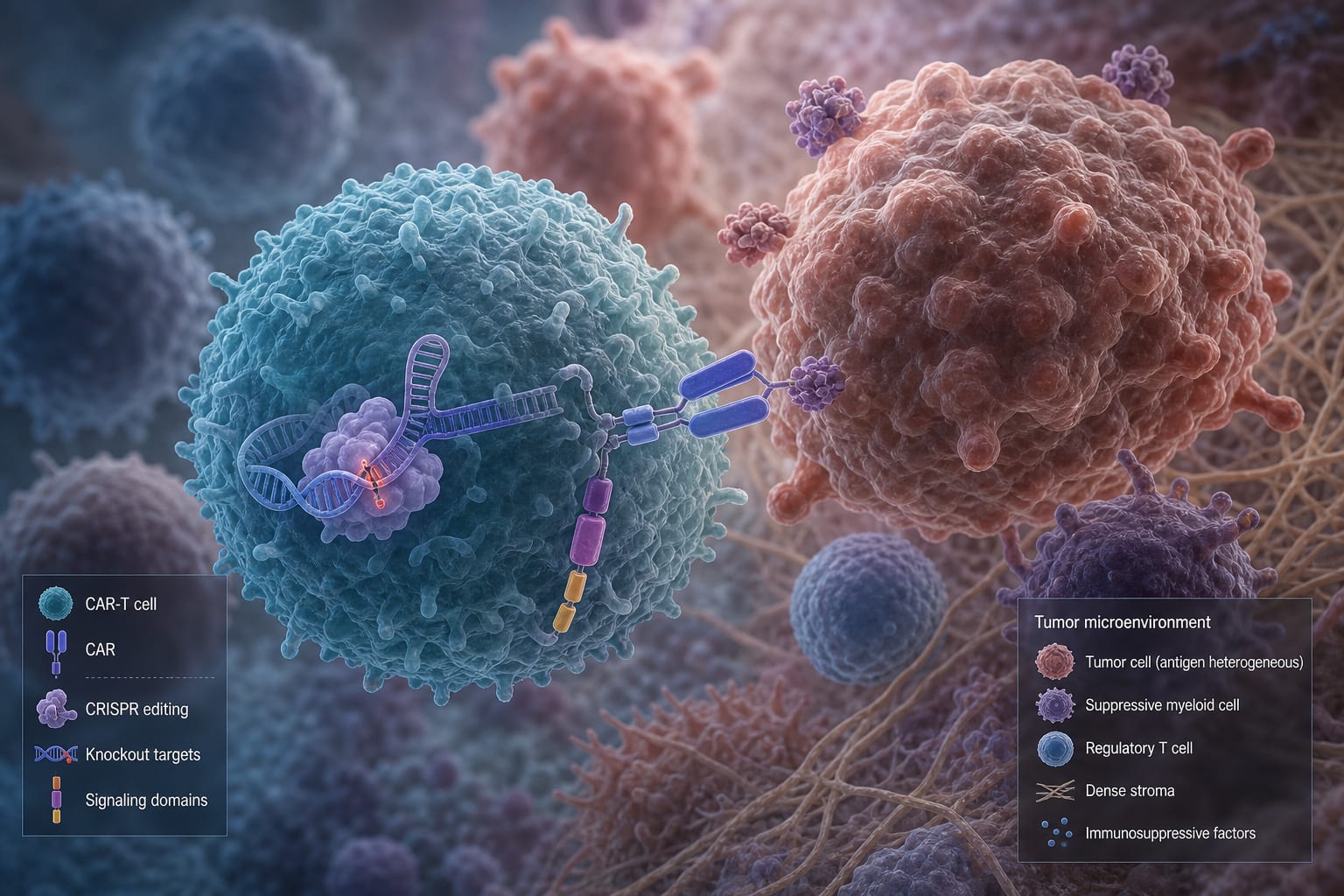
CAR-T therapy for CRC faces challenges including antigen heterogeneity and off-tumor toxicity.
Next-generation engineering strategies include novel targets, armored CARs, and combinatorial antigen-sensing circuits.
CRISPR-based editing is being explored for enhancing CAR-T cell persistence and efficacy.
Clinical evidence shows objective responses in subsets of CRC patients, but durable remissions remain elusive.
The immunosuppressive tumor microenvironment significantly limits CAR-T cell effectiveness.
Clinical Implications
Future CAR-T therapies for CRC should focus on molecular typing and innovative engineering approaches to address current limitations.
Conclusion
Advancements in CAR-T cell engineering present potential for improving outcomes in colorectal cancer, but significant challenges remain that require further research.