Clinical Report: A Case Series of Optic Neuritis in Patients with Anti-NMDA-Receptor Encephalitis and MOGAD
Background
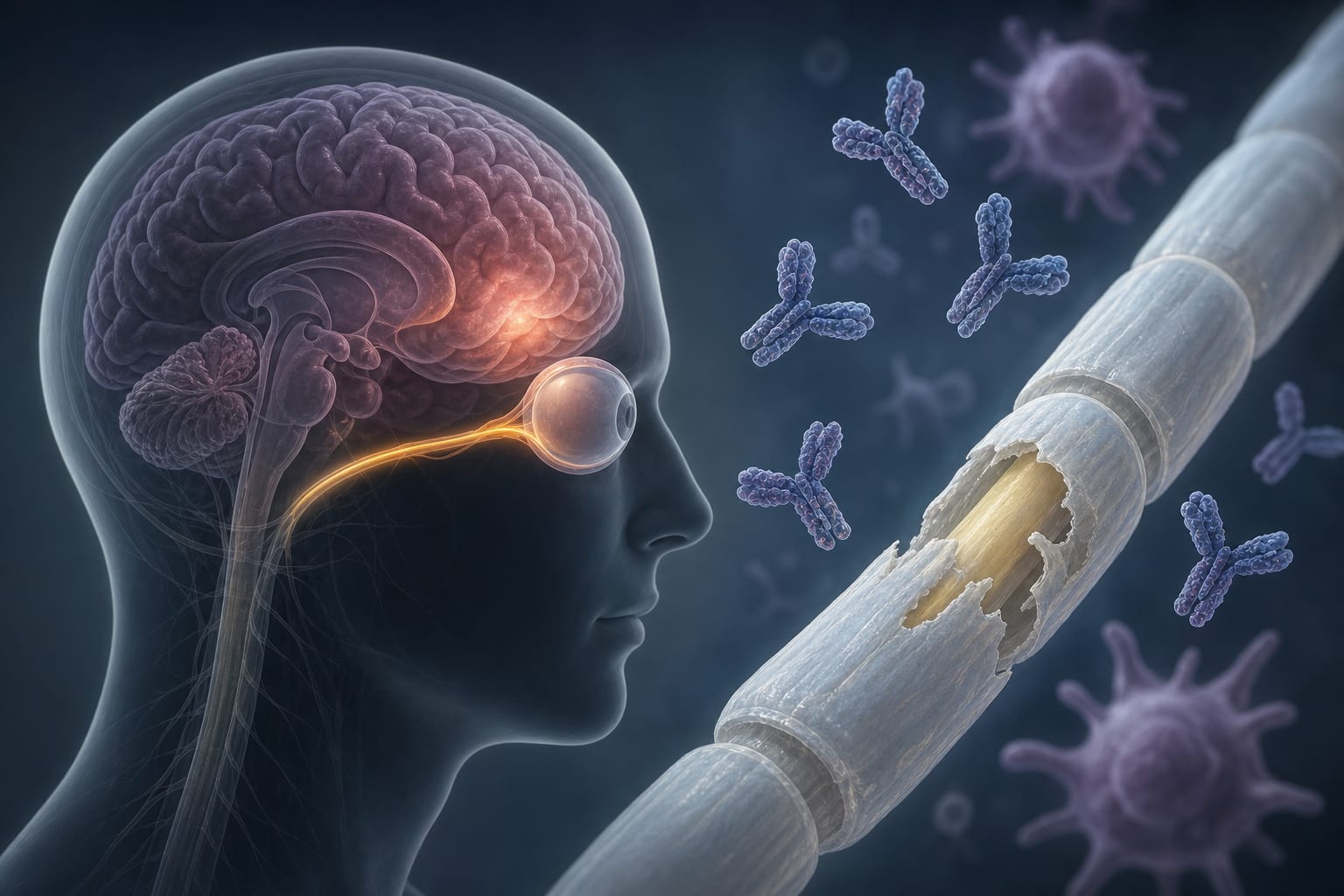
Anti-NMDAR encephalitis is an autoimmune disorder characterized by neuropsychiatric symptoms and seizures, while MOGAD is associated with optic neuritis. The co-occurrence of these conditions is increasingly recognized.
Data Highlights
Patient
Age
Initial Symptoms
Treatment
Visual Acuity Outcome
1
36
Altered mental status, vision loss
IV steroids, PLEX, rituximab
Improved to baseline
2
26
Altered mental status, vision loss
IV steroids, PLEX, rituximab
Improved to baseline
3
19
Headache, vision loss
IV steroids, IVIG, tocilizumab
Improved to baseline
Key Findings
All patients tested positive for CSF anti-NMDAR antibodies during the encephalitis episode.
Positive serum MOG titers were found during the optic neuritis episode in all cases.
Patients presented with bilateral, asymmetrically reduced visual acuity and diminished color vision.
Imaging revealed abnormal T2/FLAIR lesions and optic nerve enhancement.
Visual acuity improved to baseline levels following treatment in all patients.
Clinical Implications
Patients with anti-NMDAR encephalitis may develop optic neuritis, which can occur months to years after the initial encephalitis.
Conclusion
This case series highlights the overlap between anti-NMDAR encephalitis and MOGAD optic neuritis.