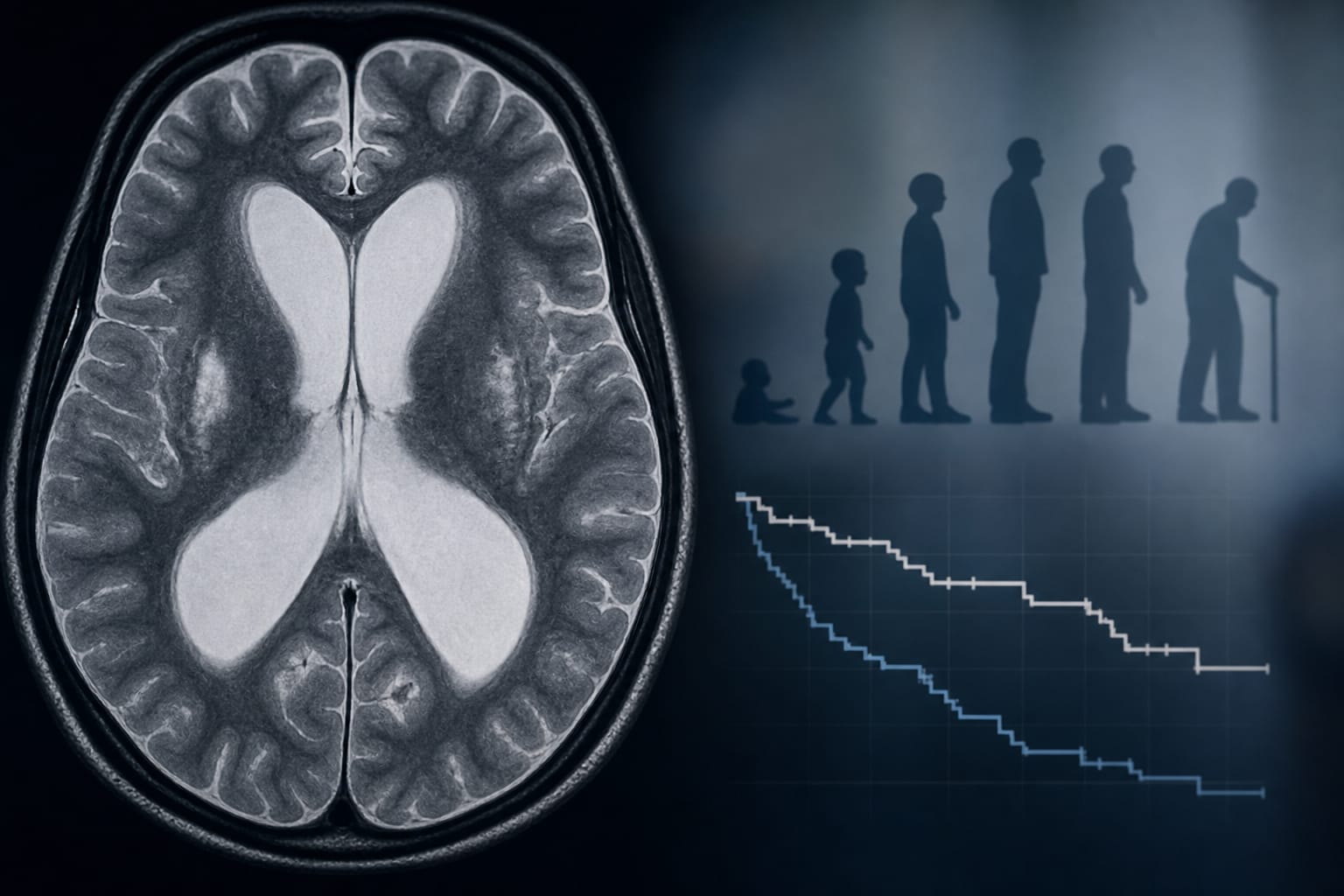
Hydrocephalus as a consistent predictor of in-hospital mortality in tuberculous meningitis: no age-specific effect modification in a lifespan cohort - Report - MDSpire
Advertisement
Hydrocephalus as a consistent predictor of in-hospital mortality in tuberculous meningitis: no age-specific effect modification in a lifespan cohort
Clinical Report: Hydrocephalus as a Reliable Indicator of In-Hospital Mortality in Tuberculous Meningitis
Overview
This study investigates the association between hydrocephalus and in-hospital mortality in non-HIV patients with tuberculous meningitis (TBM).
Background
Tuberculous meningitis (TBM) is a severe form of tuberculosis with high mortality rates, often exacerbated by complications such as hydrocephalus. Understanding the prognostic factors associated with TBM is crucial for improving patient outcomes. Hydrocephalus, a common complication, has been recognized as a key adverse prognostic factor.
Data Highlights
Measure
Value
In-hospital mortality rate
11.9%
Key Findings
Hydrocephalus is independently associated with increased in-hospital mortality in TBM patients.
The in-hospital mortality rate among the studied cohort was 11.9%.
No statistically significant interaction between hydrocephalus and age was detected.
Predicted mortality increased with older age in both hydrocephalus groups.
The prediction model demonstrated excellent discrimination and good calibration.
Clinical Implications
The findings suggest that clinicians should prioritize the early detection and management of hydrocephalus in TBM patients, regardless of age. Understanding the consistent impact of hydrocephalus on mortality can guide treatment decisions and resource allocation.
Conclusion
Hydrocephalus serves as a predictor of in-hospital mortality in patients with tuberculous meningitis.