Clinical Report: Enhancing Screening for Retinopathy of Prematurity in China
Overview
Expand on the implications of reduced over-screening and maintained sensitivity.
Background
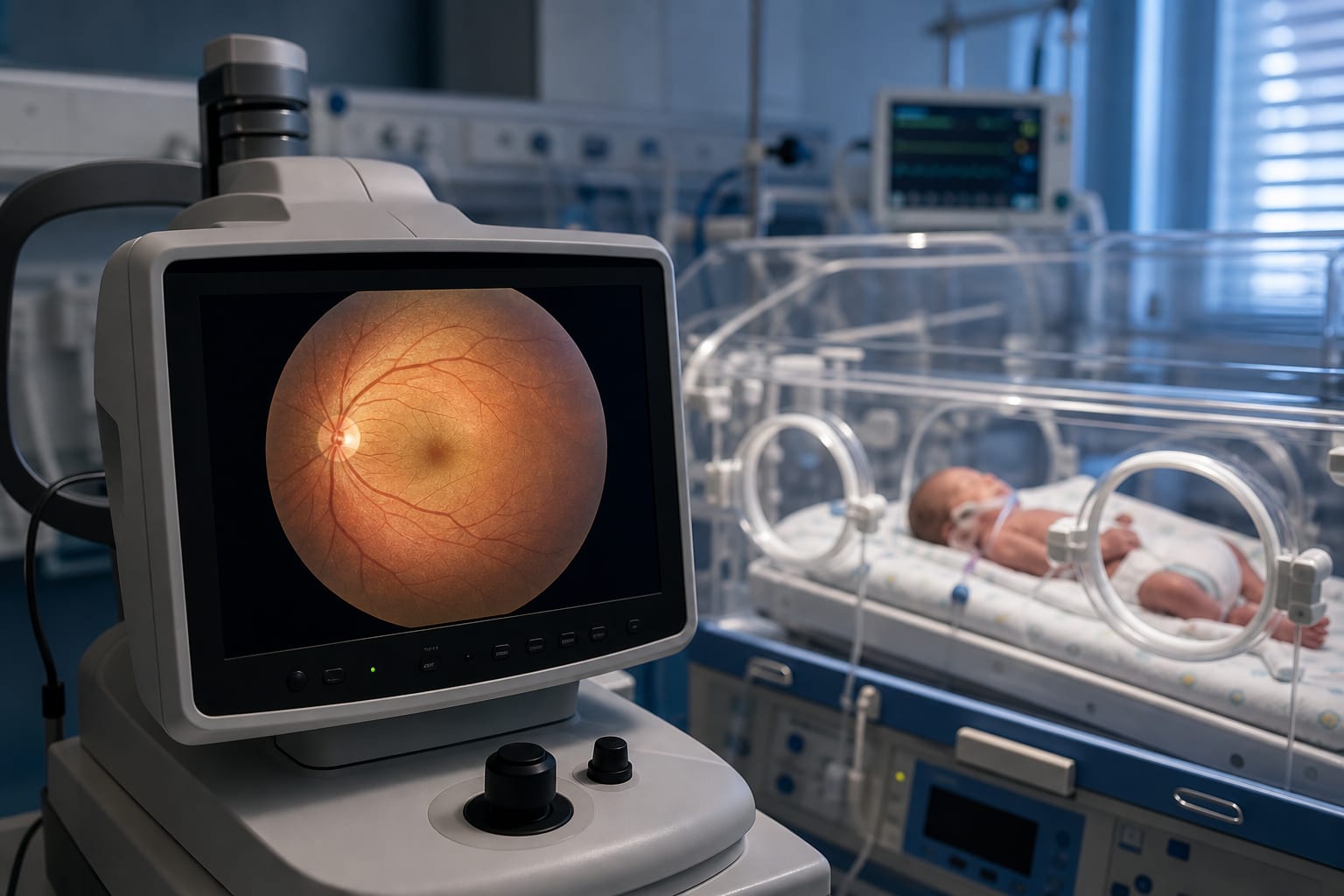
Retinopathy of prematurity (ROP) is a major cause of preventable childhood blindness, necessitating effective screening strategies. Current practices in China involve both objective and subjective criteria, leading to potential over-screening and unnecessary procedures. This study aims to assess the clinical utility of a strictly objective criterion to optimize ROP screening.
Data Highlights
Parameter
Objective Group
Subjective Group
ROP Cases
705 (48.5%)
Not specified
Severe ROP Cases
370 (25.5%)
3 cases
Coverage of ROP Cases
98.2%
Not applicable
Coverage of Severe ROP Cases
99.2%
Not applicable
Key Findings
The objective screening criterion (BW < 2000g or GA < 32 weeks) identified 98.2% of ROP cases.
Severe ROP cases were diagnosed at a significantly higher rate in the objective group compared to the subjective group (P < 0.001).
Lower gestational age (OR = 1.42 per week decrease) and lower birth weight (OR = 1.21 per 100 g decrease) were identified as independent risk factors for severe ROP.
All severe ROP cases in the subjective group were diagnosed before 2017, indicating minimal ongoing clinical value for subjective criteria.
Subjective extended screening led to unnecessary examinations and resource burden without significant benefit.
Clinical Implications
The findings support the implementation of a unified objective criterion for ROP screening in tertiary neonatal care settings to enhance efficiency and reduce unnecessary procedures. Clinicians are encouraged to reconsider the reliance on subjective criteria that may lead to over-screening.
Conclusion
Adopting a single objective criterion for ROP screening can effectively identify high-risk infants while minimizing unnecessary examinations. This approach may inform future clinical guidelines and improve resource allocation in neonatal care.
Justin Schweitzer, OD, FAAO, and Jessica Steen, OD, FAAO, describe emerging technologies, treatment strategies, and clinical considerations that can help eyecare professionals (ECPs) identify glaucoma earlier and better manage progression.