Conexiant’s news site is now MDSpire News. Learn more
Advertisement
Differentiating Sustained Ventricular Tachycardia in Structural Heart Disease Through LGE-CMR and Computational Modeling: Advancing Beyond Left Ventricular Ejection Fraction
Differentiating Sustained Ventricular Tachycardia in Structural Heart Disease
Overview
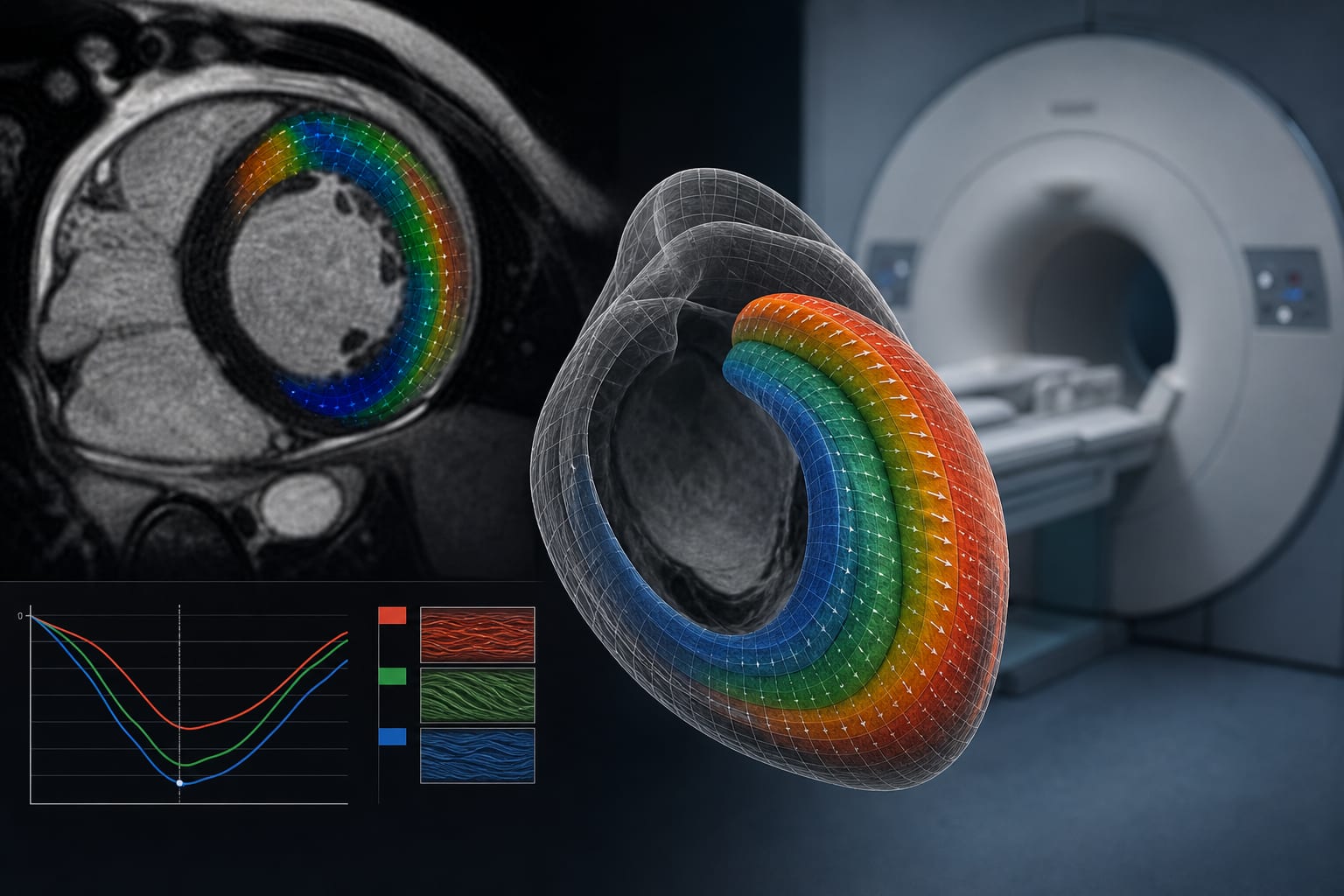
This study explores the integration of late gadolinium enhancement cardiac magnetic resonance (LGE-CMR) with computational modeling to improve risk stratification for sustained ventricular tachycardia (VT) in patients with structural heart disease (SHD). The LGE-VTsim index provides discrimination of sustained VT compared to traditional left ventricular ejection fraction (LVEF) metrics.
Background
Sustained VT is a significant contributor to sudden cardiac death in patients with SHD, and current risk stratification methods relying on LVEF are often inadequate. A substantial number of SCD events occur in patients with LVEF greater than 35%. The use of LGE-CMR allows for detailed characterization of myocardial scarring.
Data Highlights
Parameter
Sustained VT (n=15)
Non-Sustained VT (n=67)
P-value
LVEF
Lower
Higher
0.008
Visual LGE positivity
Present
Absent
0.023
Core scar size
10.0 [5.9, 14.8]%
2.2 [1.1, 4.7]%
< 0.001
Grey zone size
14.0 [10.9, 14.7]%
5.7 [2.3, 9.2]%
< 0.001
VT inducibility
50.0 [22.9, 66.9]%
0 [0, 21.1]%
< 0.001
Inducible VT circuits
2 [2, 4]
0 [0, 2]
< 0.001
Key Findings
Lower LVEF is significantly associated with sustained VT (P = 0.008).
Visual LGE positivity correlates with sustained VT (P = 0.023).
LGE-positive patients with sustained VT have larger core scars compared to those without (P < 0.001).
The integrated LGE-VTsim index effectively discriminates sustained VT (C-statistic: 0.816).
The LGE-VTsim index remains independently associated with sustained VT after adjusting for LVEF (OR: 1.029; P = 0.007).
Clinical Implications
The integration of LGE-CMR and computational modeling may enhance identification of patients at risk for sustained VT. This approach could refine risk stratification beyond traditional LVEF metrics.
Conclusion
The LGE-VTsim index offers a more nuanced approach than LVEF alone. Further validation of this model is warranted.