Clinical Report: A Comprehensive Review of Radiomics Techniques in the Assessment of Vestibular Schwannomas
Overview
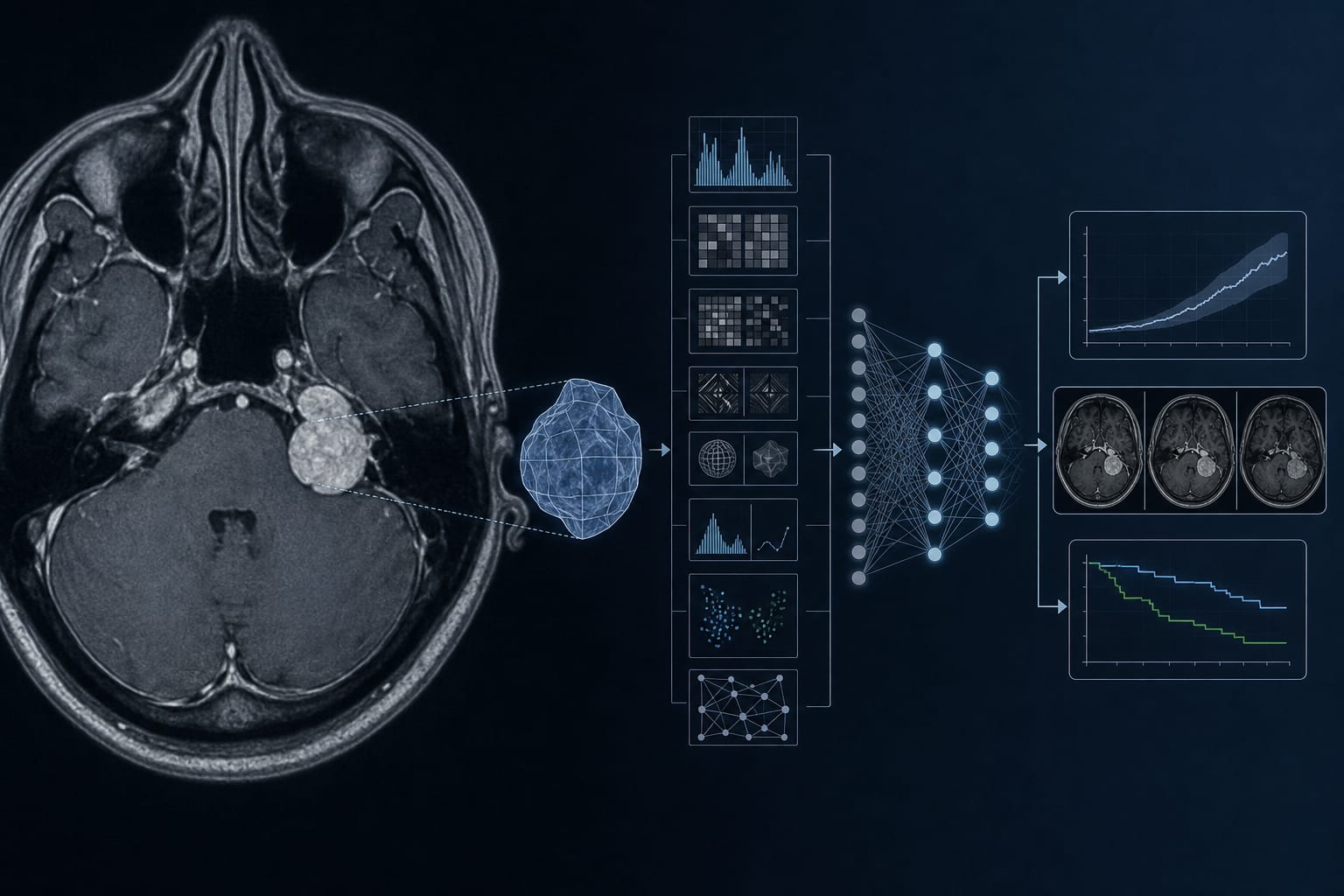
This review highlights the potential of radiomics and machine learning in predicting outcomes for patients with vestibular schwannomas (VS). It emphasizes the importance of extracting quantitative data from MRI to inform clinical decision-making regarding tumor management.
Background
Vestibular schwannomas are benign tumors that can lead to significant clinical symptoms, including hearing loss and balance dysfunction. Accurate assessment and management of these tumors are crucial, as treatment options vary based on tumor characteristics and patient factors. Radiomics, combined with machine learning, offers a promising approach to enhance predictive capabilities in the management of VS.
Data Highlights
No specific numerical data was provided in the source material.
Key Findings
Radiomics can extract quantitative data from MRI, aiding in the prediction of VS outcomes.
Machine learning algorithms, such as random forest and support vector machines, enhance the predictive accuracy of radiomic features.
Feature classes in radiomics include first-order grayscale intensity and second-order texture metrics.
Statistical analysis is used to select the most relevant features for predicting tumor growth and treatment response.
The natural history of VS during observation periods is heterogeneous, necessitating improved predictive tools.
Clinical Implications
The integration of radiomics into clinical practice may reduce uncertainty in managing vestibular schwannomas by providing data-driven predictions of tumor behavior. Clinicians should consider utilizing radiomic profiles to inform treatment decisions and improve patient outcomes.
Conclusion
Radiomics represents a significant advancement in the assessment of vestibular schwannomas, with the potential to enhance clinical decision-making through predictive modeling. Continued research and validation of these techniques are essential for their successful implementation in clinical settings.
by Rithvik Gundlapalli, Purushotham Ramanathan, Veda Akula, Douglas Fox, Matthew Nguyen, Derek Meyers, Xin He, Mariam Ishaque, Ryan T. Kellogg, Benjamin D. Lovin, Jason Sheehan, Adam Thompson-Harvey, Georgios Maragkos, Ashok Asthagiri