Gut microbiota-dependent mechanisms and efficacy of natural polysaccharides in multitarget antidepressant therapy: a systematic review - Report - MDSpire
Advertisement
Gut microbiota-dependent mechanisms and efficacy of natural polysaccharides in multitarget antidepressant therapy: a systematic review
Clinical Report: Mechanisms Related to Gut Microbiota and Natural Polysaccharides
Overview
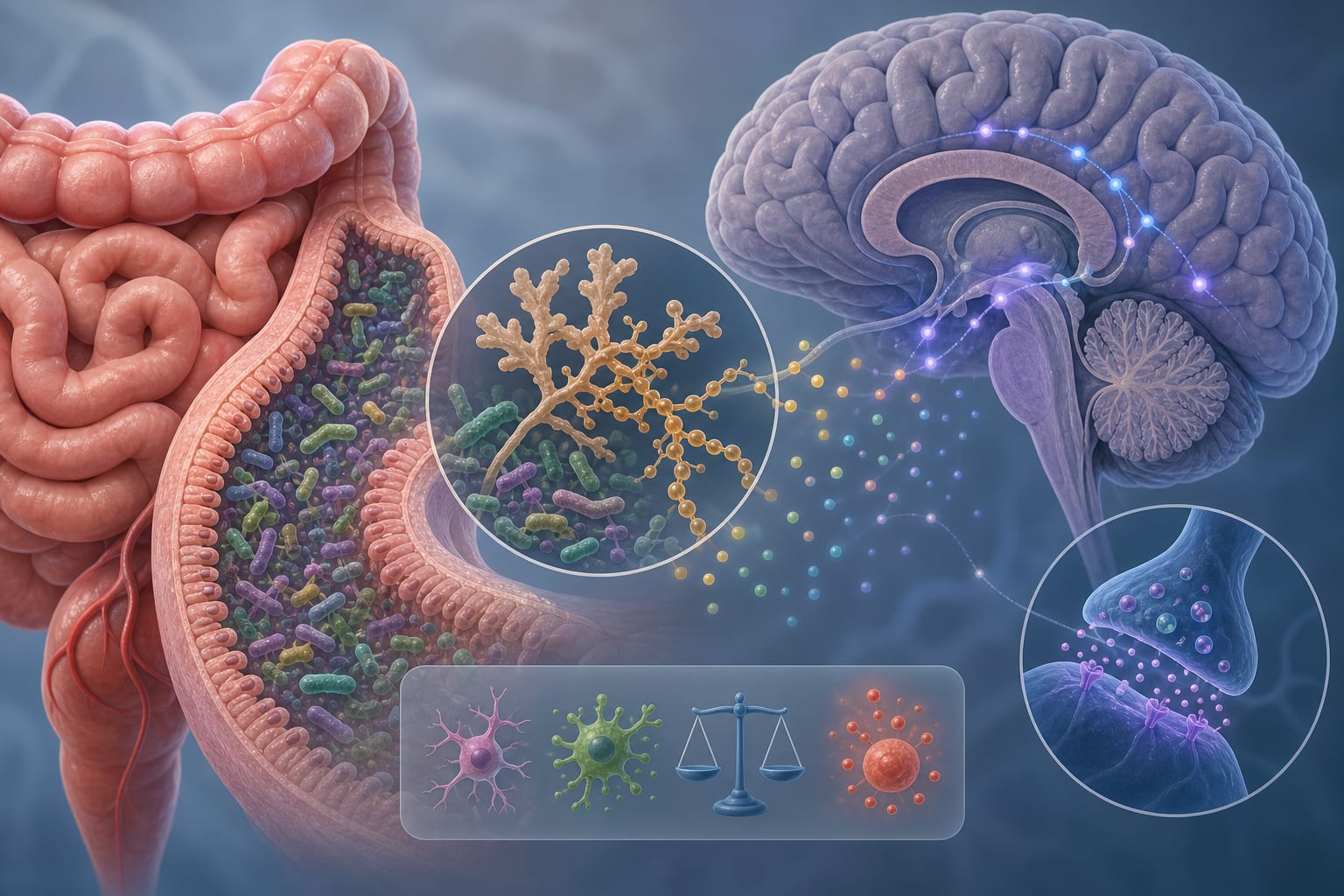
This systematic review summarizes preclinical evidence on the antidepressant efficacy of natural polysaccharides, focusing on their effects on gut microbiota and related metabolic pathways.
Background
Depression is a significant public health issue affecting over 300 million individuals globally, with complex pathophysiology involving multiple biological systems. Traditional antidepressant therapies often yield only moderate relief.
Data Highlights
Twenty preclinical studies met the inclusion criteria, showing that polysaccharide treatment was associated with improved depression-like behaviors, normalized neurotransmitter levels, and reduced inflammation and oxidative stress.
Key Findings
Natural polysaccharides may improve depression-like behaviors in preclinical models.
Polysaccharide treatment is linked to normalized neurotransmitter levels.
There is a reduction in inflammation and oxidative stress with polysaccharide treatment.
Changes in intestinal barrier function and gut microbiota composition were observed.
Substantial heterogeneity and high risk of bias limit causal interpretations of the findings.
Clinical Implications
Further research is necessary to establish the efficacy and safety of natural polysaccharides in clinical settings.
Conclusion
Natural polysaccharides have been studied for their antidepressant effects in preclinical models, but further studies are needed.