An exploratory pre–post study of an intensive somatosensory activity-based intervention on participation-related goals, motor performance and somatosensory function in children with unilateral cerebral palsy - Report - MDSpire

An exploratory pre–post study of an intensive somatosensory activity-based intervention on participation-related goals, motor performance and somatosensory function in children with unilateral cerebral palsy

  • By

  • Patricia Jovellar-Isiegas

  • Luis Enrique Roche-Seruendo

  • Diego Jaén-Carrillo

  • Manuel Gómez-Barrera

  • César Cuesta-García

  • June 25, 2026

  • 0 min

Share

Clinical Report: Intensive Somatosensory Activity Intervention in UCP Children

Overview

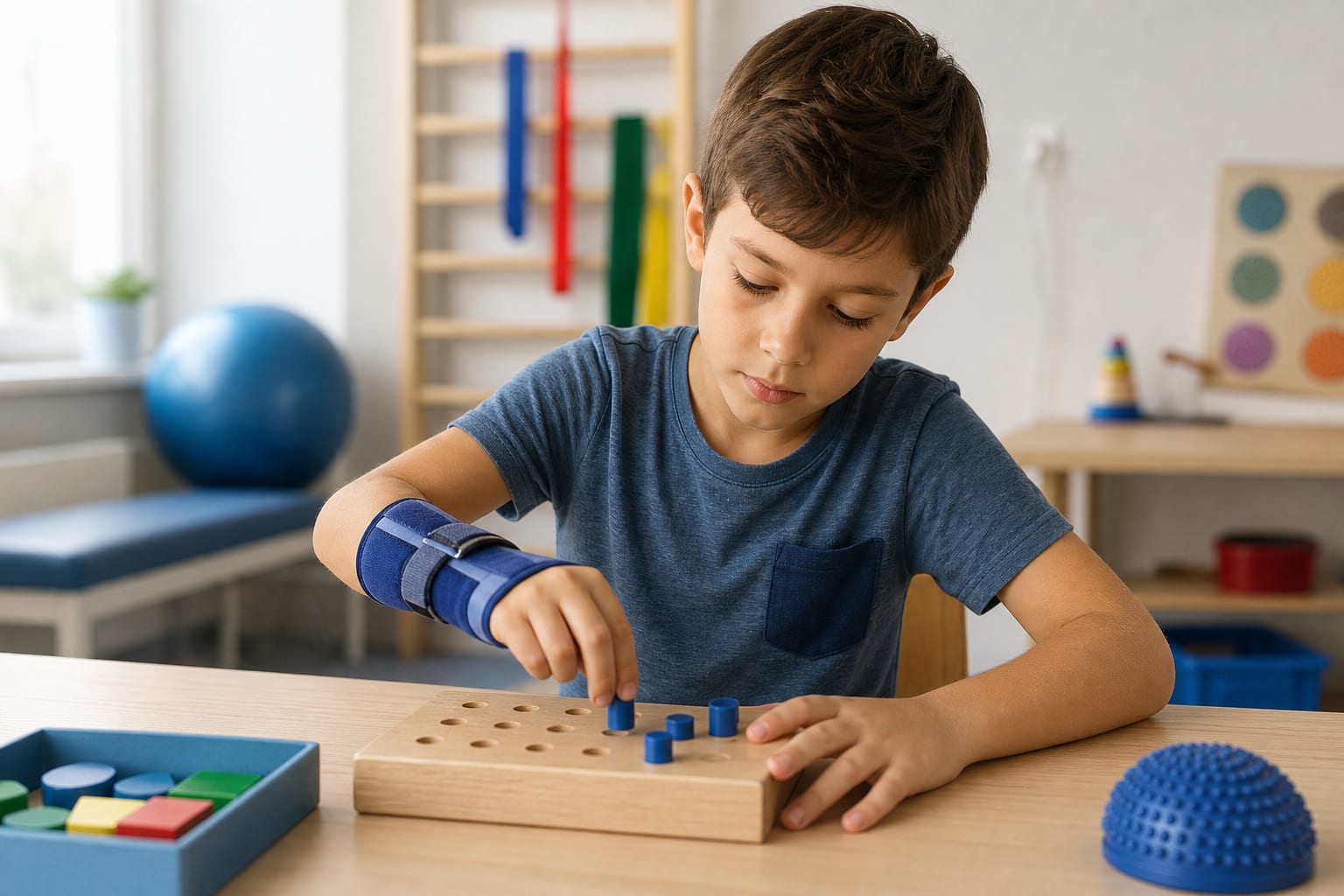
This study evaluates the effects of an intensive somatosensory activity-based intervention (ISABI) on children with unilateral cerebral palsy (UCP). Improvements were observed in occupational performance, motor skills, and somatosensory function following the intervention.

Background

Somatosensory impairments in children with unilateral cerebral palsy can hinder upper-limb function and daily activities. Understanding and improving somatosensory processing is crucial for enhancing motor performance and participation in daily life.

Data Highlights

Outcome MeasurePre-InterventionPost-InterventionChange (%)
COPM Performance--71.47
COPM Satisfaction--62.51
Box and Block Test--12
Jebsen–Taylor Hand Function Test--12.38
Graphaesthesia--33
Texture Perception--33
Functional Sensibility--18.52

Key Findings

  • 81.25% of occupational problems were related to self-care.
  • COPM performance increased by 71.47% post-intervention.
  • Family satisfaction increased by 62.51% after the intervention.
  • Manual dexterity improved by 12% as measured by the Box and Block Test.
  • Improvements in graphaesthesia and texture perception were both 33%.
  • Functional sensibility showed an 18.52% increase post-intervention.

Clinical Implications

The findings indicate that intensive somatosensory activity interventions may enhance occupational performance and motor skills in children with UCP.

Conclusion

The findings indicate that ISABI may lead to improvements in various functional domains for children with unilateral cerebral palsy.

Related Resources & Content

  1. Outcomes in Motor Function and Activity Following Selective Dorsal Rhizotomy in Pediatric Patients with Spastic Diplegia: A 12- and 24-Month Evaluation
  2. Feasibility testing of a home-based exercise intervention in children with cerebral palsy who are ambulant—a study protocol of the HOME-EX study
  3. Enhanced Cognitive Abilities and Sleep Quality in Preteens with High-Functioning Autism After Engaging in a Structured Exercise Program
  4. Recommendations | Cerebral palsy in under 25s: assessment and management | Guidance | NICE
  5. Bimanual Intensive Therapy in Infants With Unilateral Cerebral Palsy
  6. Frontiers in Psychiatry — Active-touch texture/material matching and caregiver-reported sensory reactivity in adolescents with autism spectrum disorder: a pilot study
  7. Recommendations | Cerebral palsy in under 25s: assessment and management | Guidance | NICE
  8. Bimanual Intensive Therapy in Infants With Unilateral Cerebral Palsy
  9. Unraveling tactile and proprioceptive upper limb function in children with unilateral cerebral palsy: a combination of robotic and clinical assessments - PubMed

Original Source(s)

Related Content