Artificial Intelligence Models May Enhance Diagnosis and Treatment for Rare Disorders
-
By
-
Simon Spichak
-
July 16, 2026
Clinical Report: Artificial Intelligence Models May Enhance Diagnosis and Treatment for Rare Disorders
Overview
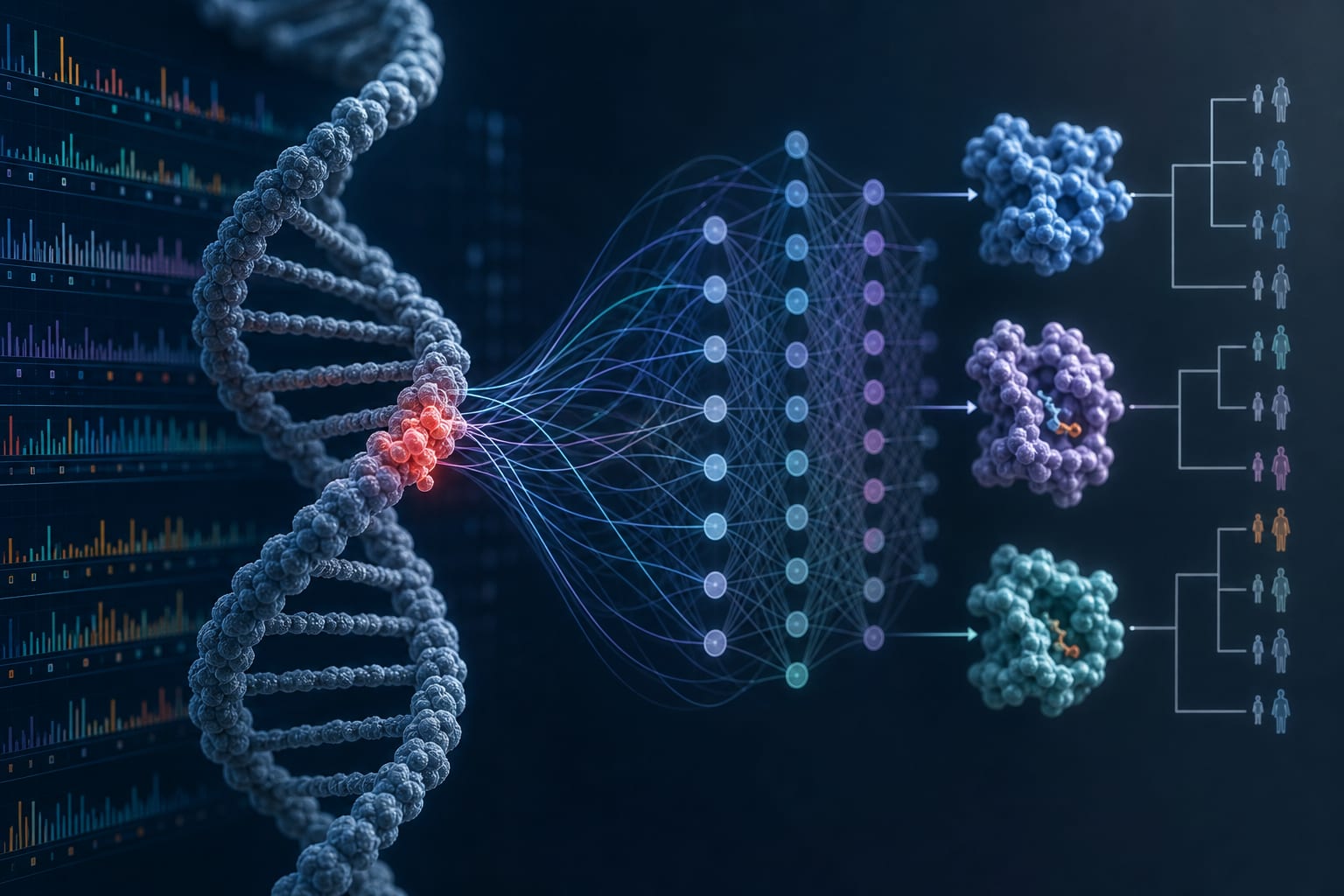
AI models have the potential to improve the diagnosis and treatment of rare diseases by identifying disease-causing variants and accelerating drug repurposing. These models require high-quality data for optimal performance.
Background
Rare diseases affect a significant portion of the global population, with diagnostic delays and limited treatment options being common challenges. Advances in artificial intelligence (AI) offer new avenues for identifying genetic mutations and accelerating the development of therapies.
Data Highlights
As many as 446 million people worldwide are living with a rare disease, and fewer than 5% have approved treatments. AI models like popEVE have identified 123 novel genetic variants potentially causing rare disorders.
Key Findings
- AI models can identify putative disease-causing variants in rare diseases.
- popEVE, an AI model, identified 123 novel genetic variants linked to severe developmental disorders.
- DeepRare, an AI system, achieved a 64% correct prediction rate for rare disease diagnoses.
- The OpenAI o3 Deep Research model aided in confirming 18 unsolved rare disease cases.
- Foundation models are being developed to analyze vast biological datasets for improved diagnostic capabilities.
Clinical Implications
The effectiveness of AI tools in diagnostic workflows for rare diseases is contingent on the availability of high-quality data.
Conclusion
Further validation and data quality improvements are necessary for the clinical application of AI in the diagnosis and treatment of rare diseases.
Related Resources & Content
- Weike Zhao, Nature, 2026 -- Agentic AI system may improve rare disease diagnosis
- Conexiant, 2026 -- AI Falls Short on Differential Dx
- William Haseltine, Retinal Physician, 2024 -- Artificial Intelligence to Manage the AMD Burden
- The Medicine Maker, 2026 -- The Role of AI in Rare Disease Drug Discovery
- ClinGen, Clinical Genome Resource -- ClinGen Variant Classification Guidance
- Nature Medicine, 2025 -- A generative AI-discovered TNIK inhibitor for idiopathic pulmonary fibrosis: a randomized phase 2a trial
- ClinGen Variant Classification Guidance - ClinGen | Clinical Genome Resource
- A generative AI-discovered TNIK inhibitor for idiopathic pulmonary fibrosis: a randomized phase 2a trial | Nature Medicine
- Drug Repurposing Using Machine Learning and Deep Learning: A Systematic Literature Review - PubMed
This content is an AI-generated, fully rewritten summary based on a published scholarly article. It does not reproduce the original text and is not a substitute for the original publication. Readers are encouraged to consult the source for full context, data, and methodology.