Identification of clinical phenotypes and prediction model for the mixed-infection phenotype of pediatric community-acquired pneumonia based on unsupervised machine learning - Report - MDSpire
Advertisement
Identification of clinical phenotypes and prediction model for the mixed-infection phenotype of pediatric community-acquired pneumonia based on unsupervised machine learning
Clinical Report: Prediction Model for Mixed-Infection in Pediatric CAP
Overview
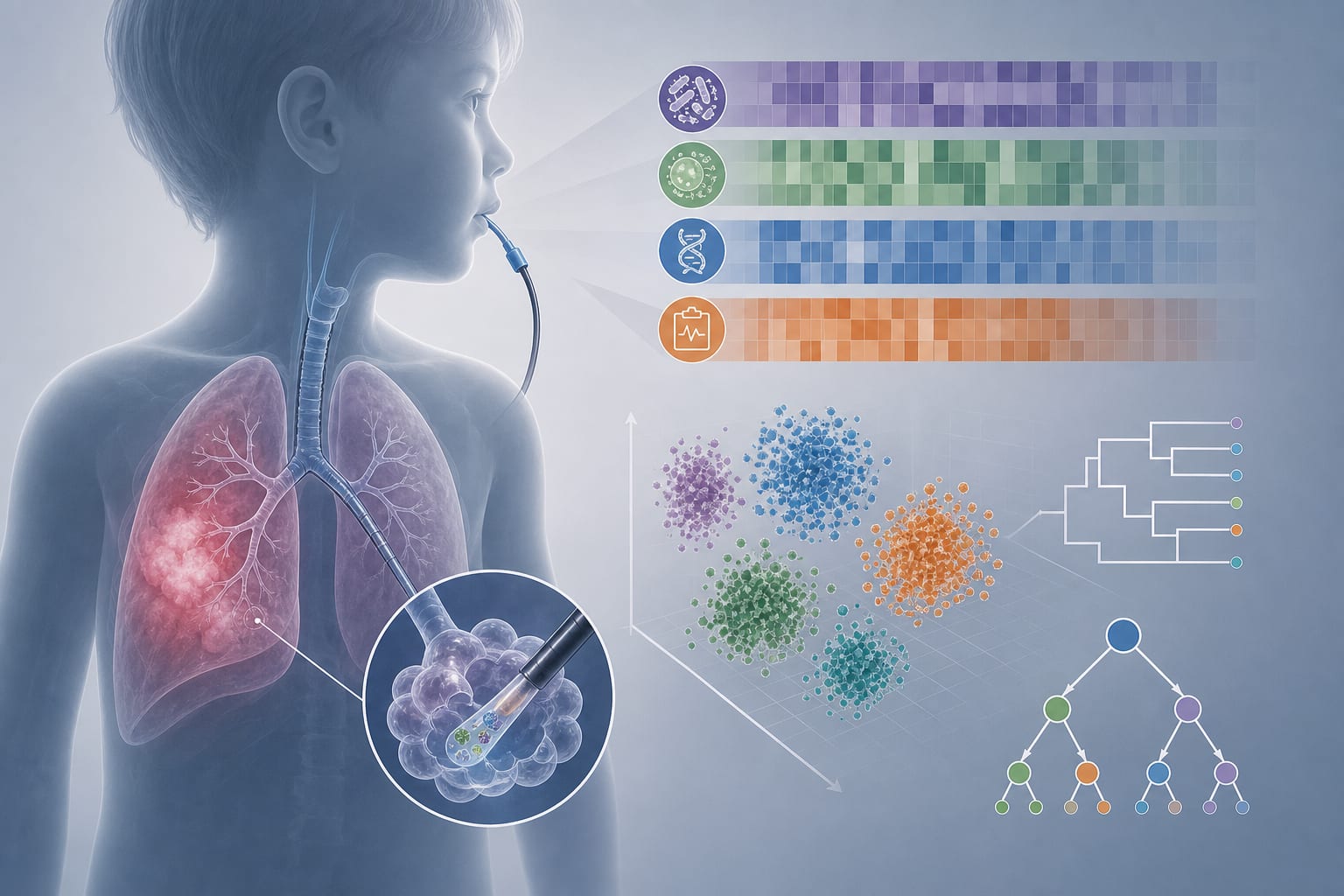
This study identifies three clinical phenotypes of pediatric community-acquired pneumonia (CAP) using unsupervised machine learning and develops a prediction model for the Mixed-Infection phenotype. The model demonstrates high accuracy and potential for early identification, although further validation is needed.
Background
Pediatric community-acquired pneumonia (CAP) is a leading cause of morbidity and mortality in children, characterized by significant clinical variability. Traditional microbiological classifications often fail to account for host factors and coinfections, complicating treatment decisions. Understanding distinct clinical phenotypes can enhance prognostic accuracy and guide targeted therapies.
Data Highlights
Phenotype
Percentage
Characteristics
Mycoplasma-Dominant
37.7%
Moderate inflammatory response
Mixed-Infection
28.2%
Multi-pathogen coinfection, youngest age group, prolonged hospitalization
High-Inflammation
34.1%
Elevated CRP and WBC levels
Key Findings
Three phenotypes identified: Mycoplasma-Dominant, Mixed-Infection, and High-Inflammation.
The Mixed-Infection phenotype had the highest proportion of prolonged hospitalization (31.4%).
The prediction model achieved an AUC of 0.917 and accuracy of 91.3%.
Machine learning techniques can effectively classify pediatric CAP based on clinical and inflammatory characteristics.
Further validation in larger cohorts is necessary to confirm the model's generalizability.
Clinical Implications
The identification of distinct phenotypes in pediatric CAP can inform clinical decision-making and improve treatment strategies. The developed prediction model may assist clinicians in early identification of patients at risk for Mixed-Infection, potentially optimizing resource utilization and patient outcomes.
Conclusion
This study highlights the utility of machine learning in characterizing pediatric CAP phenotypes and developing predictive tools. Continued research is essential to validate these findings and enhance clinical applicability.