Semaglutide Adjunct to Intragastric Balloon Enhances 12-Month Weight Loss
Overview
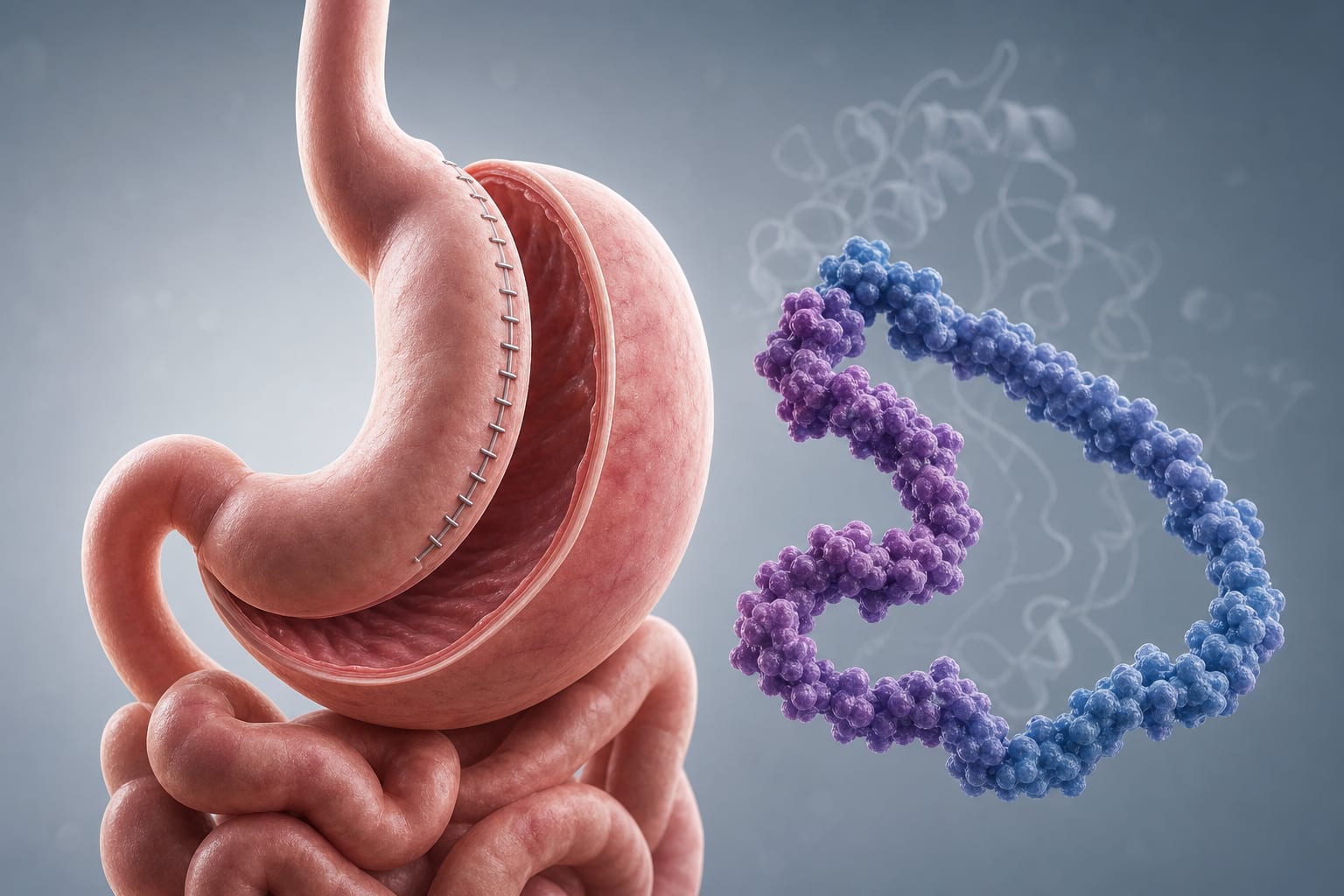
This 12-month prospective study compared weight loss outcomes in obese patients receiving intragastric balloon (IGB) therapy alone versus IGB combined with semaglutide. The combination therapy group demonstrated superior weight reduction, suggesting a synergistic effect of semaglutide with IGB treatment.
Background
Obesity is a growing global health issue linked to increased morbidity and mortality. While lifestyle interventions are foundational, their long-term effectiveness is limited, and bariatric surgery remains underutilized due to cost and access barriers. Endoscopic bariatric therapies like intragastric balloons offer less invasive alternatives. Semaglutide, a GLP-1 receptor agonist, is an approved pharmacotherapy for obesity that promotes weight loss and may enhance outcomes when combined with IGB.
Data Highlights
Parameter
IGB Only Group (n=20)
IGB + Semaglutide Group (n=20)
Mean BMI at baseline (kg/m²)
Not specified
Not specified
Weight loss at 6 months (%)
Not specified
Not specified
Weight loss at 12 months (%)
Not specified
Not specified
Note: Exact numerical data on weight loss percentages and BMI changes were not provided in the source text.
Key Findings
Patients receiving combined IGB and semaglutide therapy had greater weight loss compared to IGB alone over 12 months.
The semaglutide dosing was initiated at 0.5 mg weekly in month 2, escalated to 1 mg weekly during months 3 and 4, paused during months 5 and 6, and resumed at 1 mg weekly during months 7 and 8.
IGB was maintained for six months before removal, with semaglutide administration timed to complement balloon placement and removal phases.
Both groups received standardized dietary counseling and lifestyle modification support throughout the study.
The study design was prospective, randomized, and open-label with 40 patients completing 12-month follow-up.
Clinical Implications
Combining semaglutide with intragastric balloon therapy may enhance weight loss outcomes beyond IGB alone, offering a less invasive yet effective obesity treatment option. Clinicians should consider integrating GLP-1 receptor agonists like semaglutide in patients undergoing endoscopic bariatric procedures to optimize results. Careful dosing schedules aligned with balloon placement can maximize efficacy while minimizing adverse effects.
Conclusion
The adjunct use of semaglutide with intragastric balloon therapy shows promise in improving weight loss outcomes in obese patients. This combined approach warrants further investigation as a viable strategy in obesity management.
References
Obesity and related morbidity -- Global health burden
Look AHEAD Study -- Long-term weight loss outcomes
Semaglutide approval and efficacy -- GLP-1 RA in obesity
A four-factor staging system stratified response rates from 90.9% to 37.5% in a retrospective cohort study, although the model showed only moderate discrimination (C statistic, 0.68) and requires external validation