Clinical Report: Evaluation of a Mucosal Protein-Only Vaccine Candidate for Tuberculosis
Overview
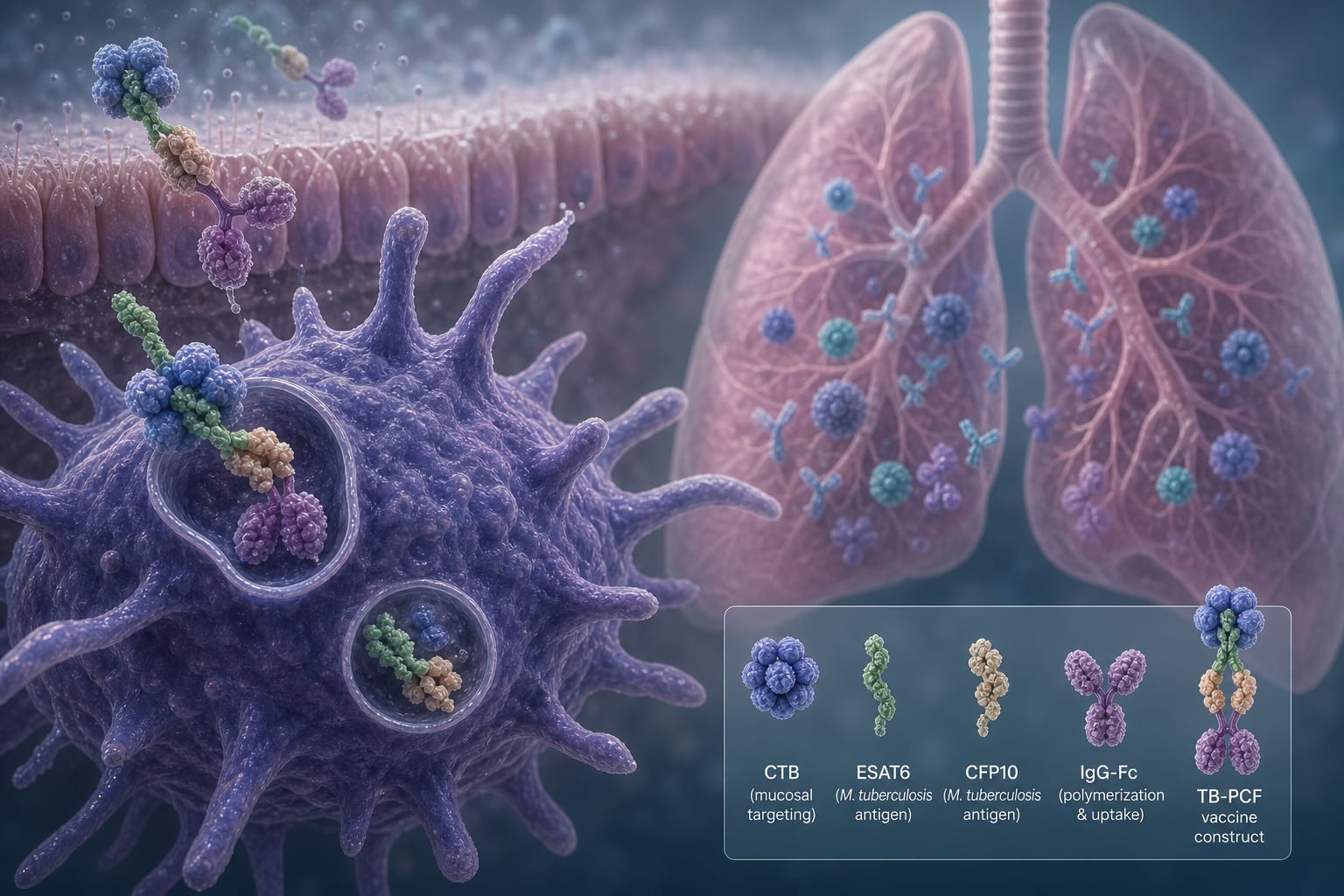
This study evaluates the TB-PCF mucosal vaccine candidate, which incorporates Mycobacterium tuberculosis antigens ESAT6 and CFP10. It elicited significant immune responses in mice but did not achieve statistically significant protection against lung bacterial burden compared to BCG.
Background
Tuberculosis (TB) remains a significant global health threat, with millions of new cases annually. The BCG vaccine, while the only licensed vaccine, has limitations in preventing pulmonary TB in adults. There is an urgent need for improved vaccination strategies that can elicit robust immune responses, particularly mucosal immunity, to enhance TB control efforts.
Data Highlights
No numerical data or trial data provided in the source material.
Key Findings
The TB-PCF vaccine elicited significant antigen-specific antibody responses in serum and bronchoalveolar lavage fluid.
Vaccinated mice exhibited polyfunctional systemic Th1 and Th17 responses, characterized by elevated IFN-γ and IL-17.
Splenocytes from vaccinated mice showed significant bacterial killing in a modified mycobacterial growth inhibition assay, trending higher than BCG.
In vivo challenge tests revealed that only the BCG-vaccinated group achieved a statistically significant reduction in lung bacterial burden.
The ESAT6-CFP10 antigen duo may lack the necessary antigenic breadth for full protection.
The TB-PCF platform is proposed as a promising tool for future screening of diverse antigen combinations.
Clinical Implications
The findings indicate that the TB-PCF vaccine shows significant immune responses but may not provide adequate protection in vivo compared to BCG.
Conclusion
The TB-PCF mucosal vaccine candidate demonstrates significant immunogenicity but fails to translate these findings into effective in vivo protection against TB.