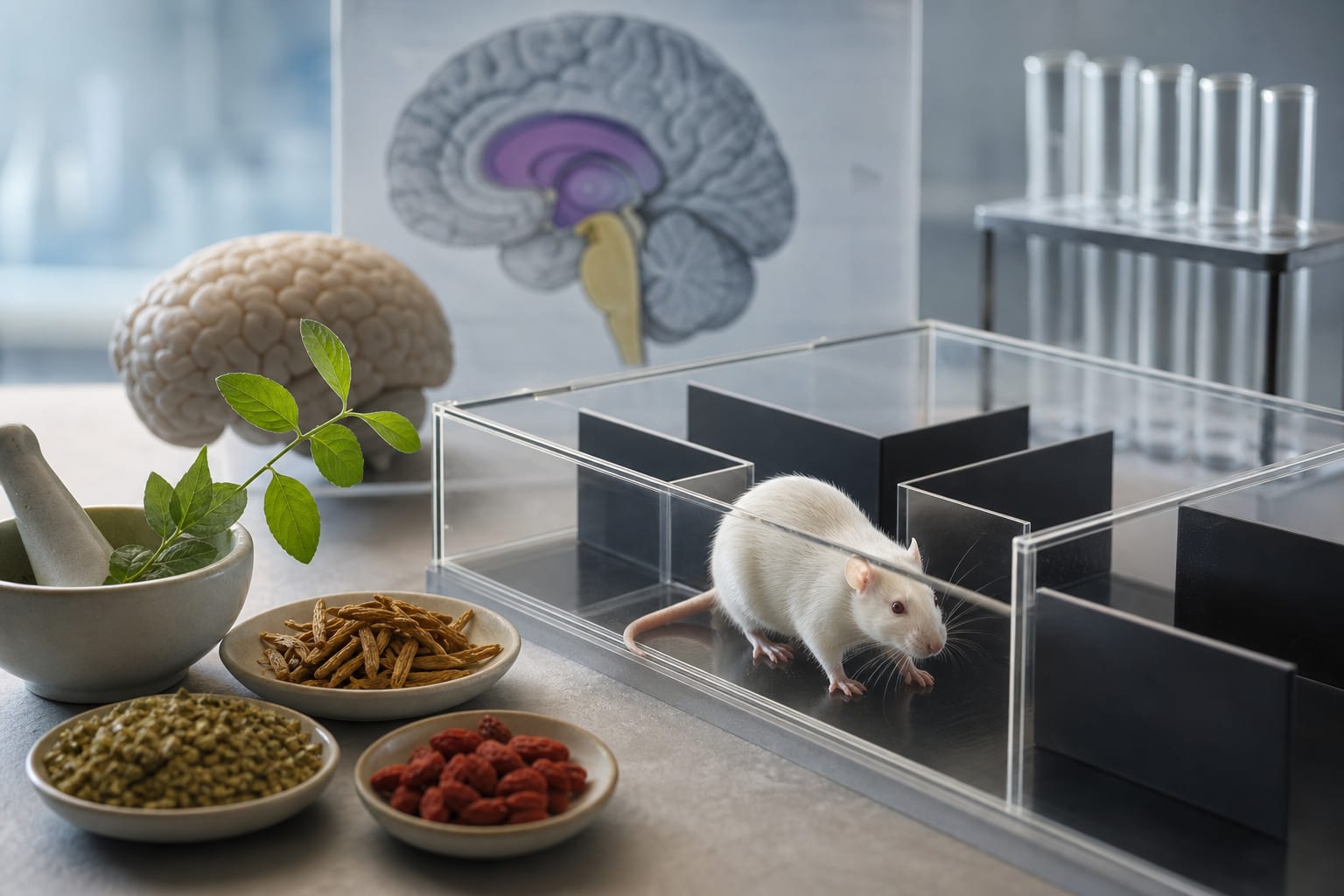
Clinical Report: Comprehensive Analysis of Herbal Remedies for ADHD
Overview
This systematic review evaluates preclinical studies on herbal remedies for ADHD, highlighting their potential benefits and significant methodological limitations. Key findings indicate improvements in ADHD-like behaviors but a lack of rigorous safety evaluations and diverse animal models.
Background
ADHD is a prevalent neurodevelopmental disorder affecting 8% of children and adolescents globally, often treated with stimulant medications that can have adverse effects. The rising interest in herbal remedies as alternative treatments necessitates a thorough evaluation of existing preclinical research to understand their efficacy and safety.
Data Highlights
No numerical data available in the source material.
Key Findings
25 preclinical studies were analyzed, predominantly using spontaneously hypertensive rats.
88% of studies exclusively used male animals, limiting generalizability.
72% of studies focused on hyperactivity, with less emphasis on inattention and impulsivity.
Herbal interventions showed improvements in ADHD-like behaviors and catecholaminergic neurotransmission.
80% of studies did not report safety outcomes, raising concerns about translational relevance.
Promising formulations included Long Mu Qing Xin mixture and An Shen Ding Zhi Ling.
Clinical Implications
Healthcare professionals should be aware of the potential benefits of herbal remedies for ADHD while recognizing the limitations of current preclinical research. Future studies should prioritize methodological rigor and diverse animal models to enhance the translational relevance of findings.
Conclusion
While herbal medicines show promise for ADHD treatment, significant gaps in research quality and safety evaluations must be addressed to inform clinical practice effectively.
April Jasper, OD, FAAO, and Dori Carlson, OD, MAL, FAAO, sat down for a conversation on how ODs can recognize burnout in themselves and ways they can find their way back to well-being.