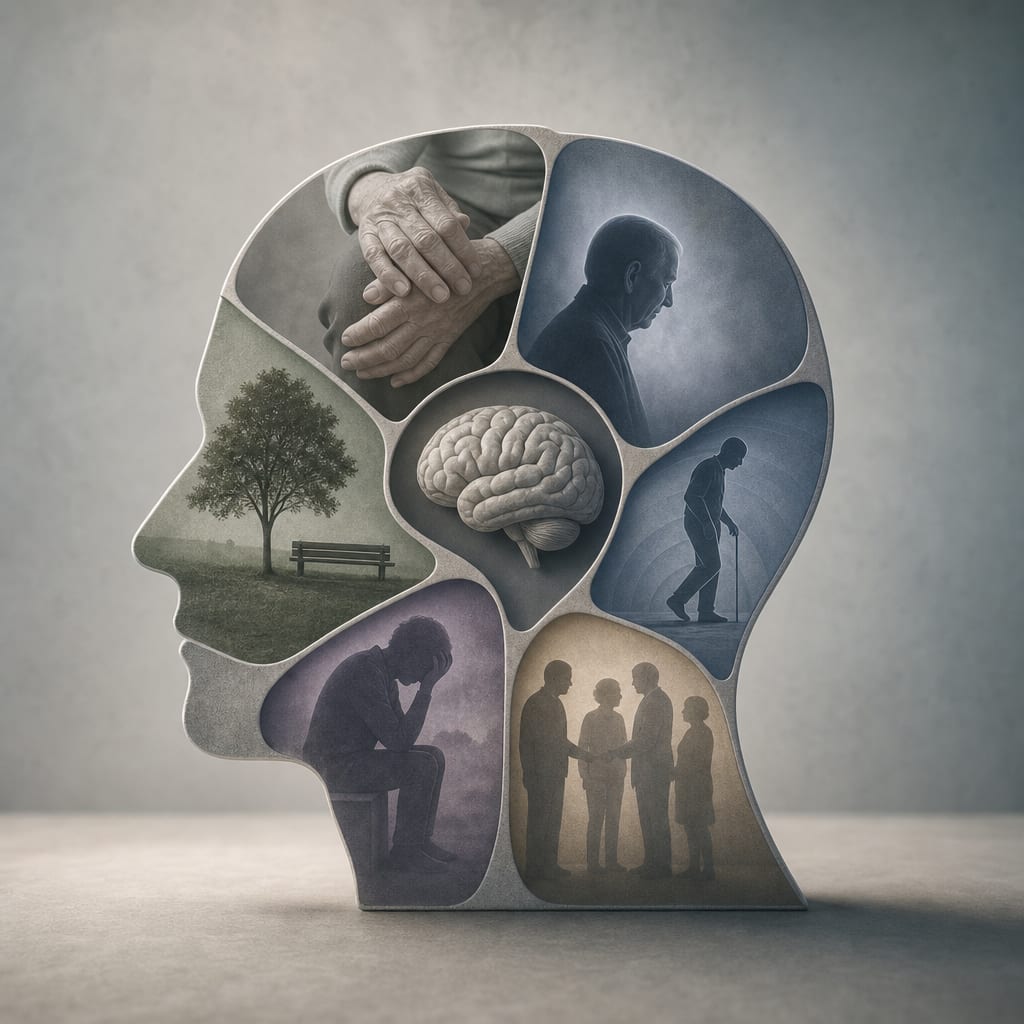
Editorial: AI-powered advances in diagnosis and management of movement disorders
-
By
-
Yi-Min Sun
-
Gao-Wei Xu
-
Guang-Ming Zhang
-
Jian-Jun Wu
-
May 27, 2026
-
0 min
Clinical Report: Innovations in Diagnosis and Treatment of Movement Disorders Through AI
Overview
This editorial discusses the transformative role of artificial intelligence (AI) in diagnosing and managing movement disorders, particularly Parkinson's disease (PD). It highlights innovative AI methodologies that enhance diagnostic accuracy and treatment monitoring, emphasizing the integration of multimodal data.
Background
Movement disorders significantly impact patients' quality of life and pose challenges in diagnosis and treatment. Traditional assessment methods are often limited by inter-rater variability and the inability to capture continuous data. The integration of AI technologies presents an opportunity to improve diagnostic precision and treatment efficacy through advanced data analysis and monitoring.
Data Highlights
No numerical data available in the source material.
Key Findings
- AI methods can enhance the diagnostic accuracy for Parkinson's disease, achieving up to 95.7% accuracy with multimodal machine learning models.
- Voice recordings analyzed by AI can differentiate PD from healthy controls with an accuracy of 95.56%.
- AI-based video analysis can assess non-motor symptoms in PD, expanding the scope of digital phenotyping.
- AI-driven software like MoDAS quantifies motor symptoms and treatment effects, revealing improvements in kinematic features not detectable by conventional scales.
- Multimodal frameworks combining various data types improve model performance for diagnosing and monitoring movement disorders.
Clinical Implications
Healthcare professionals should consider incorporating AI technologies into clinical practice for the assessment and management of movement disorders. These tools can provide more accurate diagnoses and facilitate continuous monitoring, ultimately improving patient outcomes.
Conclusion
The integration of AI in the diagnosis and management of movement disorders represents a significant advancement in neurology. Continued research and development in this area are essential for optimizing patient care.
Related Resources & Content
- International Parkinson and Movement Disorder Society, PMC, 2025 -- Update on Treatments for Parkinson's Disease Motor Fluctuations
- npj Parkinson's Disease, 2025 -- Consensus expert recommendations for referral of Parkinson’s disease patients for deep brain stimulation surgery
- npj Parkinson's Disease, 2025 -- Patient, target, device, and program selection for DBS in Parkinson’s disease
- Journal of Medical Internet Research (JMIR) — Clinical AI is Not (Yet) Trustworthy-But It Could Be
- Frontiers in Ophthalmology — Artificial intelligence in ophthalmology: from innovation to clinical integration
- New Retinal Physician — From the Editor: Artificial Intelligence Could Change the Game for Retinal Medicine Recommendations
- Frontiers in Neurology — Rewiring the brain: the AI revolution in epilepsy treatment
- Clinical AI is Not (Yet) Trustworthy-But It Could Be
- Artificial intelligence in ophthalmology: from innovation to clinical integration
- Update on Treatments for Parkinson's Disease Motor Fluctuations – An International Parkinson and Movement Disorder Society Evidence‐Based Medicine Review - PMC
- Consensus expert recommendations for referral of Parkinson’s disease patients for deep brain stimulation surgery | npj Parkinson's Disease
- Patient, target, device, and program selection for DBS in Parkinson’s disease: advancing toward precision care | npj Parkinson's Disease
- Optimal focused ultrasound lesion location in essential tremor - PubMed
- Essential tremor - Symptoms, diagnosis and treatment | BMJ Best Practice US
- Diagnosis and treatment of autonomic failure, pain and sleep disturbances in Parkinson's disease: guideline "Parkinson's disease" of the German Society of Neurology - PubMed
- FDA approves first adaptive deep brain stimulation system for Parkinson’s | Medical Economics
- BRAIN Initiative Research Leads to FDA Approval of Adaptive Deep Brain Stimulation for Parkinson’s Disease | BRAIN Initiative
- Chronic adaptive deep brain stimulation versus conventional stimulation in Parkinson’s disease: a blinded randomized feasibility trial | Nature Medicine
- StimVision: smartphone video kinematics to optimize DBS programming in Parkinson’s disease | npj Parkinson's Disease
- FDA approves Vyalev (foscarbidopa + foslevodopa) subcutaneous 24-hour infusion of levodopa-based therapy for advanced Parkinson's disease – Medthority
- Systematic review of wearables assessing medication effect on motor function and symptoms in Parkinson’s disease | npj Parkinson's Disease
- Can wearable sensor based measures of gait accurately reflect Parkinson's disease severity? A systematic review and meta-analysis - ScienceDirect
- Consensus on the clinical utility of digital mobility outcomes for personalized clinical decision support in parkinson’s disease | Neurological Research and Practice | Springer Nature Link
- Computer Vision Technologies in Movement Disorders: A Systematic Review - PMC
- Automatic and explainable assessment for Parkinson’s disease by video-based human motion understanding | Journal of NeuroEngineering and Rehabilitation | Springer Nature Link
- Innovations and ongoing challenges in digital technologies for Parkinson’s disease | npj Parkinson's Disease
- Frontiers | Editorial: Digital biomarkers in movement disorders
- Good Machine Learning Practice for Medical Device Development: Guiding Principles | FDA
This content is an AI-generated, fully rewritten summary based on a published scholarly article. It does not reproduce the original text and is not a substitute for the original publication. Readers are encouraged to consult the source for full context, data, and methodology.